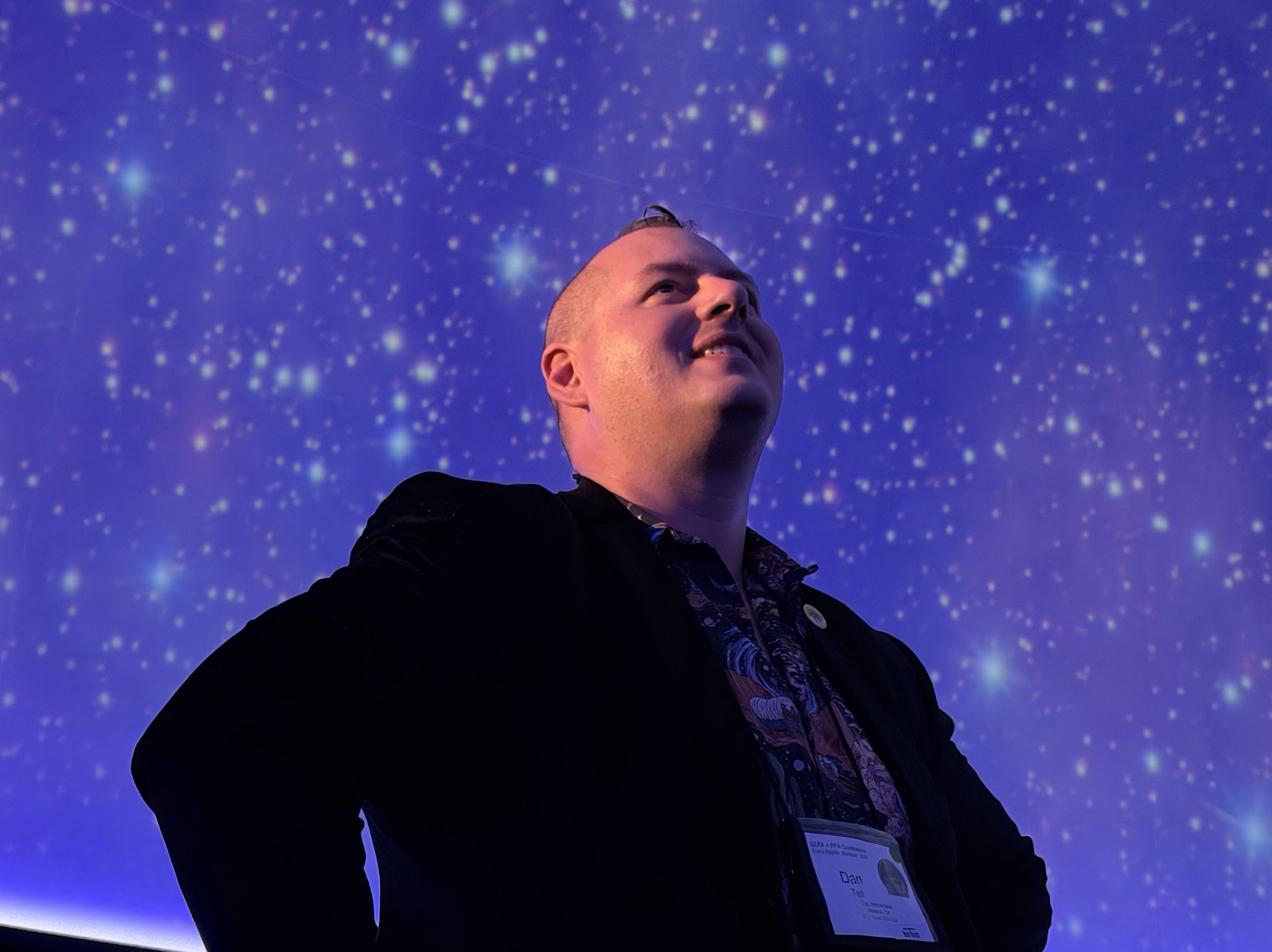
In 2005 I was a young planetarium associate, about three years on the job, at the Roger B. Chaffee Planetarium at the Grand Rapids Public Museum in Grand Rapids, Michigan, where I’d grown up for most of my life.
Throughout the summer, Dave DeBruyn, the planetarium’s curator emeritus had talked much about the forthcoming Great Lakes Planetarium Association conference and dispensed various tasks for me–reconciling registration forms (then on paper), printing banquet cards, and running to Fedex across the river for various print order pickups. This year I compared the work jokingly to the Macrodata Refinement in Apple TV’s Severance: I didn’t know what it meant or what it was for, I just did it.
Finally mid-October rolled around. “I’ll need extra help from you working at the conference next week,” Dave told me, and it turned out I was expected for various duties of AV technology, working with system vendors and presenters to make use of the planetarium theater, and was the on-site assistant for managing door prizes. I told my college classes I’d be absent for the week (rescheduling a linguistics test) and made plans to be at the museum all week.
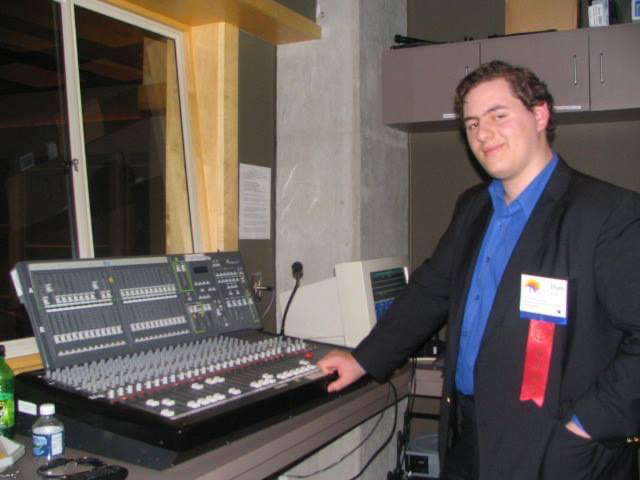
A young Dan Tell providing AV support at GLPA 2005
It was a week that changed my life forever. While I’d met a handful of colleagues from neighboring planetariums, meeting over 100 planetarians overwhelmed me with inspiration. Sitting at lunch on the Friday of the conference, conversing with established members I realized: almost nobody had planned on working in planetariums. Everyone had stumbled into it (“fell ass-backwards into it” was my exact mental wording), unintentionally discovering this career.
Maybe, I thought, the same was happening to me. I realized this was why GLPA existed–that a much younger Dave DeBruyn, and his colleagues Von Del Chamberlain and Dennis Sunal, realized new planetarians needed guidance to discover and reach their potential in this profession, and they founded the organization for exactly that.
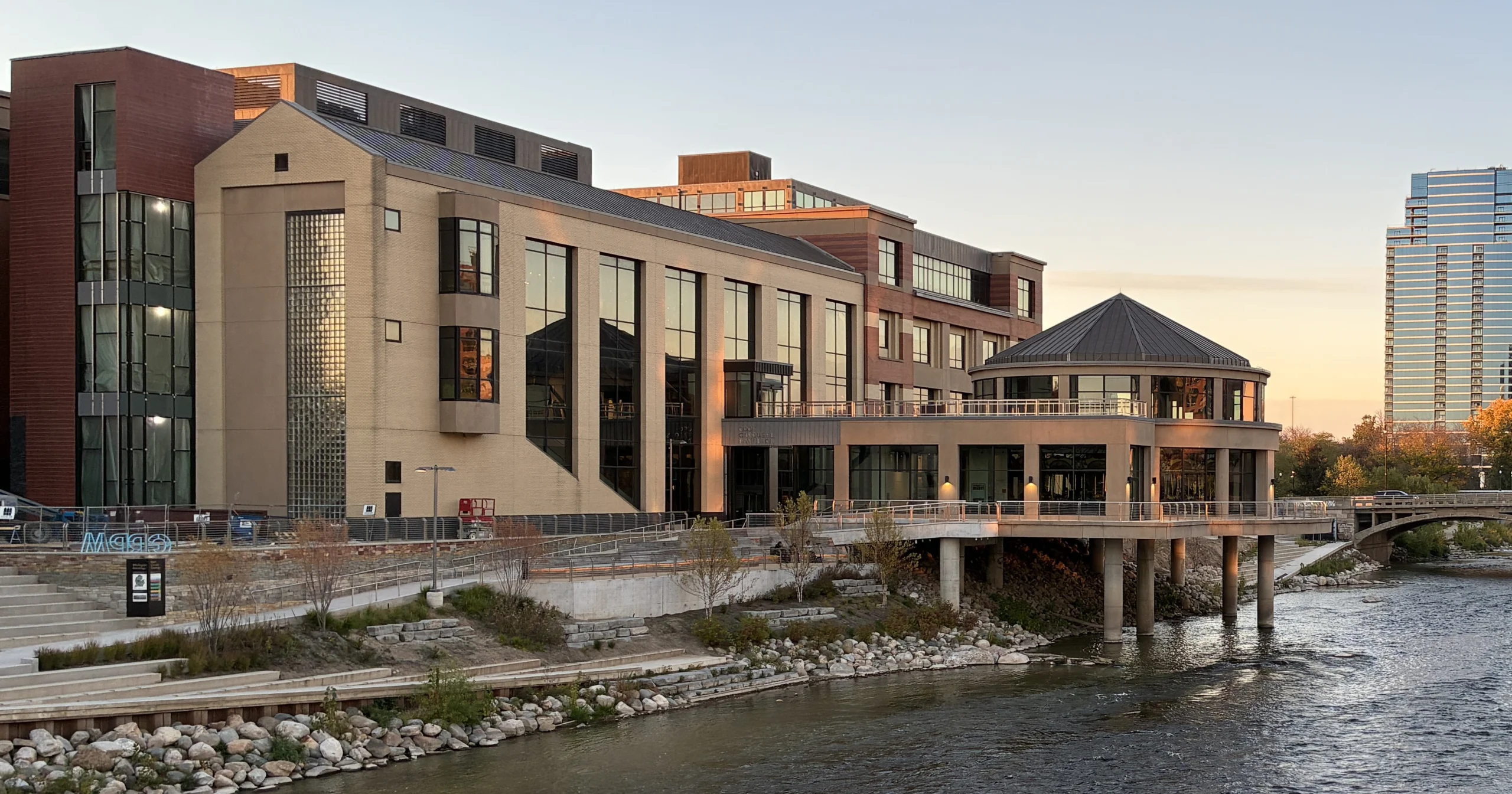
21 years later, the Chaffee Planetarium, which also hosted the inaugural GLPA conference in 1965, invited the planetarium community to return to Grand Rapids for the 2026 conference, with a combined conference for the Great Lakes Planetarium Association and Pacific Planetarium Association.
Since I left the Chaffee Planetarium to move to the San Francisco Bay Area in 2012, I have always enjoyed a return visit, seeing the planetarium that was so instrumental in the start of my career flourishing under its current team. I realized this year would offer the unique opportunity to present Tau Immersive in the dome where everything began, for the conference that gave me community and guidance.
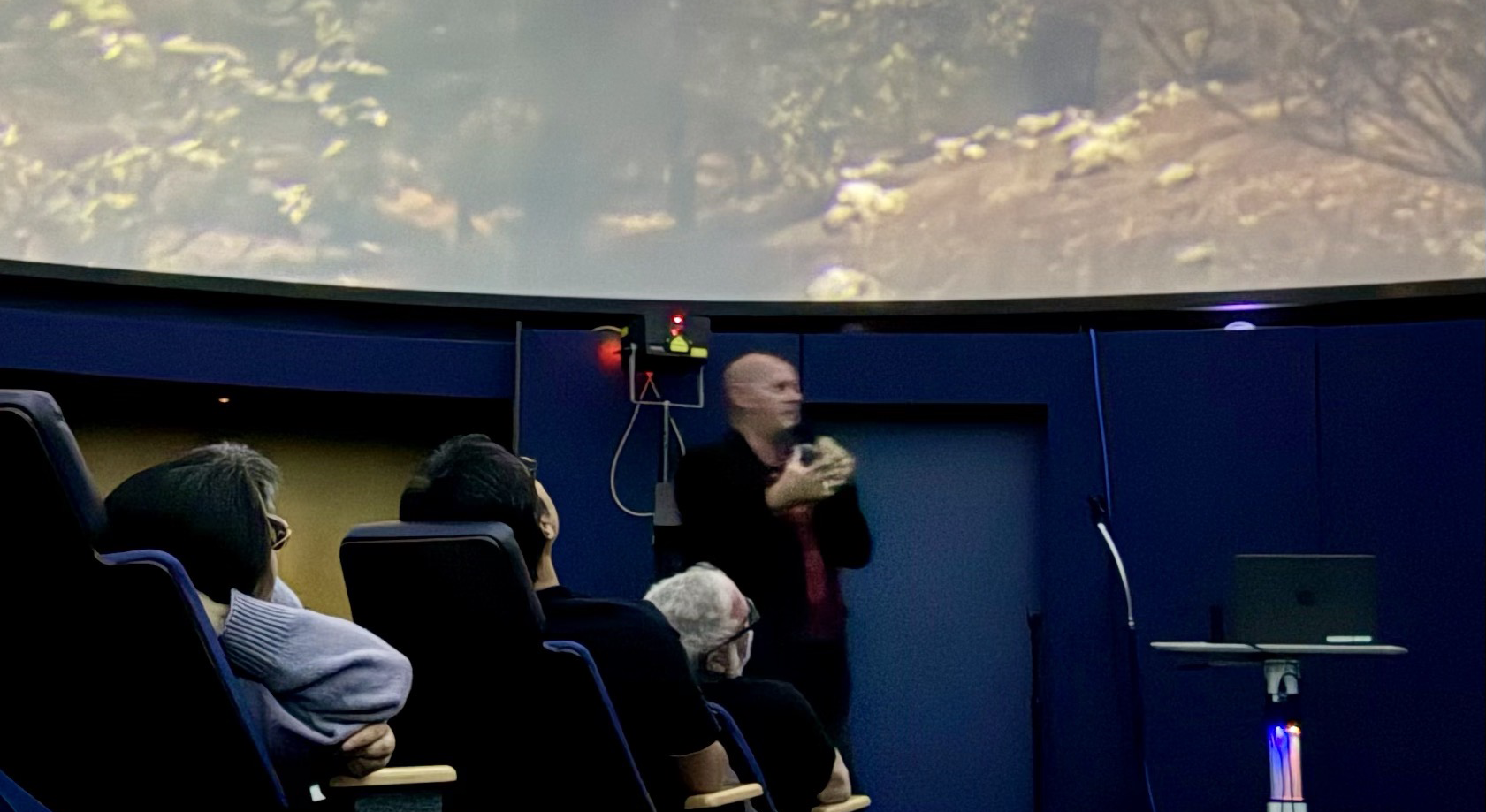
With Tau Immersive’s focus on OpenSpace training, I gave presentations in both the Chaffee Planetarium itself, and the traditional flatscreen environment of the Meijer Theater. The dome session was not only a chance to show off the power of OpenSpace in general, but specifically featured the collaborative work with my clients, and what they achieved with the software thanks to the training workshops and installation support I provided.
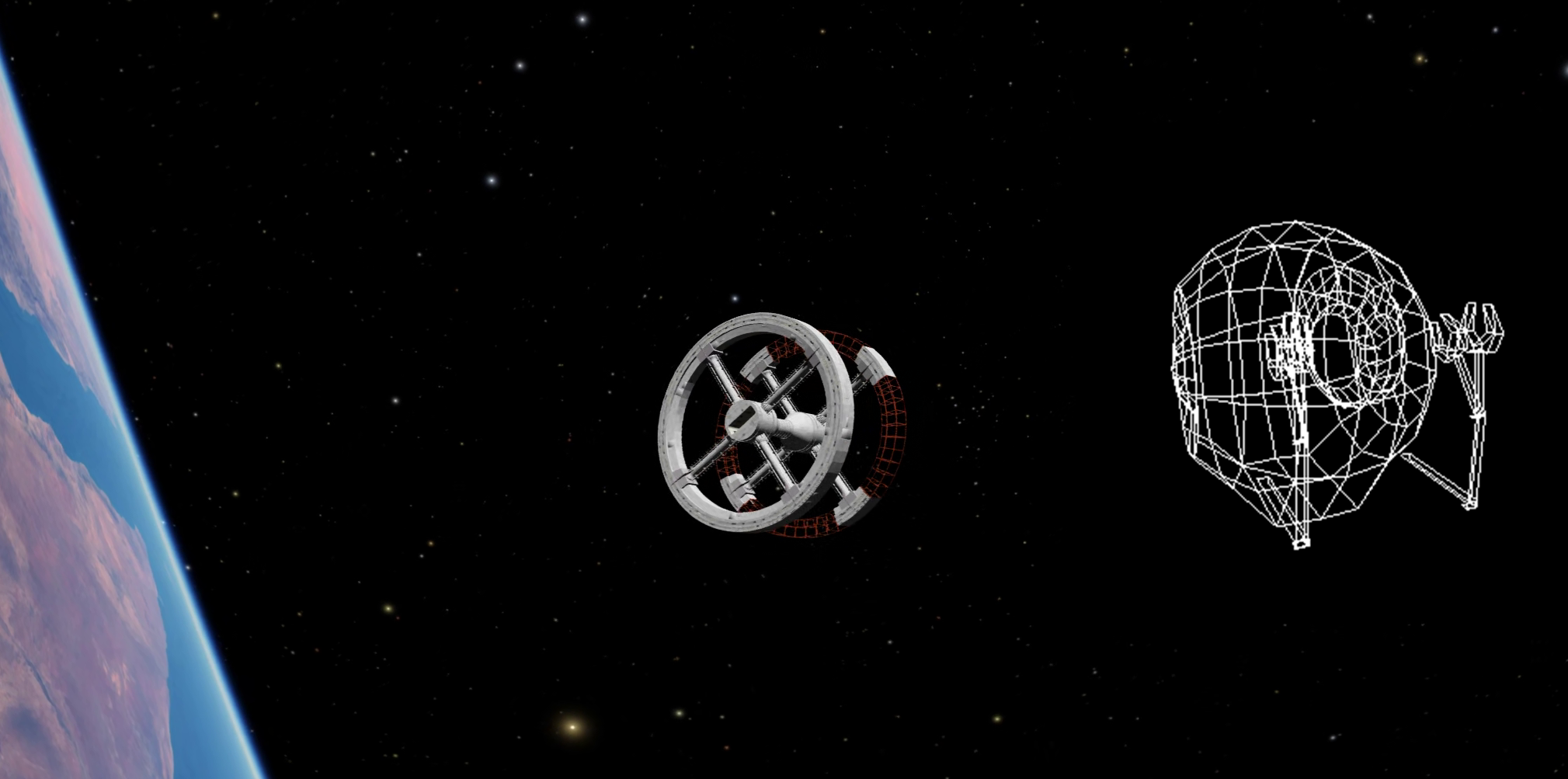
But I also included something for myself. When I started at the Chaffee it was a more traditional planetarium: a gallery of almost 80 slide projectors, four CRT video projectors, and a bevy of homemade mechanical special effects worked in concert with an Evans & Sutherland Digistar II digital star projector. In 2005 I was just learning how to program the Digistar II and bring new data and 3D models into the system, which finally led me to pursue an ambition to learn 3D modeling and computer graphics, an ambition I had since childhood. Among my early experiments were simple wireframe (since that’s all the Digistar II could support) models of various ships from 2001: A Space Odyssey. Two decades later I opened my demo with a quick flight past a modern, detailed and textured 3D model as used in my Space on Screen presentations.
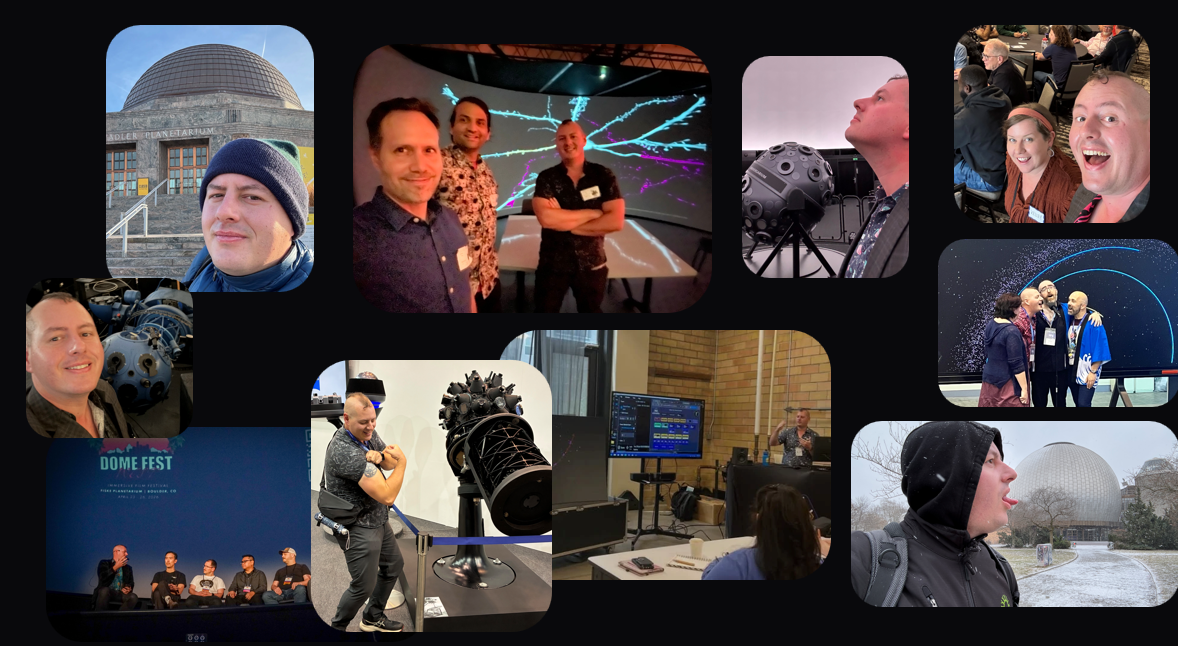
I felt like I delivered great promotional presentations in both theaters for Tau Immersive, sharing the power of our OpenSpace workshops, and also highlighting the variety of projects and clients we have worked on this year (with some special help on a lighthearted mock-infomercial featuring a song and voiceover from my friend Anna Green at Planetarium Jena), I was also touched to have other opportunities to engage with the conference, delivering presentations close to my heart.
Steve Crawford, of the Kalamazoo Valley Museum, has run live presentation workshops at GLPA for the last several years, and gave me the opportunity to present my style of live planetarium show in the Chaffee. Without much time to prepare–and even pivoting to avoid overlapping with another planetarian’s topic, I was delighted to revisit the style of presentation I had given hundreds of times over my career for my colleagues. Afterwards, Dave DeBruyn stopped me in the hall to tell me “that was a fabulous presentation.” I thanked him for the compliment, but reminded him I owe my skills to his years of training and investment in developing me as a presenter.
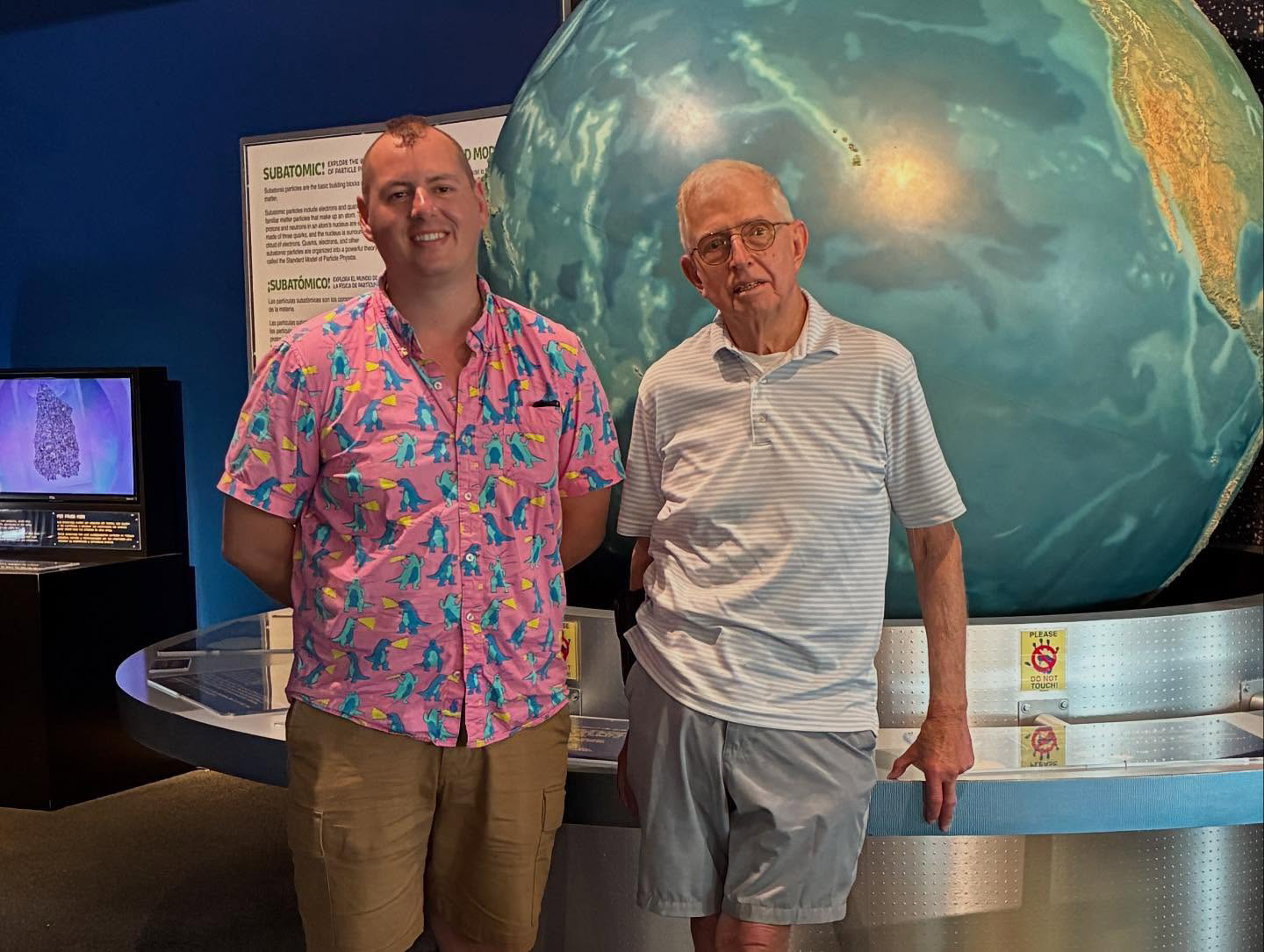
Dan Tell and Dave DeBruyn outside the Chaffee Planetarium in 2005
Armand Spitz, founder of one of the earliest and most significant US planetarium companies in the mid-20th century observed to GLPA, “the full potential of planetarium (and I use the word in its broadest possible connotation) has yet barely been scratched” and charged the members of the organization with discovering the capabilities of our instruments. I think delegate presentations, including oral papers, academic posters, and collaborative workshops, are one of the most valuable components of the conference–they are how we share these discoveries with each other. As I tried to find the balance in my new role with Tau Immersive 2025 was my first conference in 20 years that I did not present at other than my vendor demonstrations.
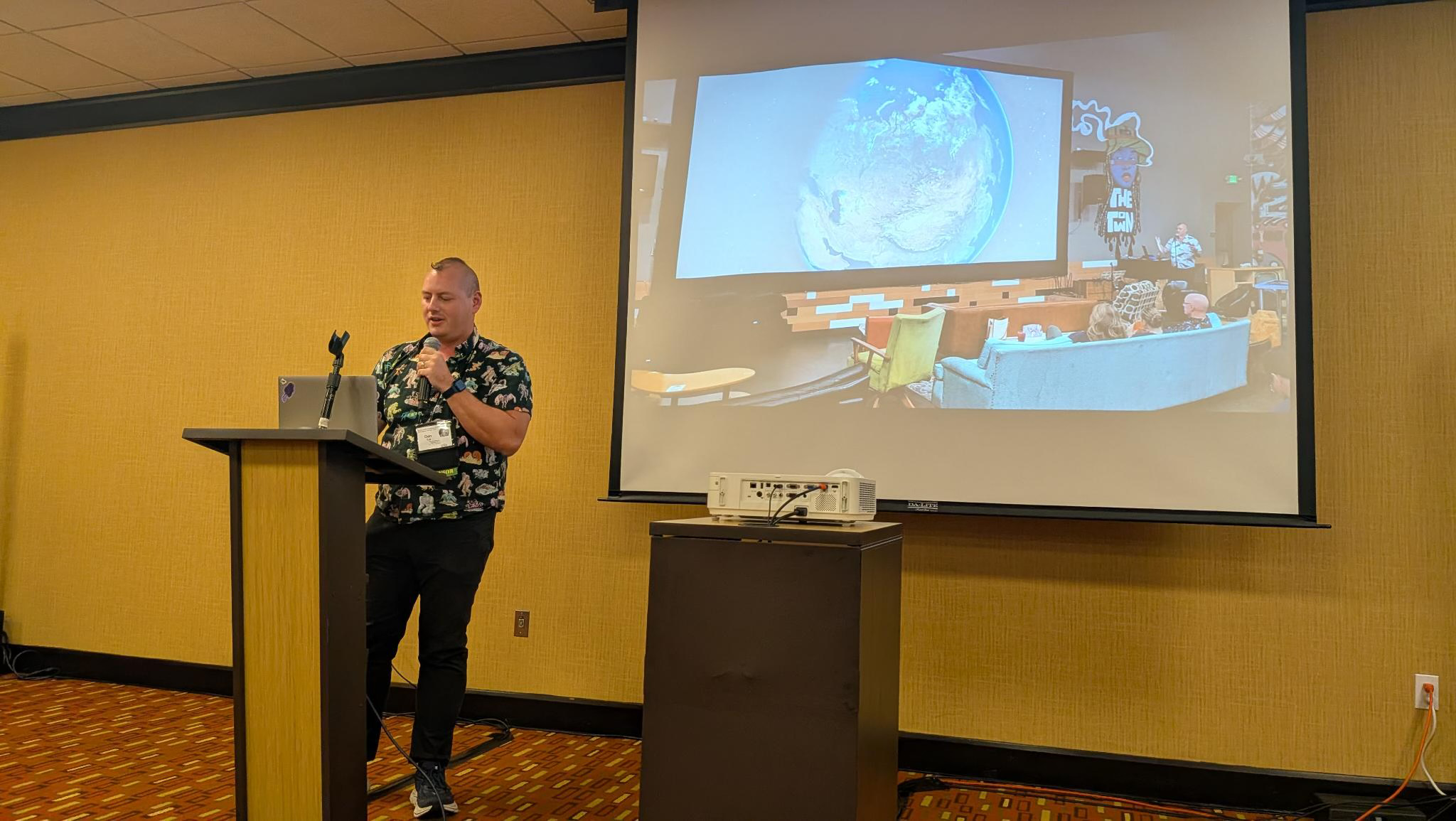
This year I was delighted to deliver two papers. Pleased with the results from my Space on Screen film series, I gave a presentation summarizing how the series had been developed and some of the connections to science and literature I showcased in my opening lecturettes for the films. This also drew on the rich history of science fiction and the planetarium–which runs at least as far back as a significant live reading of Isaac Asimov’s short story the Last Question at the Abrams Planetarium in 1965. I also drew a link to a 2019 paper by Chris Janssen, which noted the revenue capabilities of film rentals and showings for planetariums of all sizes, and how these types of presentations can be an excellent value-add to the experience.
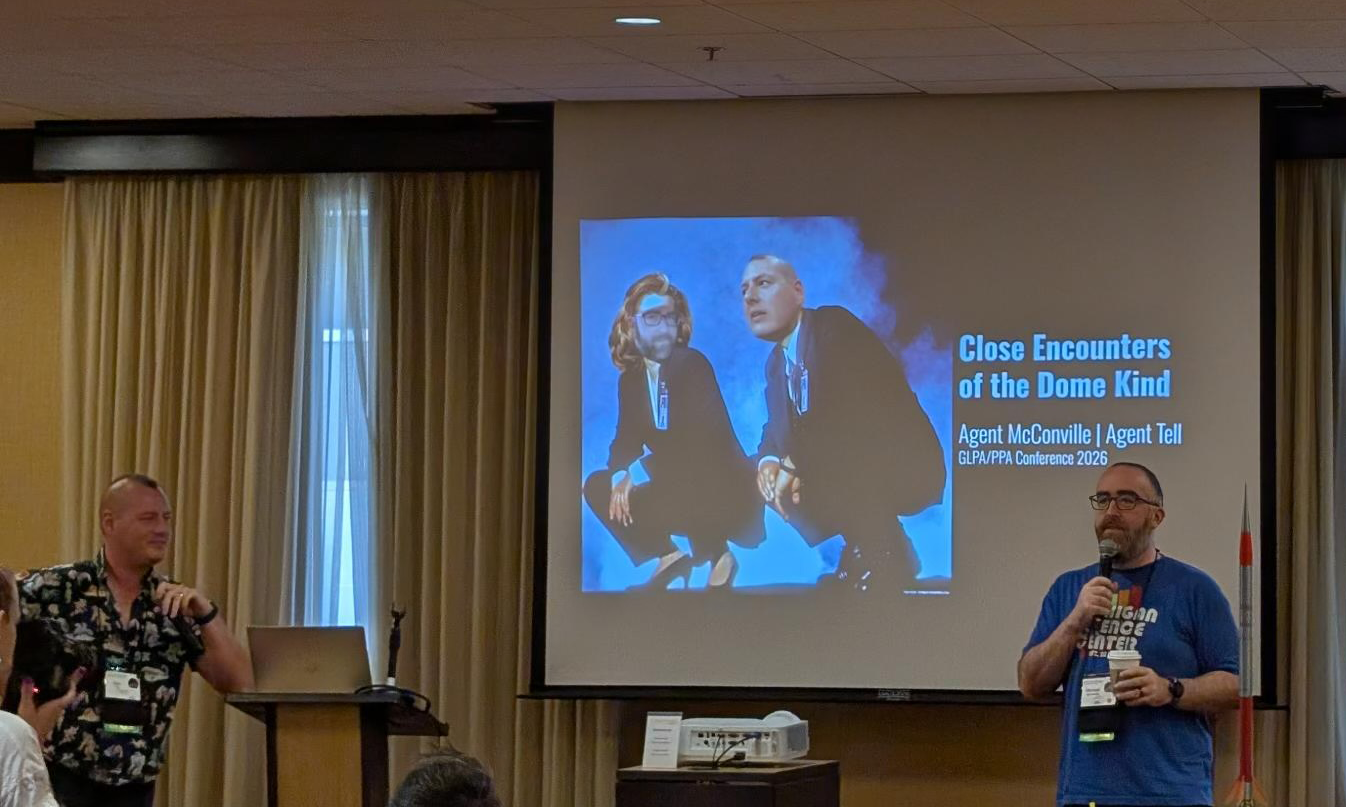
The second paper was a collaboration with my friend Michael McConville from Cosm, sharing our experiences and knowledge from AUI’s Unidentified Aerial Phenomenon (UAP) workshop. This was the first NSF-funded workshop on the topic of UAPs and UFOs (Unidentified Flying Objects) in nearly 50 years. Michael and I discussed both the history of UFO and UAP observation, but also the discussion between current experts and enthusiasts in the field, the open problems of data collection and cleaning, and how to more meaningfully discuss this controversial topic with our audiences, while remaining rooted in real data. We hope to revisit this topic with a more in-depth workshop in 2027.
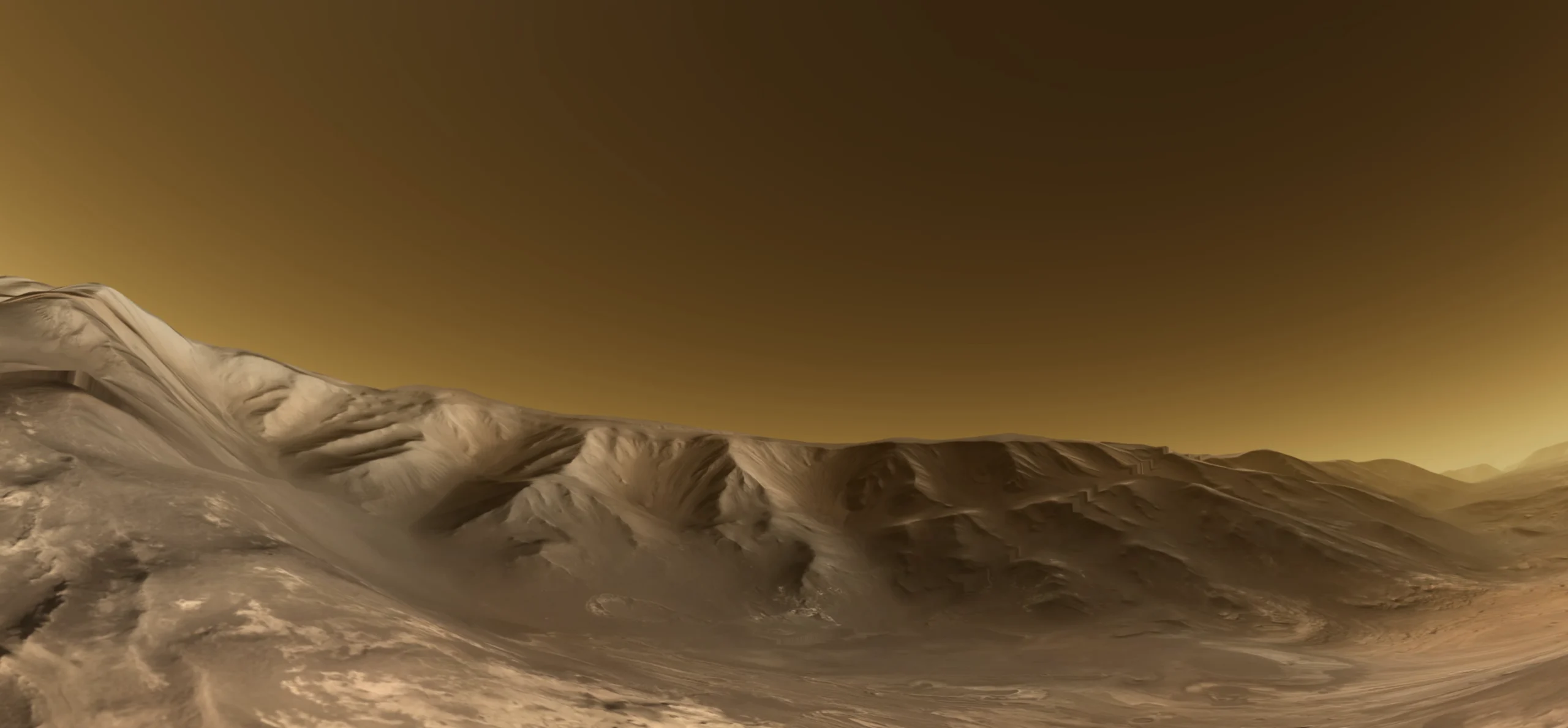
Having served on GLPA’s executive committee for the last 12 years, with my term as Past President finally at an end, I was also able to attend the pre-conference GLIPSA workshop put on by the Live Interactive Planetarium Symposium. I shared how I use high resolution planetarium imagery and terrain data to tell a variety of stories that not only let audiences experience other planets at a near-human scale, but also to connect the geology of distant worlds to the terrain they can find near their homes and around the world. I was also inspired by my colleagues’ presentations, and the power of our collaborative discussions to help everyone’s effort to deliver the best live presentations possible.
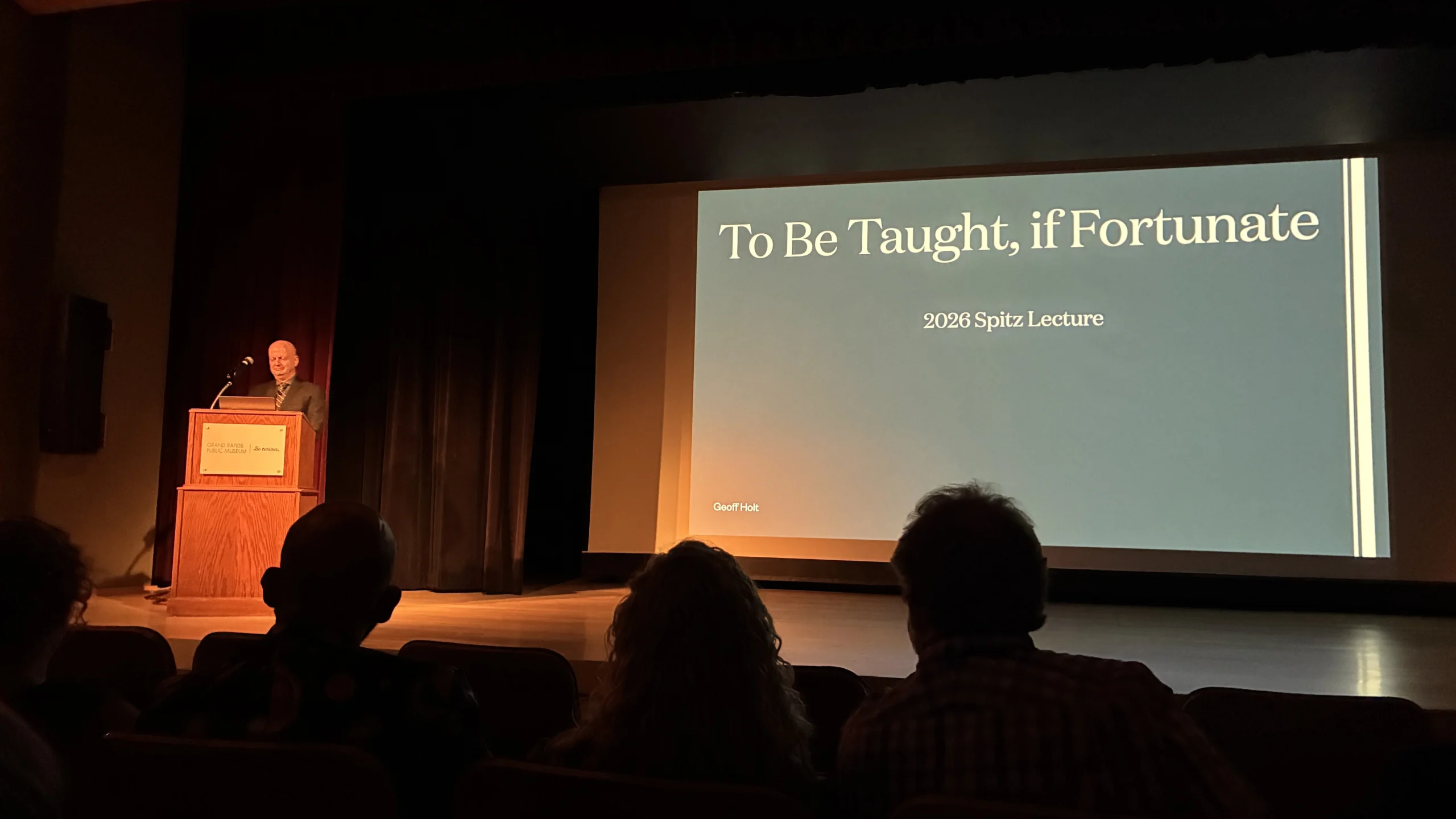
Among the most inspirational moments of the conference was the annual Armand Spitz Lecture, named for that notable luminary. This year’s speaker was Geoff Holt, retired from the Madison School District Planetarium in Wisconsin. I had the pleasure of serving GLPA as Secretary while Geoff was the organization’s President, and the honor of working closely with someone who cared so much about the future of the organization, and making it welcome to all people of diverse backgrounds–because only then can we have enough perspectives to really discover the best use of the planetarium. Economical with words, powerful with pointed pauses, Geoff delivered a moving lecture that I do not doubt energized planetarians at all stages of their careers with the importance of our mission.
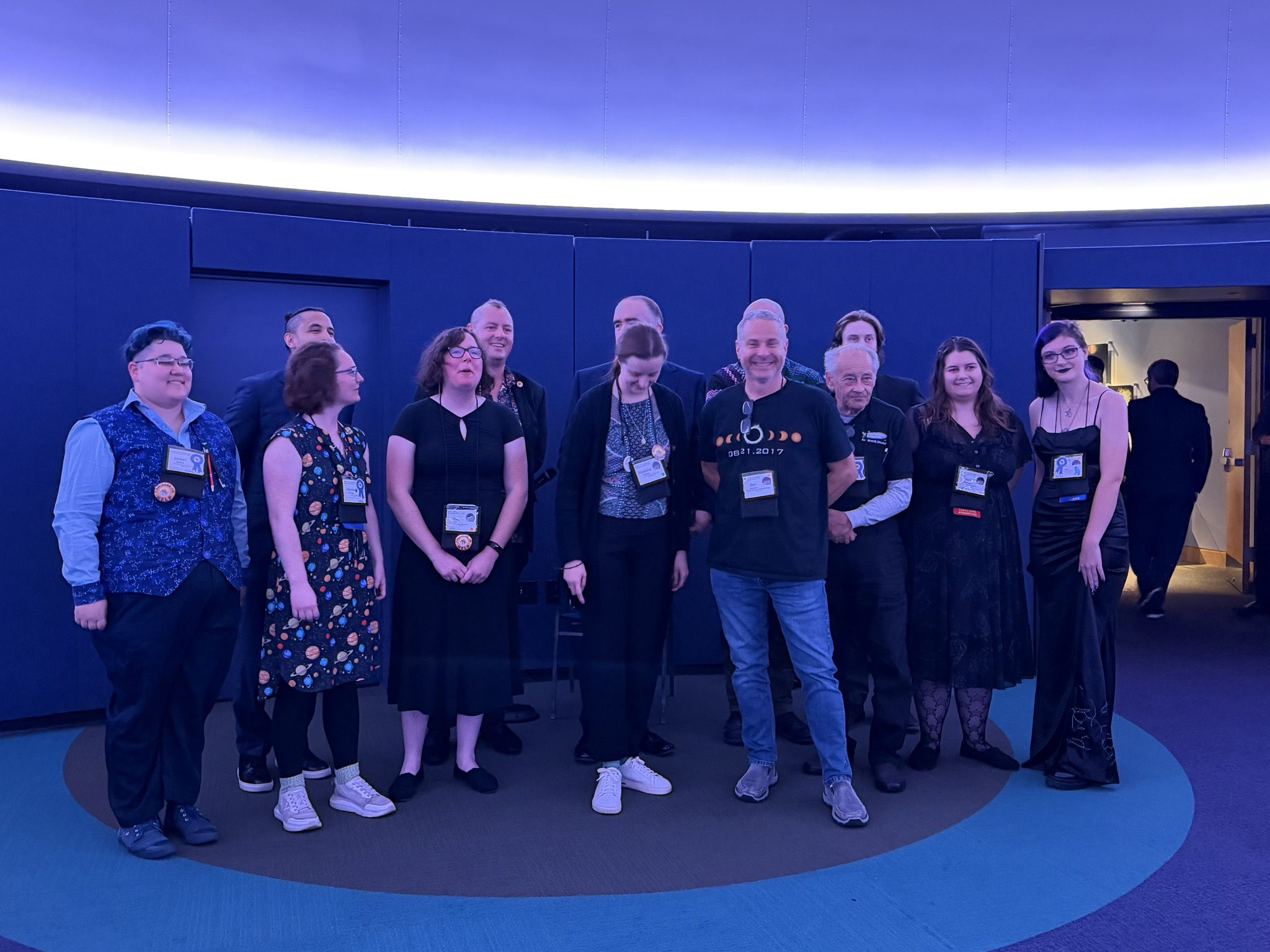
With the contestants of the 2026 GLPA Constellation Shootout
These few highlights are only a small part of the conference materials. It was a spectacular conference and it was an honor to get to showcase Tau Immersive to my professional community in the place where it started, for the people who not only inspired me to pursue this career, but have been my supporters in this latest stage. As the conference approached its end I also realized, solidly in my second decade in this profession, this also now included the next generation of planetarians coming in after me. My service to GLPA has always been focused on paying forward what the organization gave me–the encouragement to make this my career. It was moving to see that has been achieved, as these adept planetarians step into their own power of discovering the potential of their theaters, and to know that I had been a part of encouraging them to explore these possibilities. I have every confidence this chain of inspiration will continue–just as Dave and Von Del intended when, leaving a casual meeting at the Longway Planetarium in Flint in the early 1960s, they said to each other “we should do this more often… and invite more people!”