“Let me show you where I was camping last week.” Microsoft developer Jonathan Fay was demoing the latest build of WorldWideTelescope to me in Morrison Planetarium in late 2012. I had been intrigued by the free planetarium simulation software he had built since it was used for the University of Washington Planetarium a few years earlier, and we added it to Morrison’s toolkit to tour live earthquake data to accompany the then recent release of Earthquake: Evidence of a Restless Planet, as well as powering interactive kiosks in an accompanying exhibit.
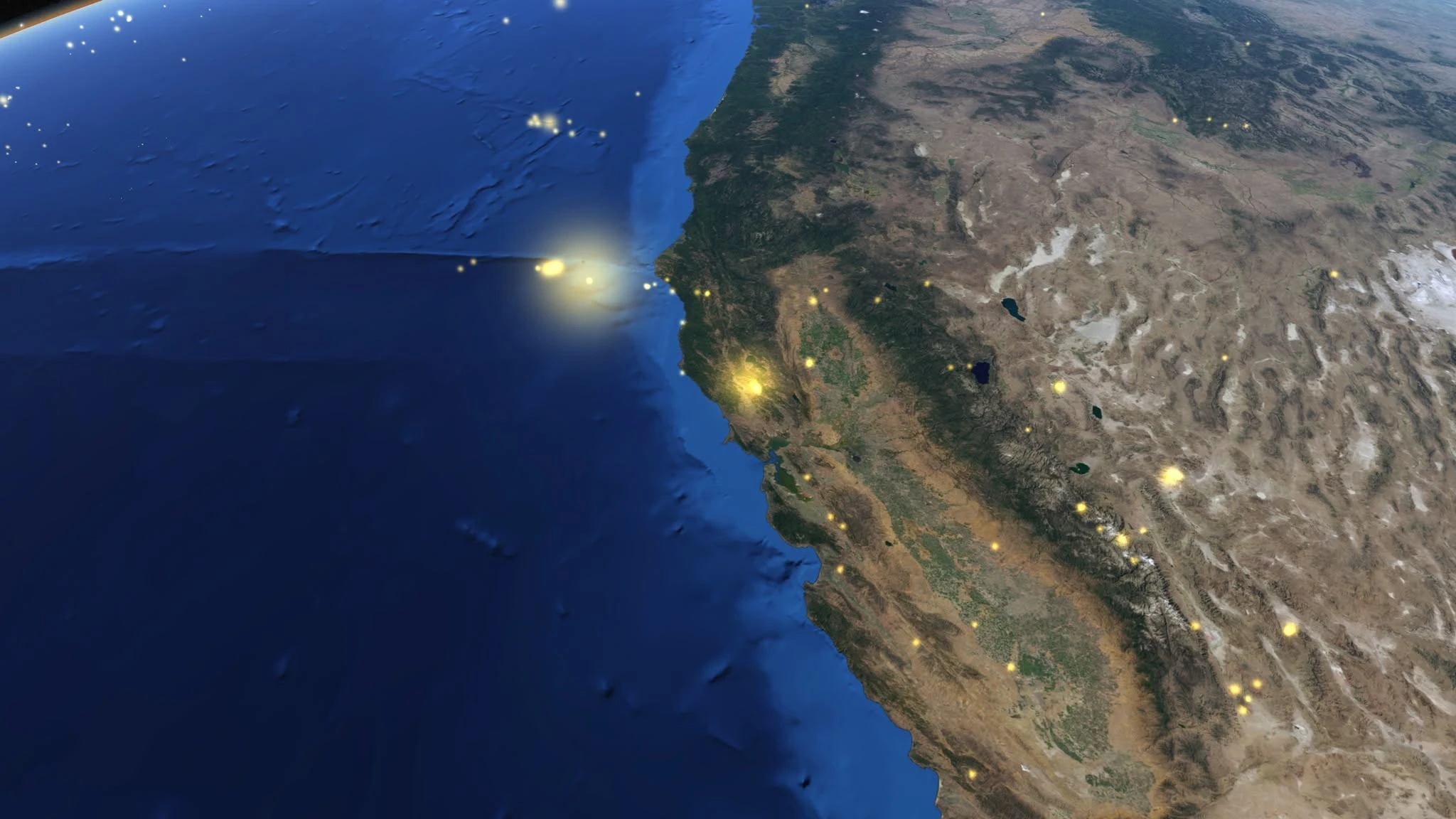
Jonathan swooped us down from orbit into the Yosemite Valley, the software pulling in BingMaps high-resolution tile data as he flew. As we descended, the granite walls of the valley seemed to rise up around us, swallowing the sky as we settled down to the campsites in the valley floor. The Sun set west past El Capitan and the stars glittered above us.
“That’s what it looked like,” Jonathan said contentedly, “smooth as butter.”
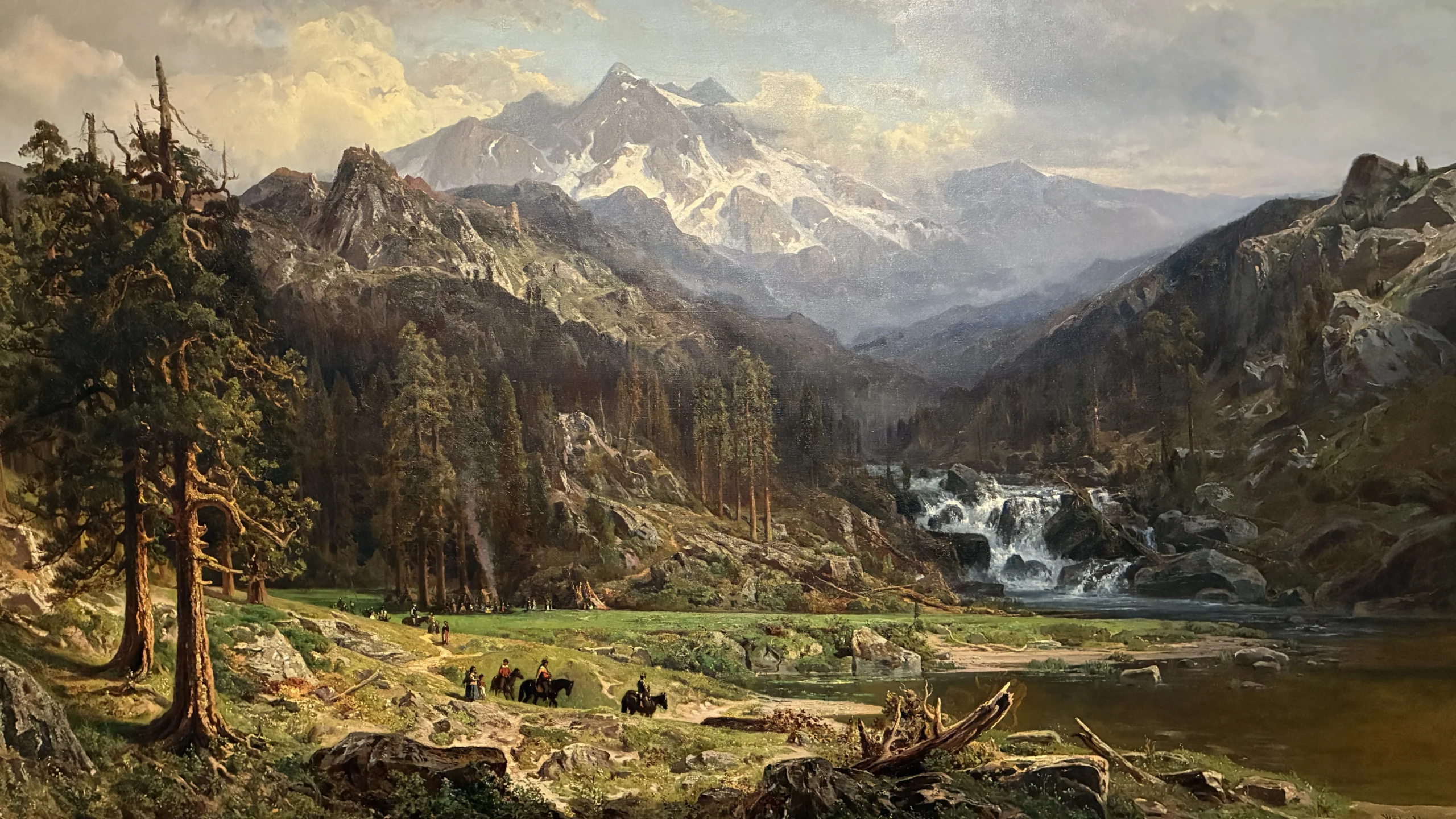
The dramatic scenery of the high Sierra mountains between California and Nevada have inspired visualization for generations. A year or two after that evening with Jonathan Fay in my planetarium, I visited the Oakland Museum of California for the first time. As you enter the museum’s art exhibits one of the first things that greets you is a massive 10’x6’ painting by William Keith entitled Kings River Canyon. Keith, like his fellow Scottish immigrant John Muir, was captivated by the Sierra, and through his artwork sought to bring the experience of the mountains to the public to foster understanding, support conservation, and encourage the daring to trek into the mountains themselves. Given the incredible scale of the painting, it’s immersive in its own right, putting the viewer in the forested campsite scene under the towering granite mountains.
The interpretive placard next to the painting mentioned Keith was known to embellish the real landscapes in his paintings–which led me to assume he was exaggerating the scale of the scene. So too, I assumed, might Jonathan Fay have been using terrain exaggeration on that simulated flight to Yosemite.
Not long after, in my continued explorations of my new home state, did I finally sojourn to the mountains myself, and stopped in awe at the Tunnel Viewpoint where the road first turns into the valley. There was no exaggeration in the scale of these valleys, they were truly awesome.
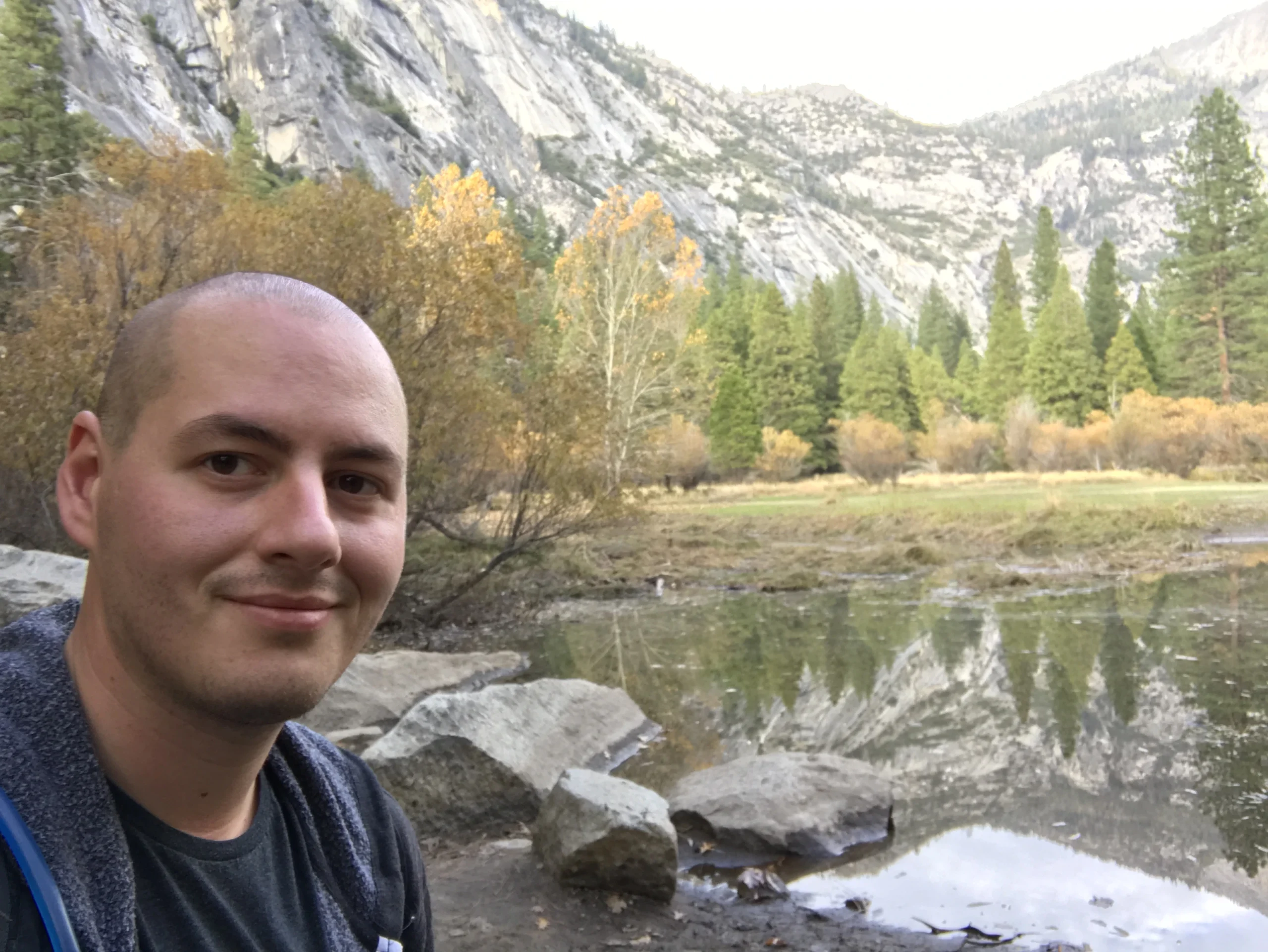
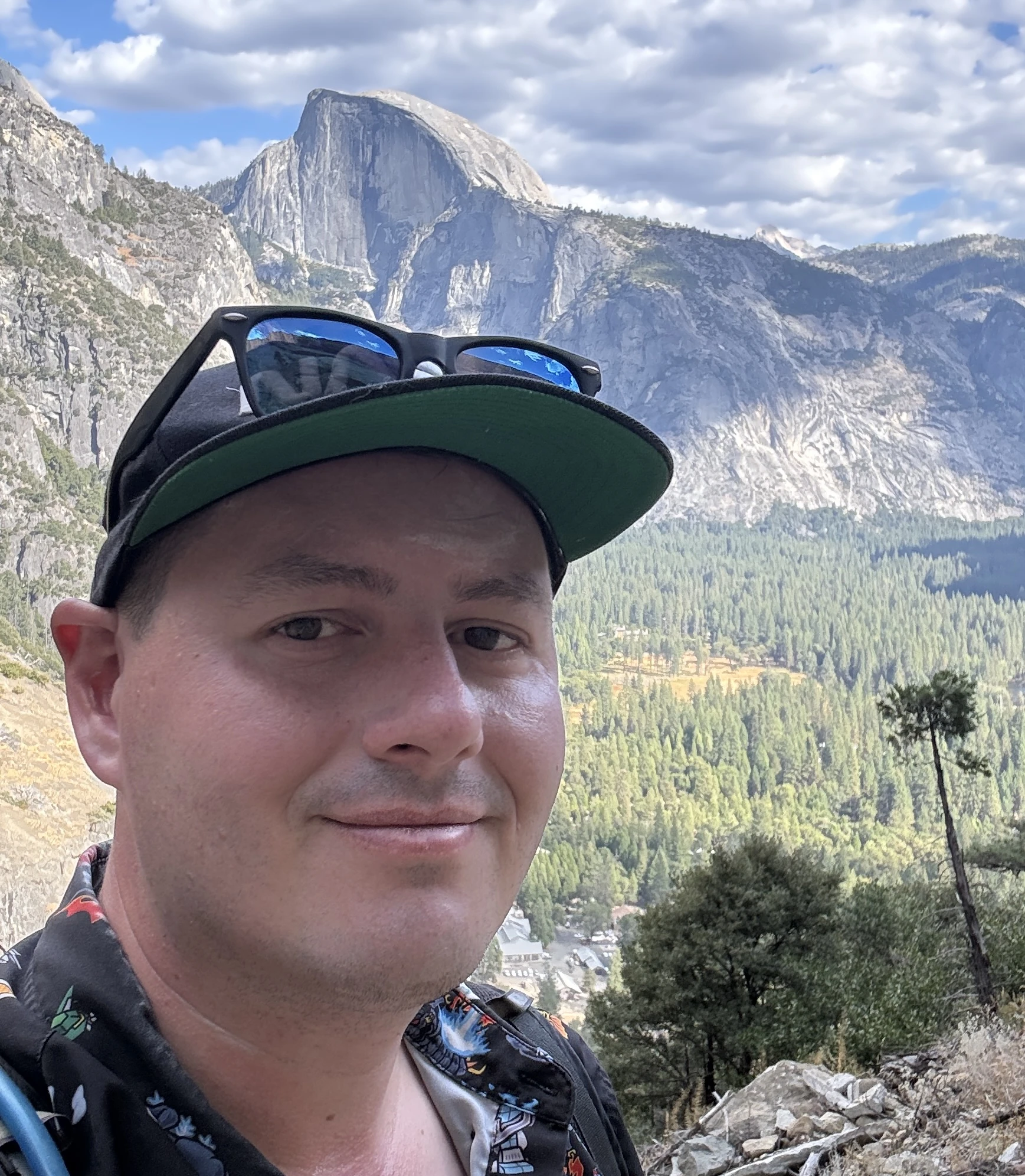
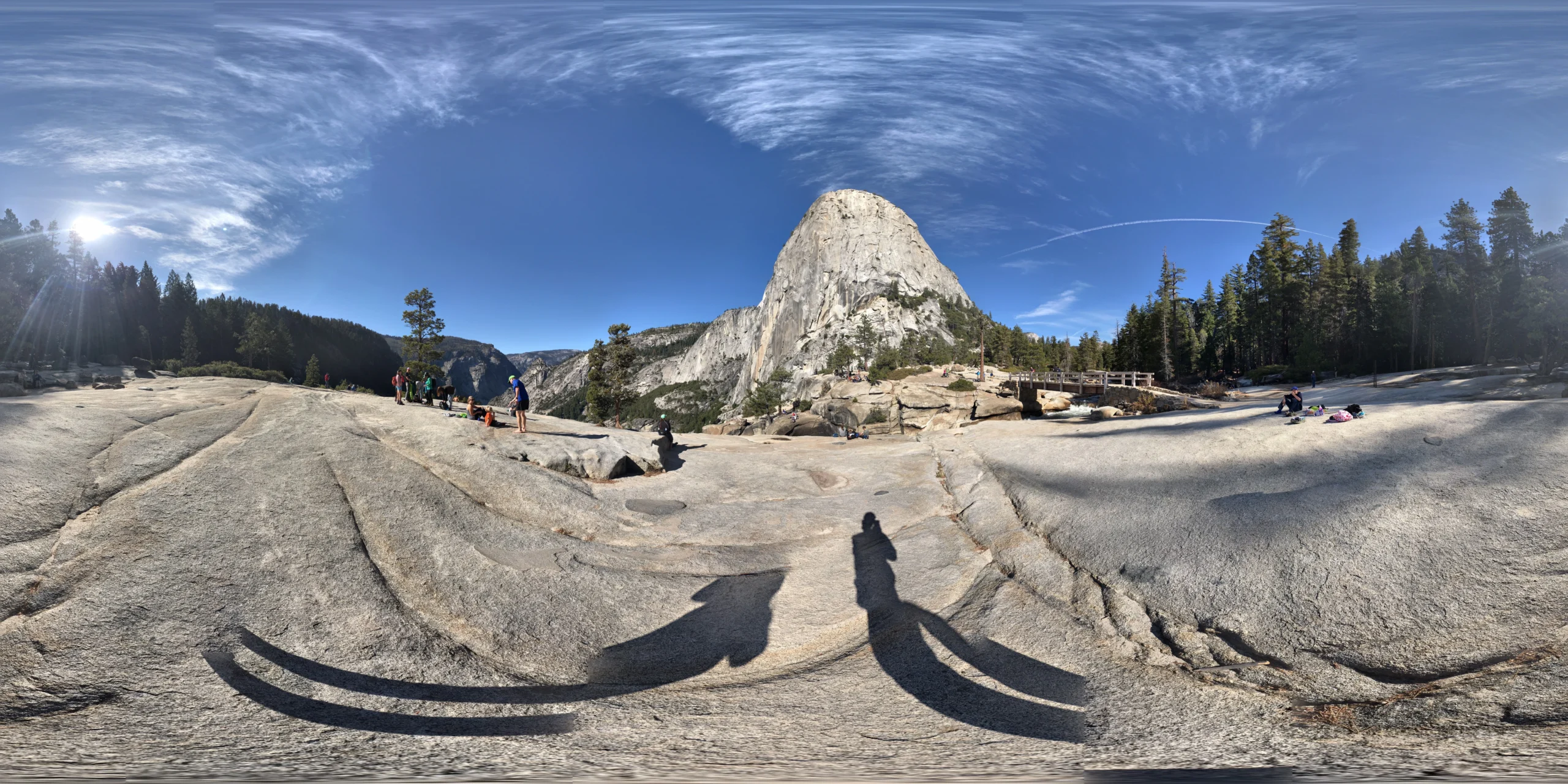
I spent a weekend hiking in Yosemite, walking under the sheer wall of Half Dome, and clambering up the rocks surrounding Vernal and Nevada Falls. Having recently attended Google’s Geo for Good geospatial workshop, I was eager to capture a lasting immersive memory of my trip: 360 photos, captured using google software camera stitcher, which took several minutes of standing and spinning around to collect the scene.
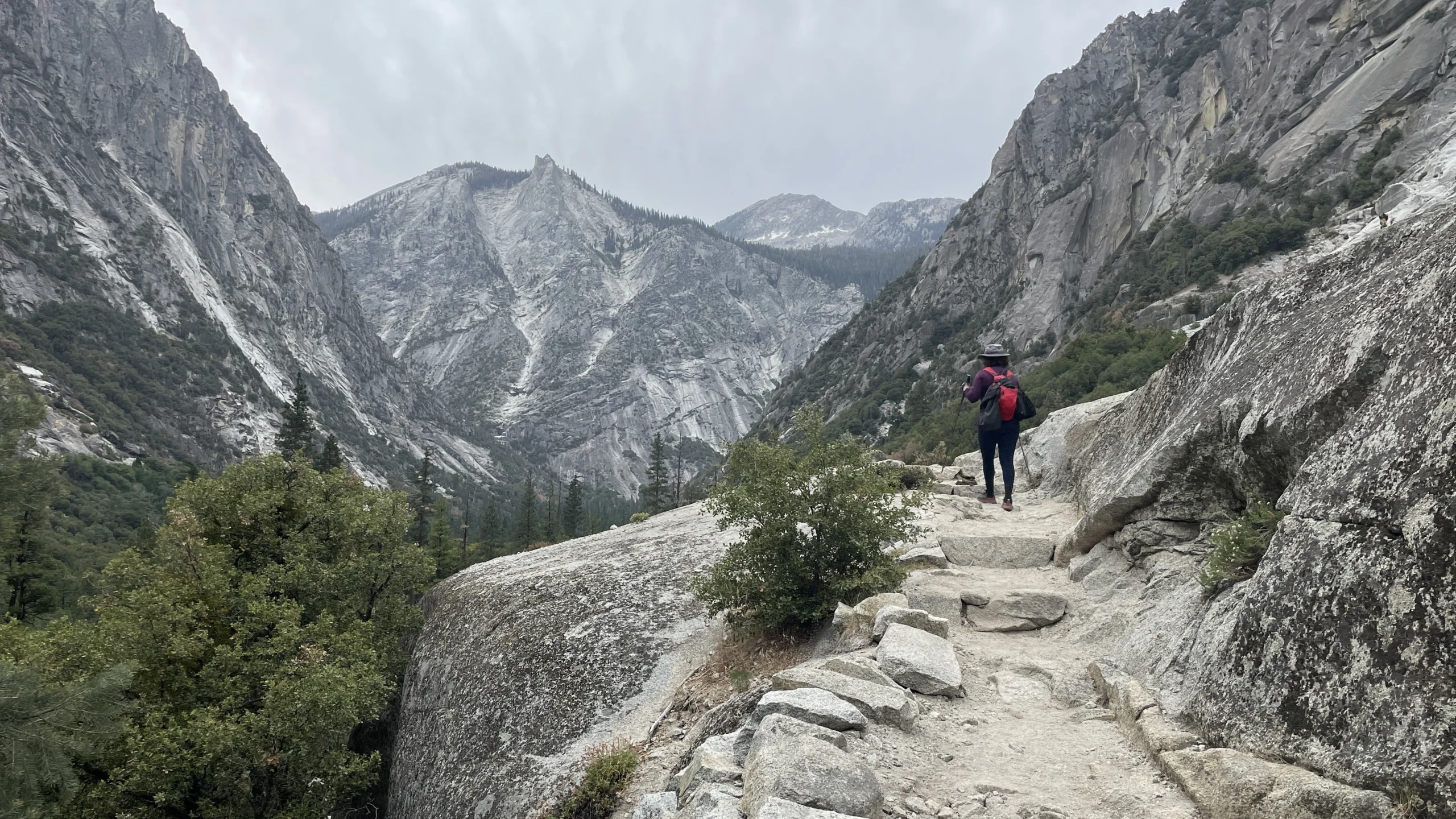
In the years since I also visited Kings Canyon and Sequoia National Parks, and see that Keith’s embellishments were more in combining many highlights from the park into one viewpoint, rather than outright exaggerating the scale of the environment, and I felt content as I stood along the valley that he had captured the experience sufficiently, my awe was in no way diminished in person.
Yosemite also continued to be featured in the planetarium. The Earth Update and Academy Update programs in Morrison Planetarium occasionally had us fly audiences over the high Sierra to look at ecology research data from scientists at the California Academy of Sciences. We supported Avery Hill visualizing zombie forests–high mountain forests that will never be able to regrow the same species that currently populate them due to climate change that has already affected the region; and similarly worked with Jack Dumbacher to look at how experiments with controlled, managed fires in the Sierra–suppressed for over a century by human intervention–can help restore and support the biodiversity of these delicate ecosystems.
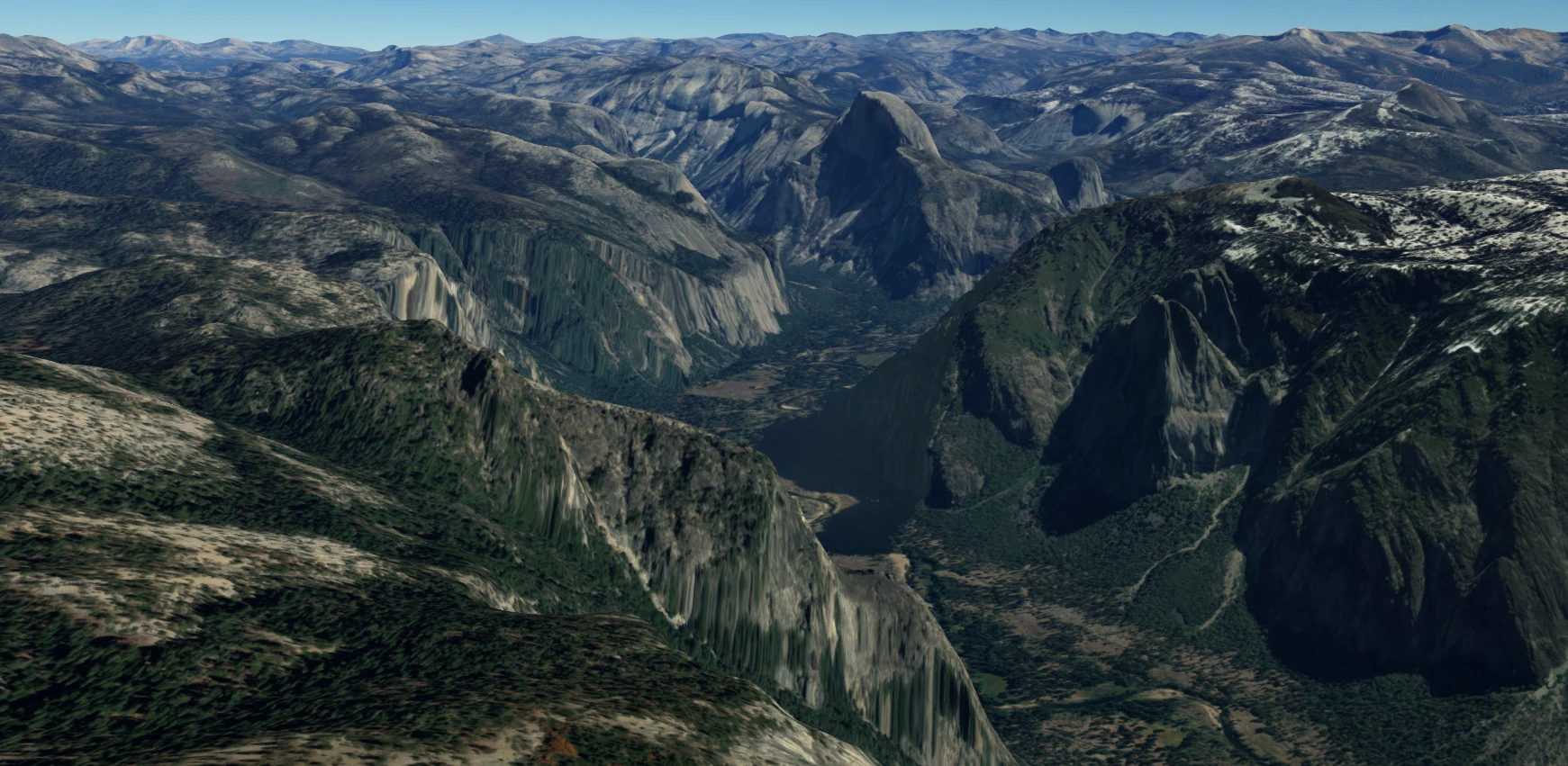
When Morrison Planetarium hosted California Secretary of Natural Resources Wade Crowfoot, I worked with him to open his talk with an OpenSpace-powered flight over California, swooping across the Central Valley and turning in to fly through Yosemite before pivoting back to arrive at the California Academy of Sciences in San Francisco.
Yosemite has regularly featured in my OpenSpace demos and workshops as well. The drama of the landscape is a fantastic showcase for the software’s Globebrowsing terrain engine–a significant evolution over what Jonathan Fay demoed in WorldWideTelescope over a decade ago, while its location almost exactly due east of San Francisco (with the cobra-head shape of Hetch Hetchy Reservoir just north of it) makes it easy to spot while free-flying over the state.
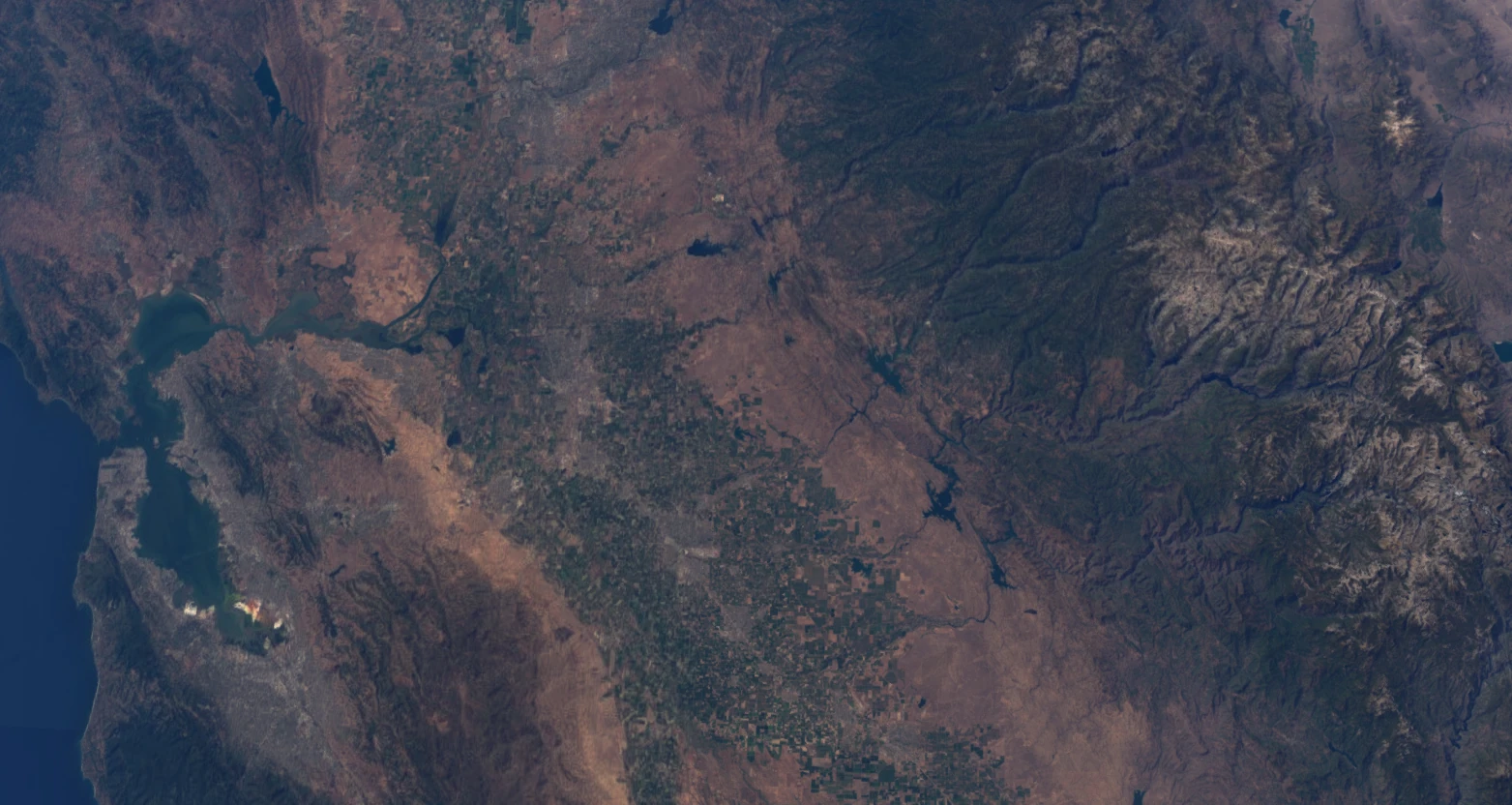
I was doing just such a demo in Berlin this February, encouraging their presentation team with the variety of immersive stories they could tell with OpenSpace when a hand shot up, with a familiar question:
“This is with the terrain exaggerated, yes?”
“No,” I assured them, “it really is this dramatic.”
That exchange inspired me: the next time I went back to Yosemite I needed some fresh 360 photos so I could show exactly that. I had the opportunity to return to Yosemite at the end of September, now armed with a modern 360 camera capable of doing in seconds what took me minutes ten years ago.
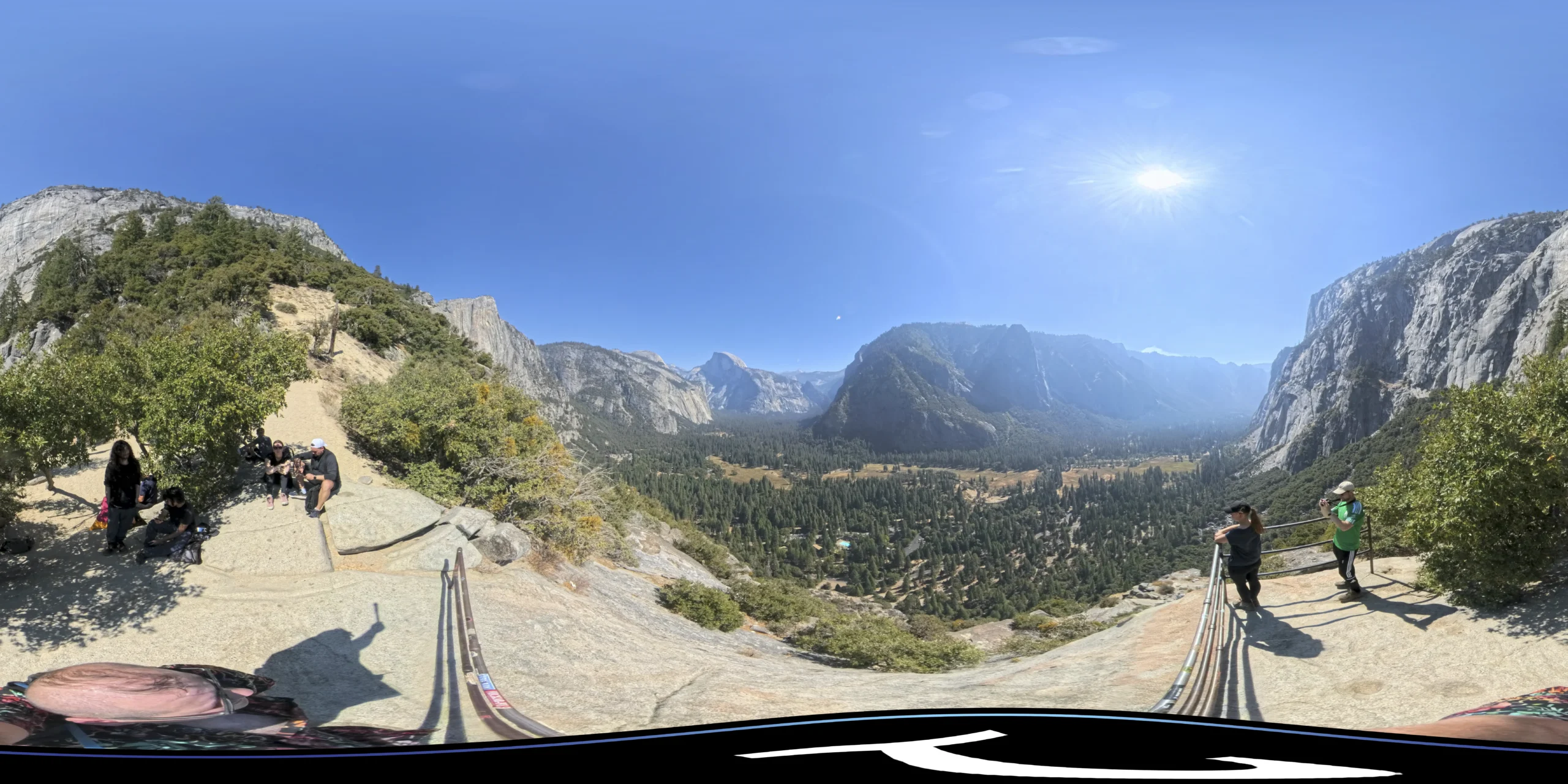
As I hiked through the park, I had to ponder some of my own vision for what immersive media can achieve. Since seeing some of Iconem’s 3D scanning demonstrations at the Ars Electronica Festival a few years ago I have envisioned the conservation power of immersive media. We know that people care most about places they have visited, and I have pondered if we can now capture and display real environments with enough fidelity that we can build empathy in our audiences and spare these sites some of the deleterious effects of tourism. I’ve also had many cheer on the idea for its ability to promote access to destinations that are economically or politically challenging to visit, or just aren’t available to those with mobility impairments.
I hope that we can and will achieve those noble goals. At the same time, as I stood in a cleft of rock, feeling the wind buffet me from alternating valleys, watching the trees hundreds of feet tall sway like a carpet beneath me, and behold the billowing and bloom of clouds above the granite monoliths, I did have to admit: there is something irreplaceable about the in-person experience.
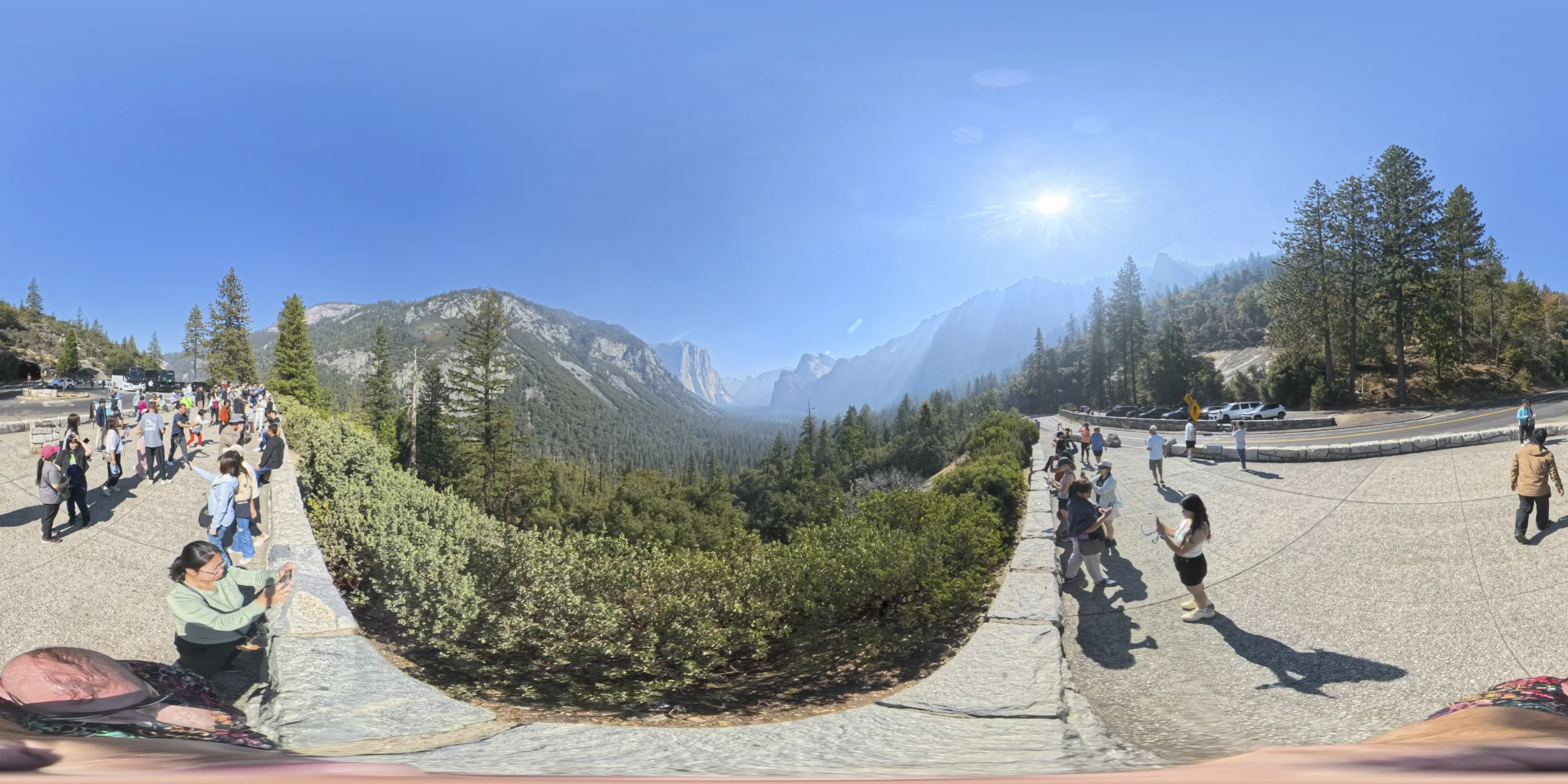
We can do a lot of very cool and very important stuff with planetariums and immersive experiences. I hope we can help save the world, preserve fragile ecosystems and cultural heritage sites, and connect things in scale and experience in innovative ways.
But I hope we never lose sight of how important it is to step outside and experience the world ourselves.
Photos are free to use for any purpose under the CC-BY license, just credit Dan Tell, Tau Immersive.