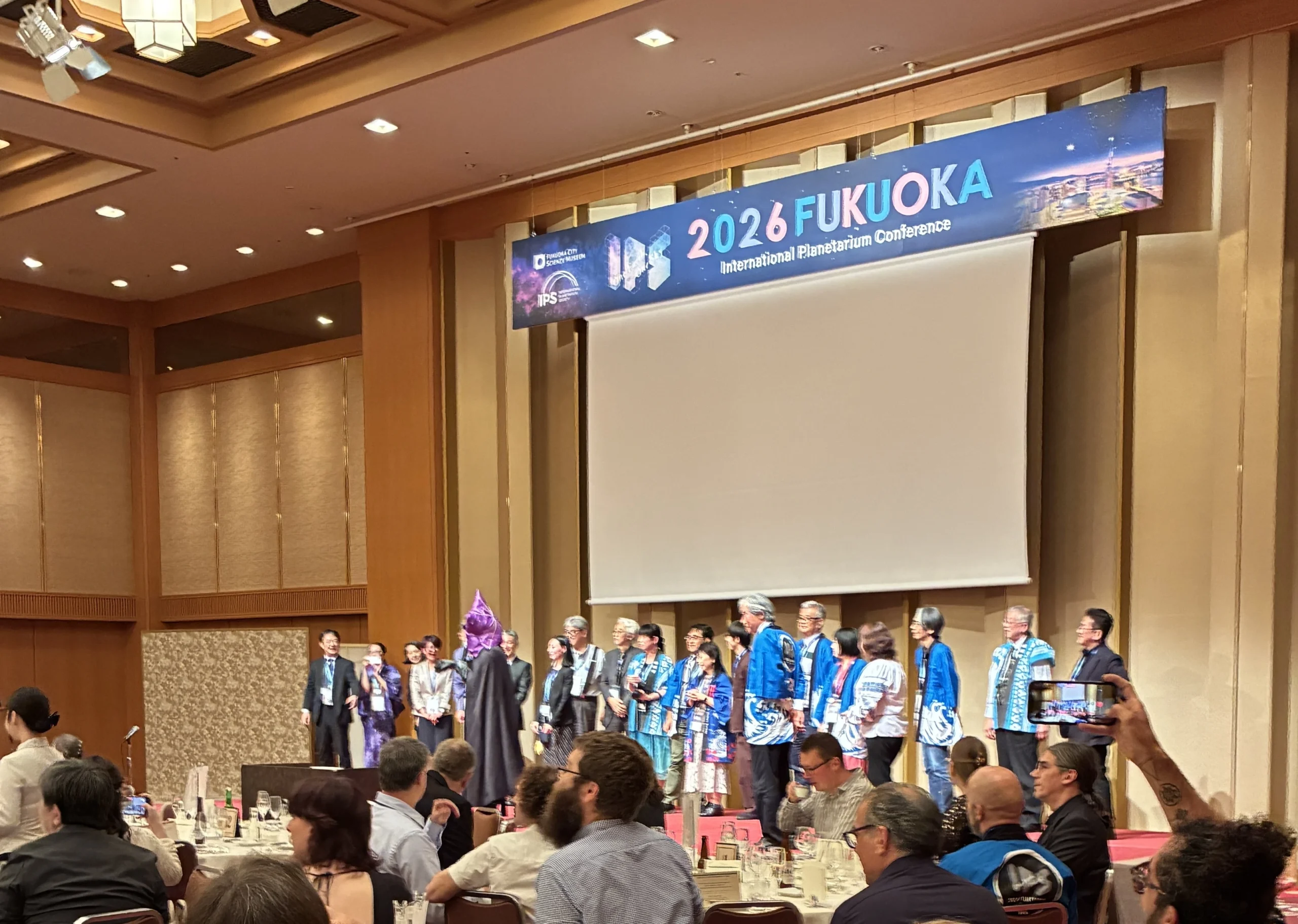
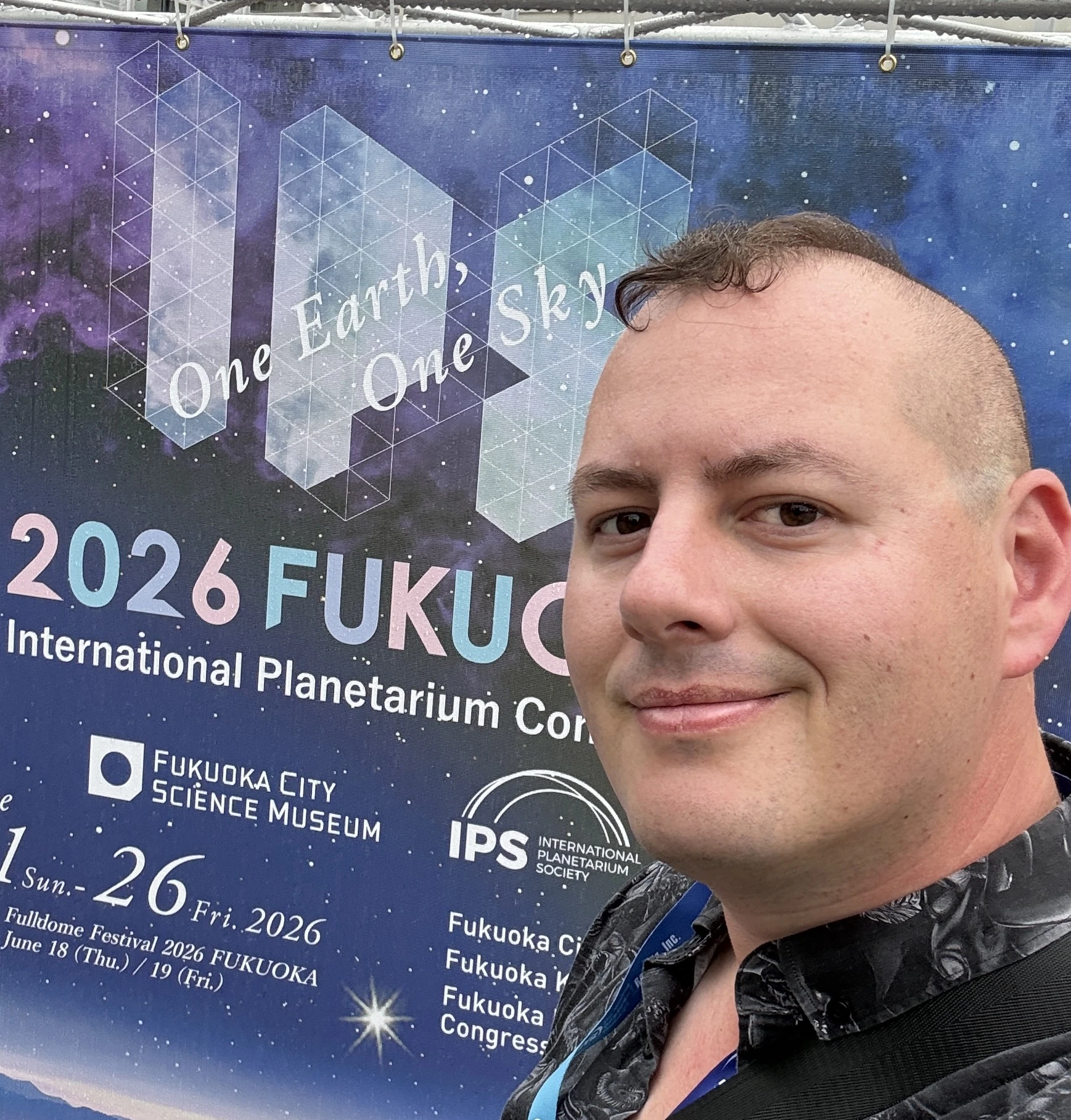
“What are your biggest takeaways from IPS?” A colleague asked as a group of us eating lunch after the International Planetarium Society’s business meeting and closing ceremonies of the 2026 conference.
Thinking back through the week of IPS 2026 Fukuoka, an answer very quickly came to me. “That the world is ready for OpenSpace, and OpenSpace is ready for the world.”
The conference wasn’t just focused on working with OpenSpace, but it certainly featured in many of my conversations throughout the week.
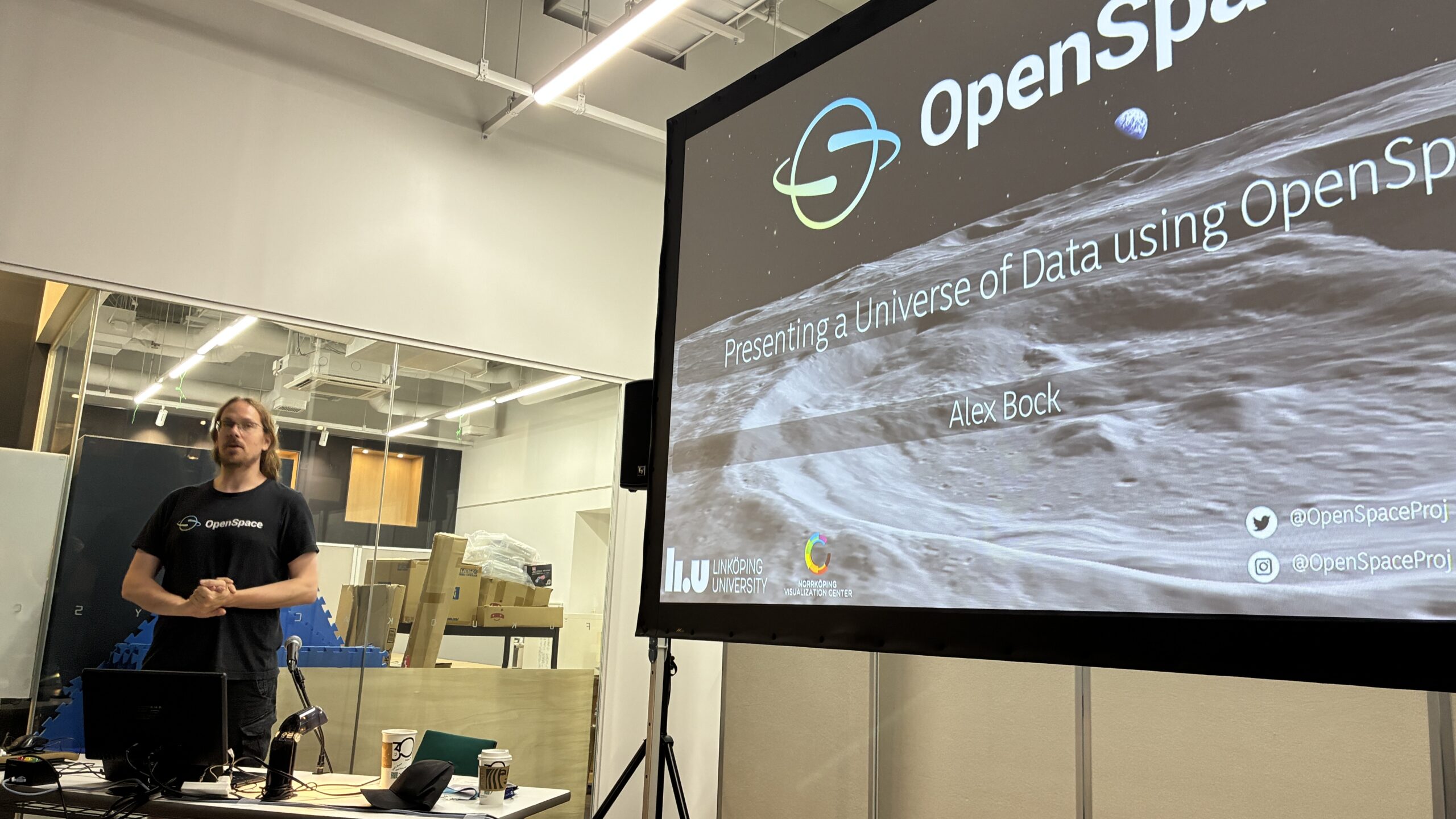
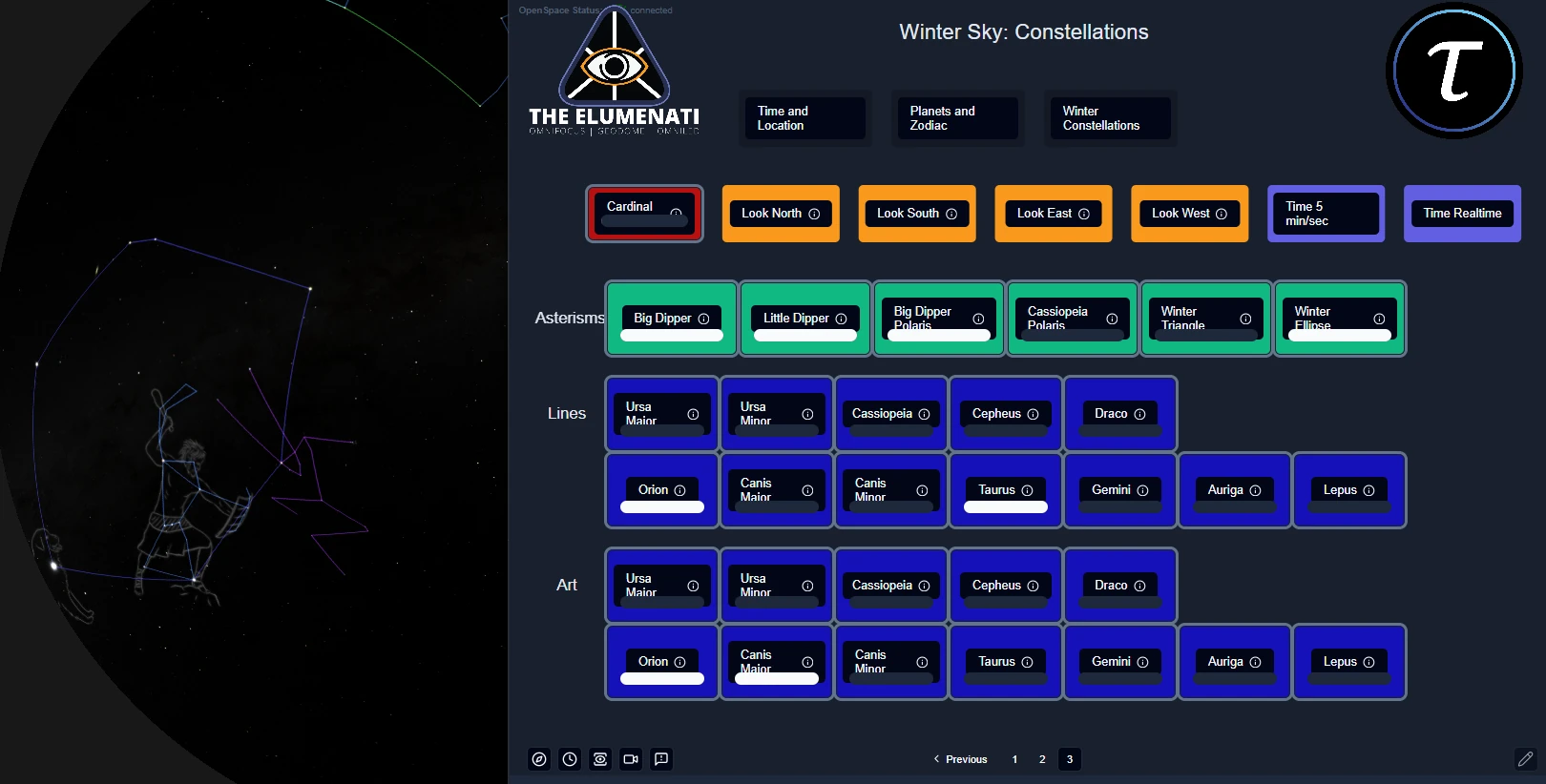
Some of that began on the first full day of the conference, when the project’s head of development Alex Bock led an introduction to OpenSpace workshop, where conference delegates from every continent crowded together into a classroom to get started with the open-source planetarium software. I was honored Alex invited me to support the workshop by presenting the last hour of it, focusing on using OpenSpace as a program presentation platform through its ShowComposer control panel building utility, based on tutorial materials I’ve created for my own OpenSpace training classes.
This led to conversations that continued throughout, as individual planetarians, regional planetarium associations, and even software vendors struck up conversations with us throughout the conference, curious about how OpenSpace could support their ambitions. Particularly inspiring were conversations about the potential for OpenSpace to expand access to planetariums in Africa, which made me feel like the great challenge for the second century of the planetarium I identified in my keynote speech at the Planetarium Centennial Gala was going to be something we could start to face.
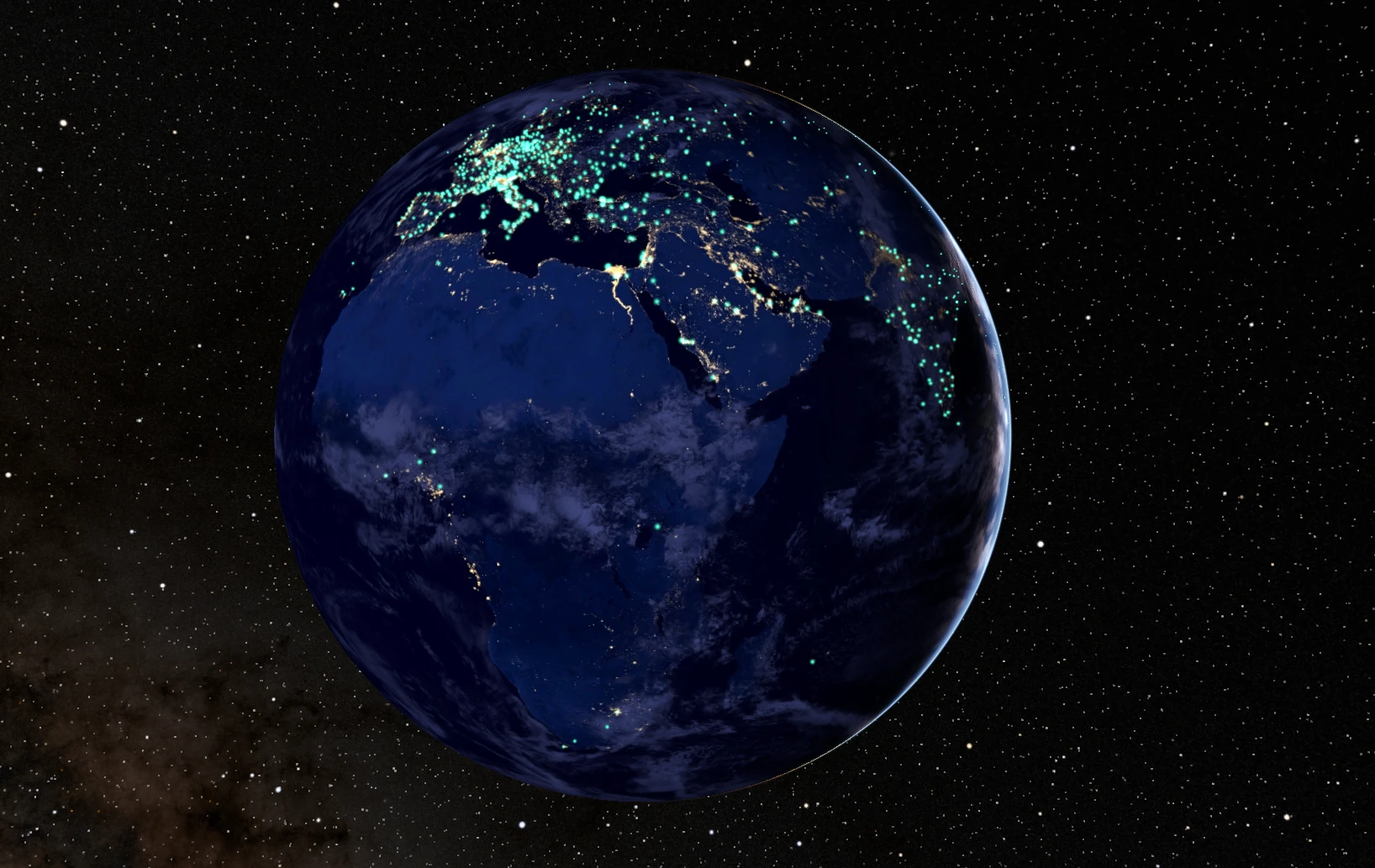
A distribution of planetariums around the world (light blue dots), from Ghosts Among the Stars.
Those conversations connected nicely with the panel on the Climate Stories project. Climate Stories was a collaborative project I helped support before I left Morrison Planetarium to start Tau Immersive, building on our experience with using planetariums for local climate change visualization and co-developed community storytelling through programs like the Worldviews Network and Earth Update. Even though I had to step away from the project when I left Morrison, and ultimately the project’s grant funding was cut by DOGE, it was gratifying to be able to share my experience from the conception and initial stages of the project, as well as lessons learned to help others bring these ideas to life in new forms. Key to that was making the planetarium a real resource to community partners, and making it a tool that centered their story and expertise, with the planetarium staff serving as technical adviser and supporters. I’m grateful to my colleague and friend Tiffany Stone Wollbrecht for inviting me to be part of that panel.
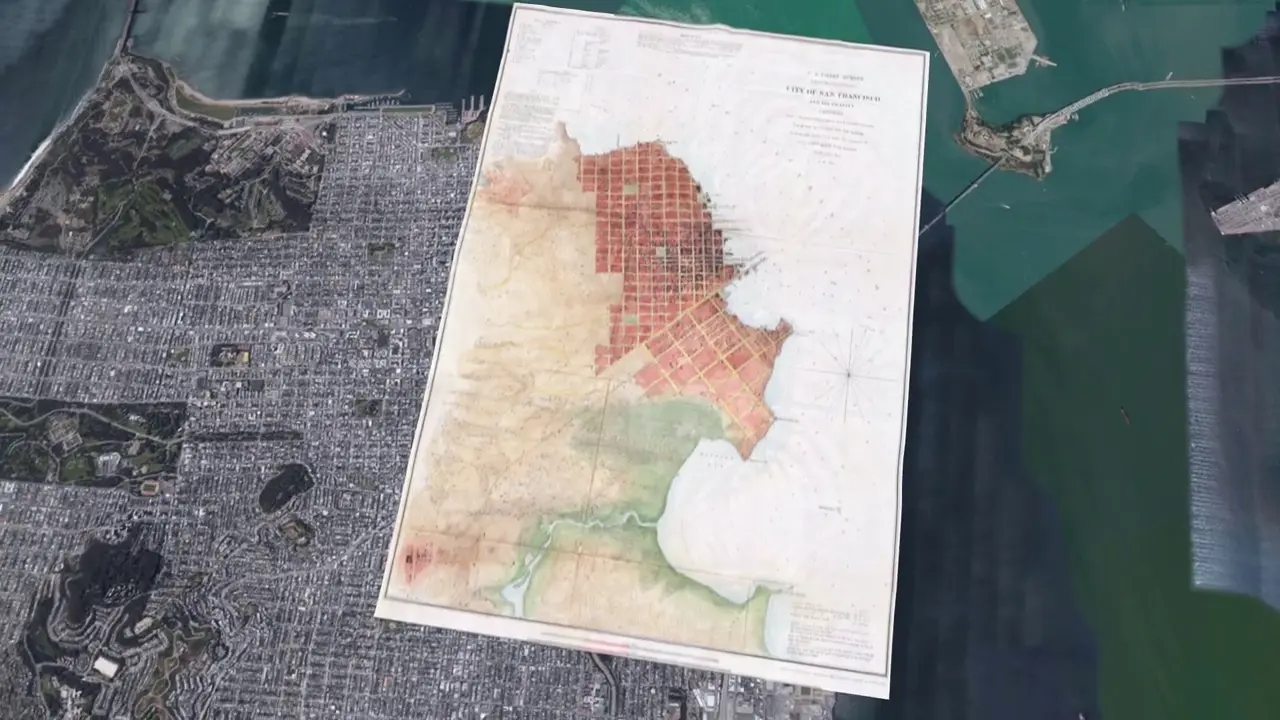
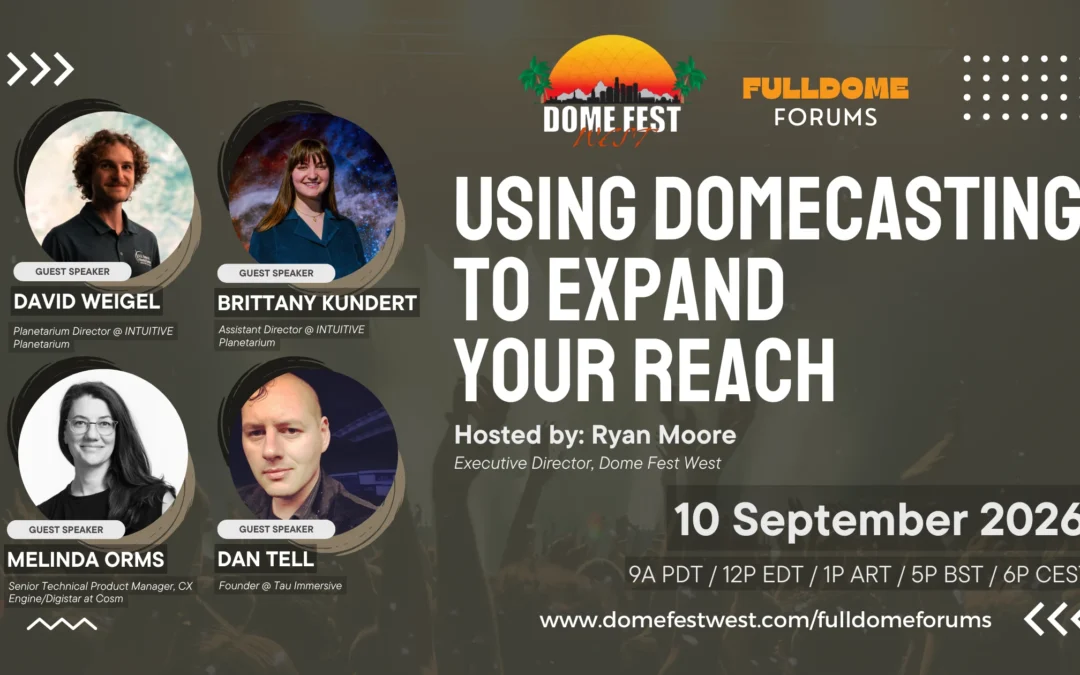
I also sat on a panel I planned with Björn Voss from Planetarium Hamburg, along with David Weigel from the US Space and Rocket Center and Derek Demeter from Seminole State College. We revisited our panel discussion from IPS 2024 on dome streaming—the ability to transmit and share events between planetariums. In 2024, much of the discussion was about the technical challenges. This year we observed many of the technical challenges solved. The new challenge we highlighted would be content: would there be meaningful enough events and enough interest in participating to make dome streaming work?
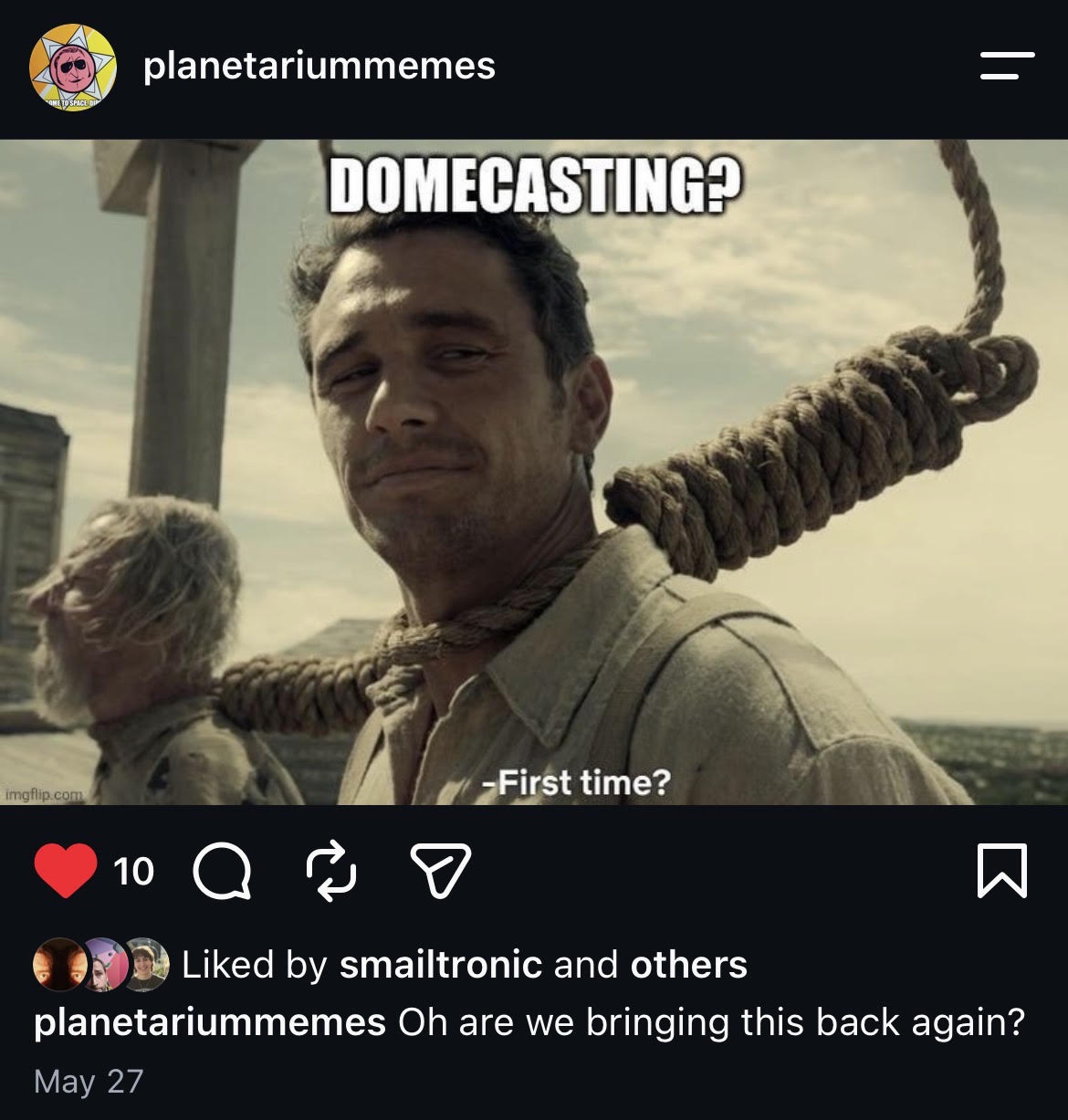
This image from irreverent instagram account planetariummemes posted after a Digistar webinar on domecasting resonated with me.
I must admit, in the planning stages of this panel I felt quite negatively. I’d pioneered several events at Morrison, including streams with the SAT Dome in Montreal, collaborative presentations with the Adler Planetarium, and deploying Video-over-IP solutions to power high quality streams. I felt like we’d already been experimenting for over fifteen years without much interest to show for these attempts. But the discussion left me hopefully that as the technology becomes easier, our community has the imagination and vision to really make cool, collaborative events happen through dome streaming.
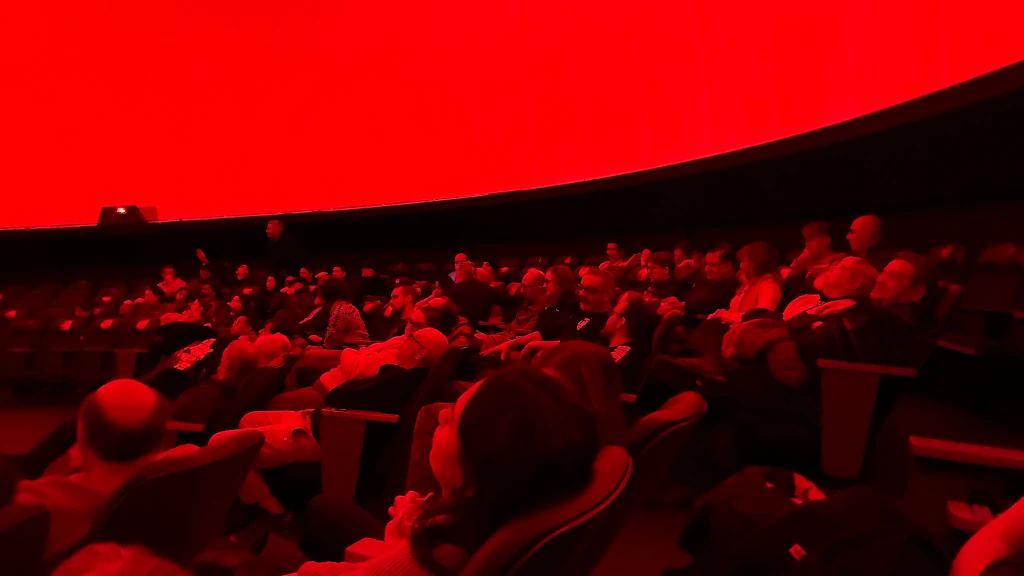
Audience for the Dome programming block at our friends, the HR MacMillan Space Centre in Vancouver.
Looking more broadly, I also joined fellow Dome Fest West board member Kate McCallum’s panel on the future of planetariums as cultural venues. This was an amazing discussion and I got to share insights from my own experiences at Morrison and what I now see working with planetariums around the world as we experiment with how a variety of programs can really make our domes into community spaces. As we talked, I realized with some amusement how us on the panel were all brought to the planetarium not by astronomy, but by its attraction as an artistic medium. I was also glad to squeeze in a remark from a conversation I’d had just the night before: “maybe we need to get past our obsession with ‘no food and drinks in the planetarium’ because our colleagues who sell concessions see almost all of their profits from food and drink sales.”
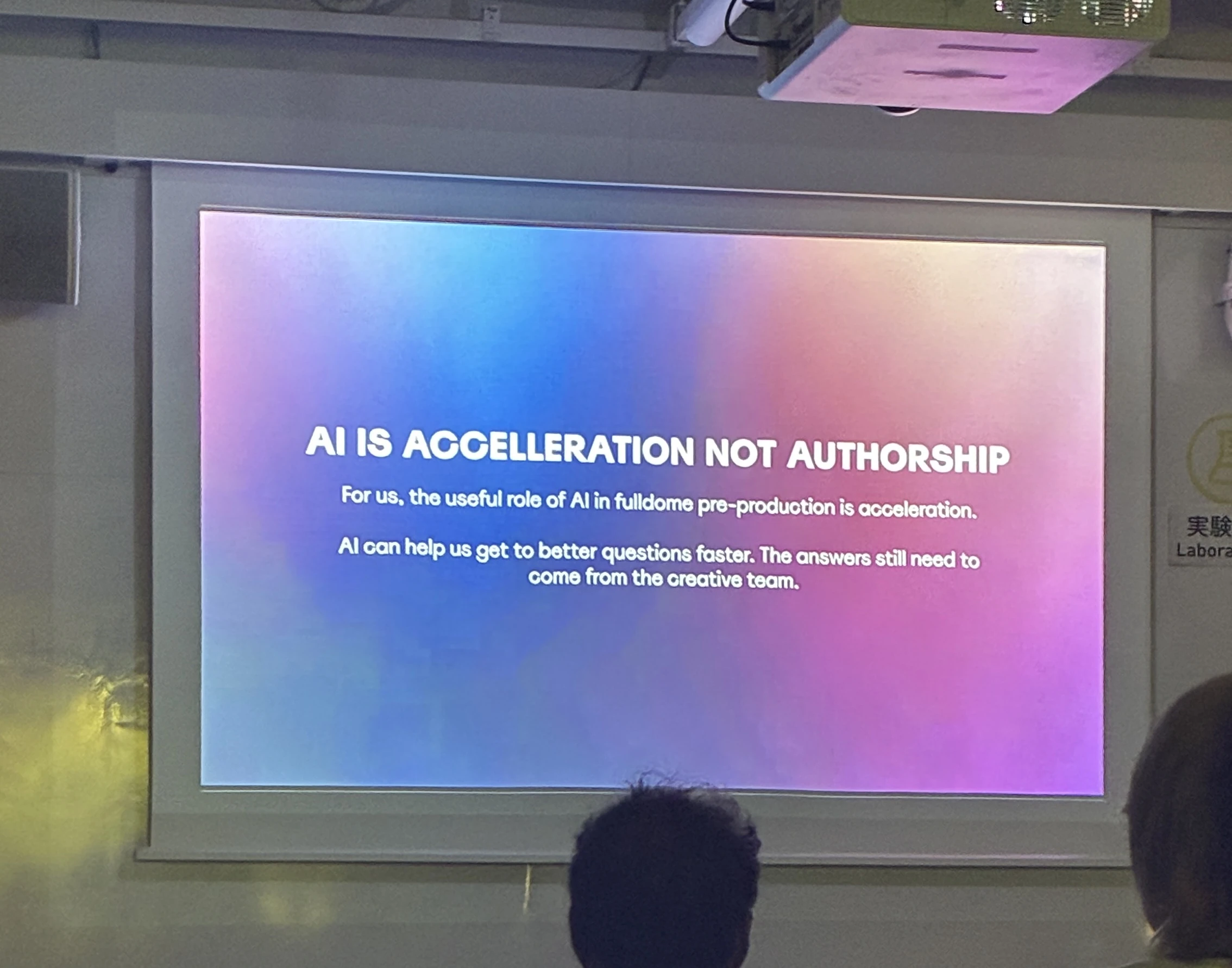
I’m grateful for the many inspiring sessions I got to attend. Paul Mowbray and Aaron Bradbury from the UK’s National Space Centre delivered some incredibly thoughtful sessions on the role of AI tools in the production workflow to aid and accelerate the work of human creators. Brittany Kundert from the US Space and Rocket Centre led a great workshop on business strategy, which certainly inspired me for how I can help clients find their success. There were also many great presentations on emerging technologies and the strength of realtime software systems to empower creativity and storytelling—mirroring my ambition for how I have always tried to support the planetarium community.
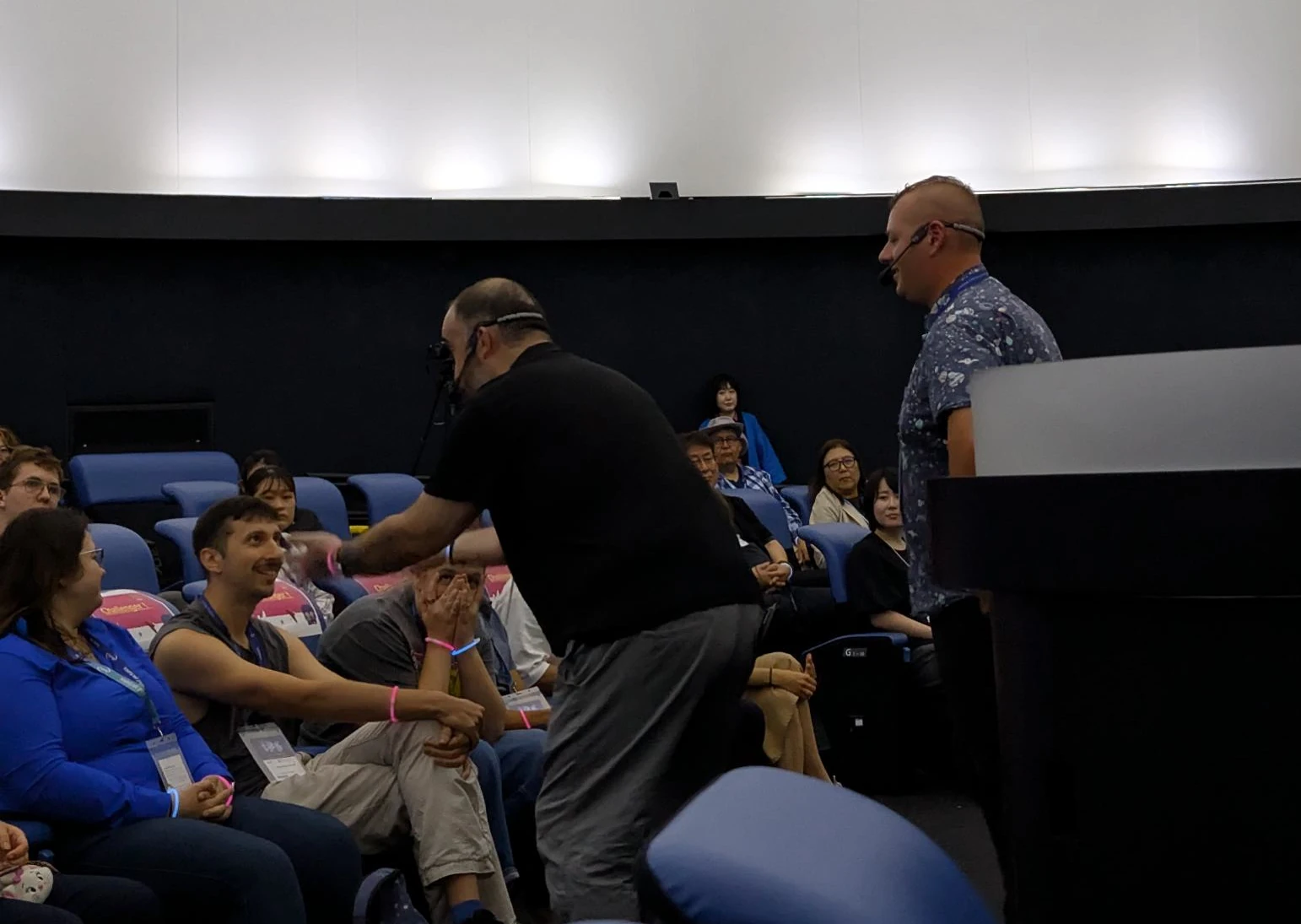
Hyping the Shootout participants with Michael McConville. Photo courtesy Mike Smail.
And of course, a highlight of the conference was one of the closing events: the Constellation Shootout. Having seen our irreverent competition at IPS 2024 in Berlin and at GLPA 2025 in St. Paul, both the Konica Minolta team and our hosts at the Fukuoka City Science museum invited me and Michael McConville to bring the Constellation Shootout to Japan. Contestants from around the world showed off their planetarium skills, and after an hour of thrilling competition we were left with an unprecedented four finalists! We were grateful to be invited and bring a fun, approachable game to Japan.
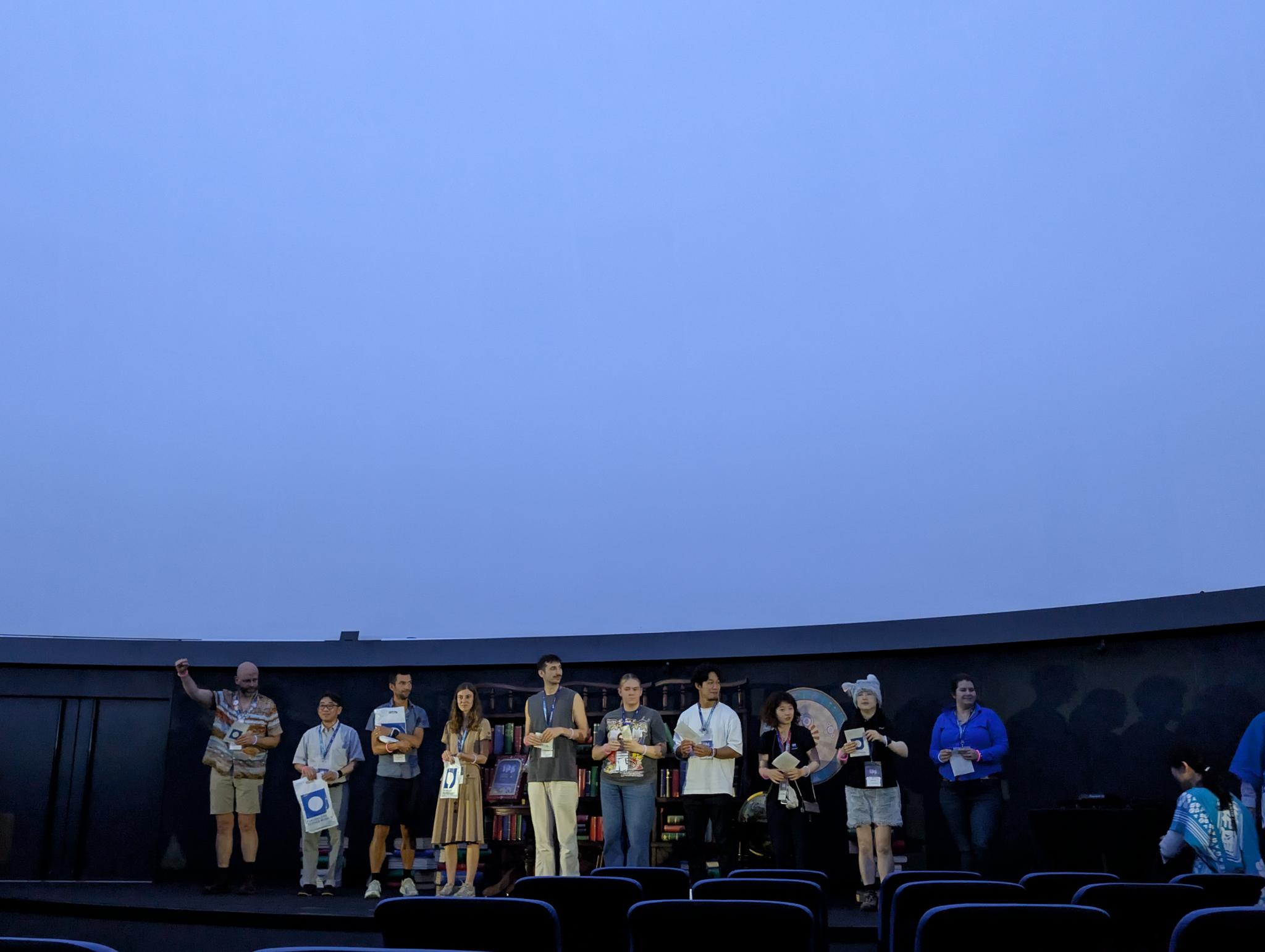
The shootout participants cheering the victors. Photo courtesy Mike Smail.
More important than competition though was togetherness. There were many moments throughout the conference, be it at the conference banquet, or as delegates from around the world bonded at karaoke during Thursday’s happy hour event, when we all reflected on the spirit of international friendship and collaboration that permeated the conference. Many expressed what I had also said three years ago at the Centennial: science education has the potential to heal the world and encourage a better, more peaceful world.
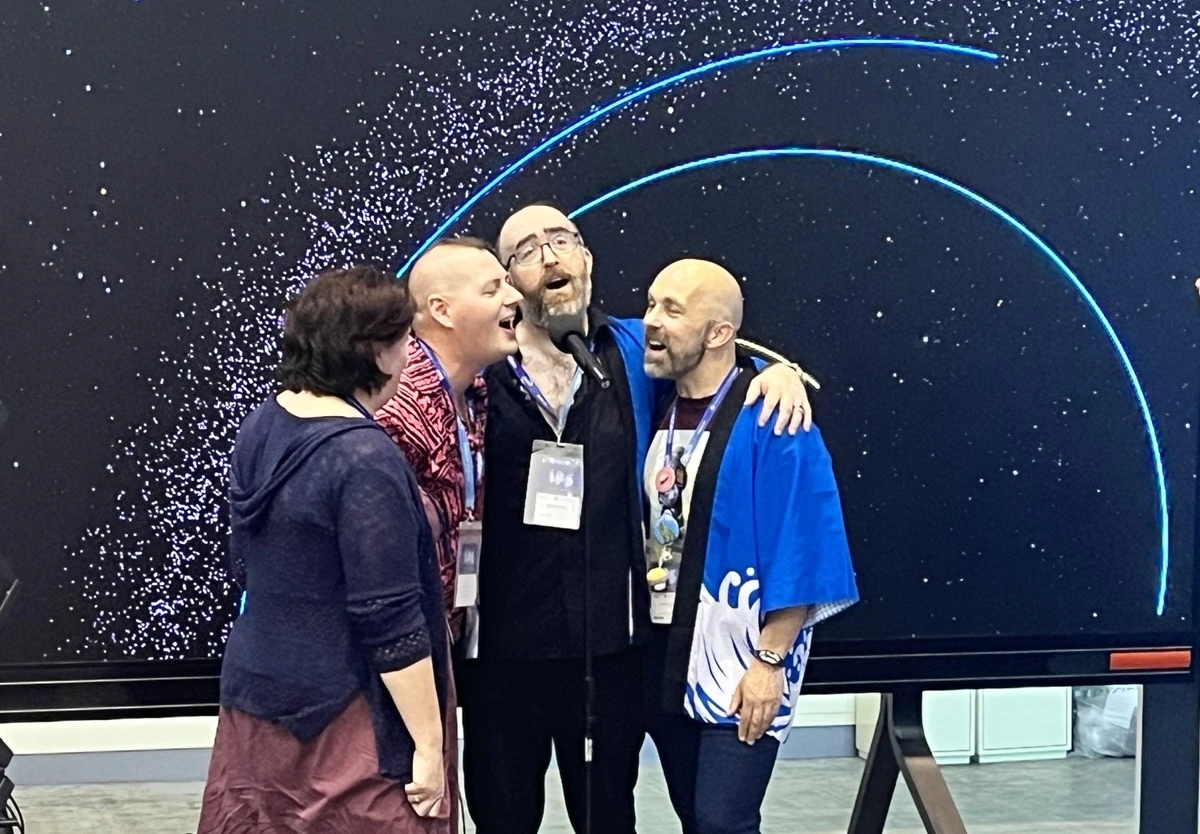
For me the conference was also deeply, personally meaningful. Two years ago at IPS in Berlin I wasn’t sure where my career would go next, and even if I’d end up remaining in planetariums. It was part of an avalanche of events that led to my decision to start Tau Immersive. This year came with the joy I still get to be part of this professional community, and to feel such deep embrace from my colleagues and friends around the globe—and the excitement we would have new opportunities to work together. As I said many times, one of my favorite things is collaboration, and Tau Immersive gives me the freedom to say “yes!” to many exciting opportunities.
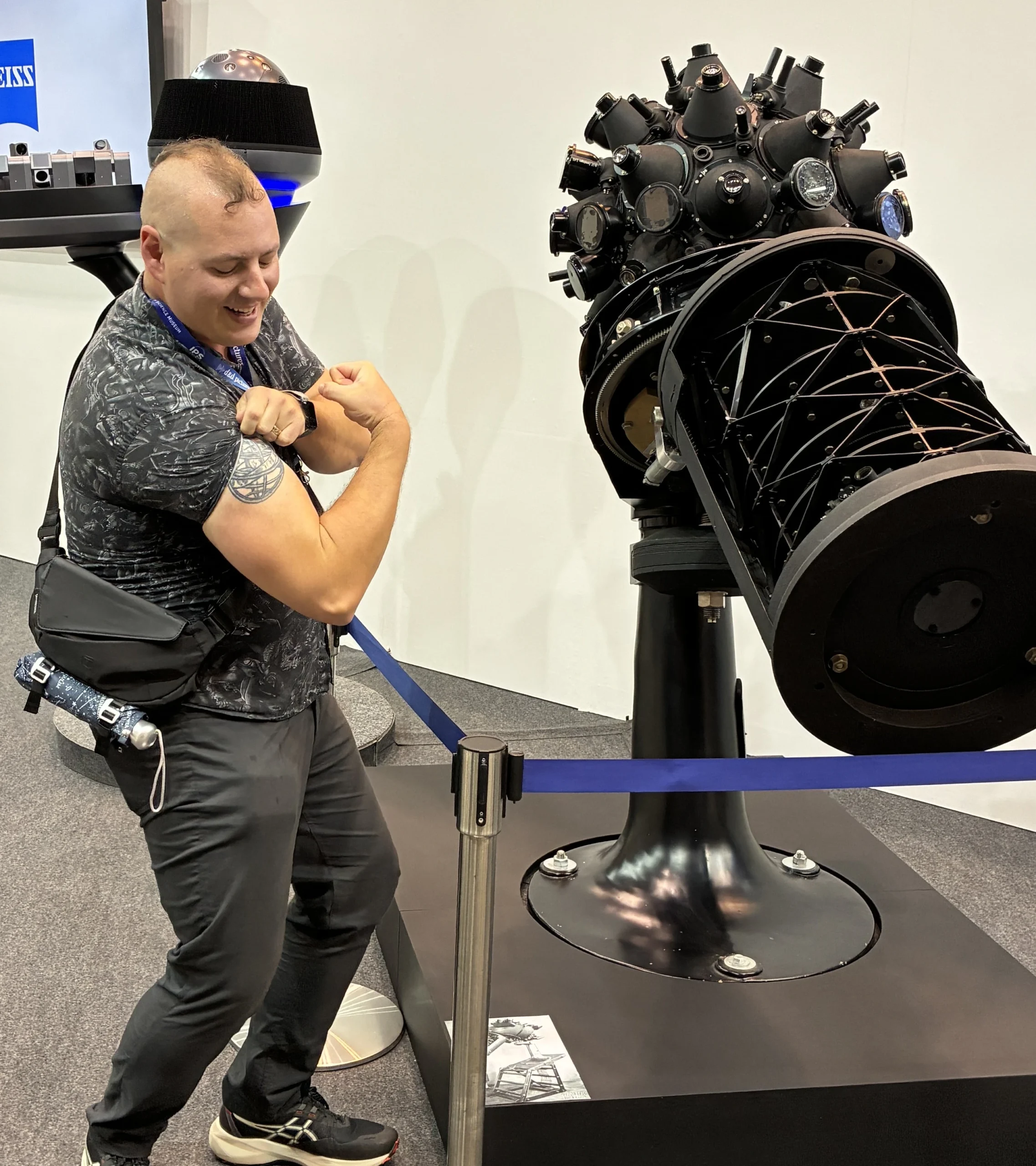
Posing with my armillary sphere planetarium tattoo next to the 1923 Model I planetarium projector.
A tremendous thanks to our hosts in Fukuoka, Japan and to the IPS board for planning such a fantastic conference. See you in 2028 in Buenos Aires!