“It wasn’t traditional astronomy programs that first really piqued my interest in planetariums,” I was talking to dome innovator Ed Lantz following one of the sessions at Dome Fest West, “it was actually seeing Laser Zeppelin when I was nine that really got me hooked.”
The diversity of what a dome theater can do has always been at the center of what has inspired my work. No question, I like astronomy, and I think planetariums have both a valuable role in astronomy education, research data visualization, and inspiring the next generation of scientists and engineers. But they also have limitless possibilities to do other things as well. I remember describing what I do in a fulldome planetarium to a new acquaintance who summarized it succinctly: “oh, so you’re like Ms Frizzle with the Magic School Bus.”
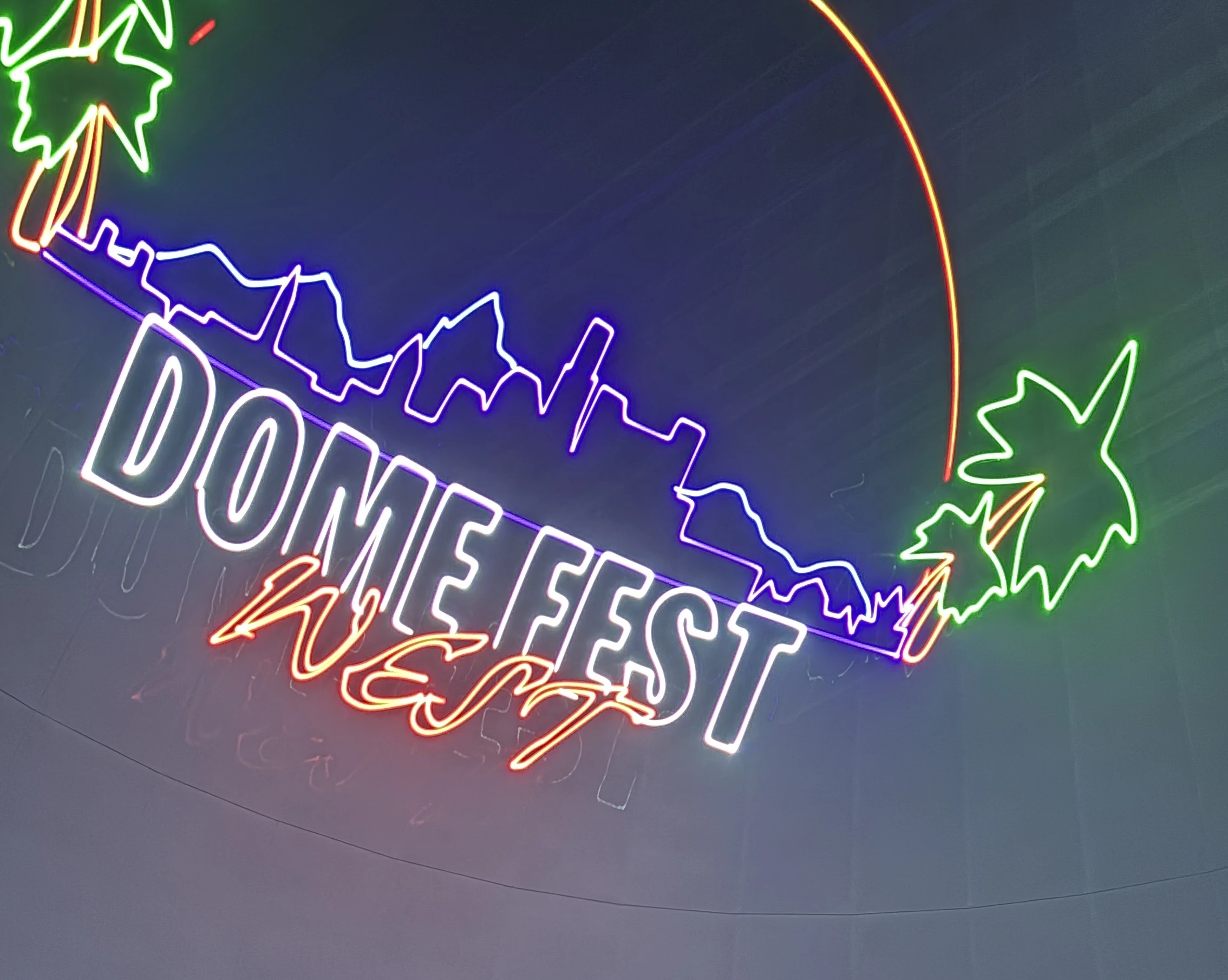
I think Dome Fest West perfectly highlighted the diversity of what a dome can be this year, showcasing a range of programs that ranged from traditional astronomy, to stunning musical celebrations, to meditations on the inner cosmos of the mind and self. This diversity of experiences bring tremendous value to the planetarium community, giving theater operators the opportunity to sample the latest content available and make choices about the directions they want to explore with their theaters and where they want to take their audiences, as well as interact directly with the producers to help shape the landscape of future programming and productions.
I’ve been an advocate for years that the reason to have standards and best practices for dome productions isn’t to gatekeep the quality of content in them, it’s to make the methodology and tools for production democratized and accessible to anyone who wants to work in a dome. Many times throughout this year’s festival, my heart was warmed feeling that we truly are at the point where the gates are open, and domes are becoming an accessible medium for artists and producers.
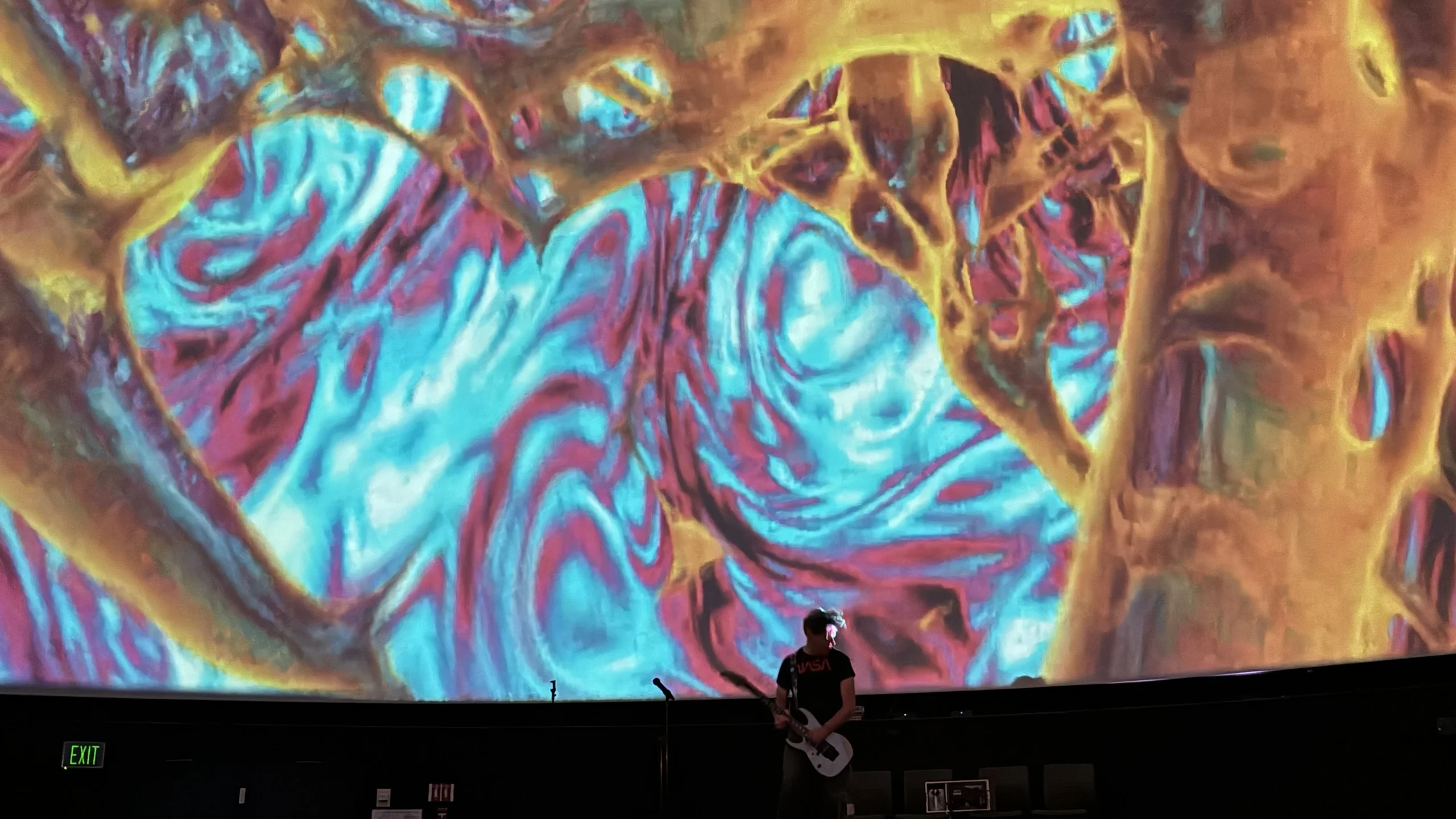
Jason Achilles performs Rovers, Rockets and Rock n Roll
Program Highlights
The center of Dome Fest West, of course, are the shows themselves. Almost 40 of the latest dome products were screened throughout the festival, organized into themed blocks by content type and experience. This made it easy for theaters with a targeted program goal to attend the specific blocks that featured material they might specifically be shopping for, and the selections were expertly curated by the Dome Fest West jury.
Probably my favorite experience of this year’s festival was featured in the first screening block thematically aligned to more traditional uses of the planetarium to explore astronomy. The Brno Planetarium and Observatory brought their production Edge of the Sky. The simplest description would be that this is a dome show about clouds. The real experience was so much more.
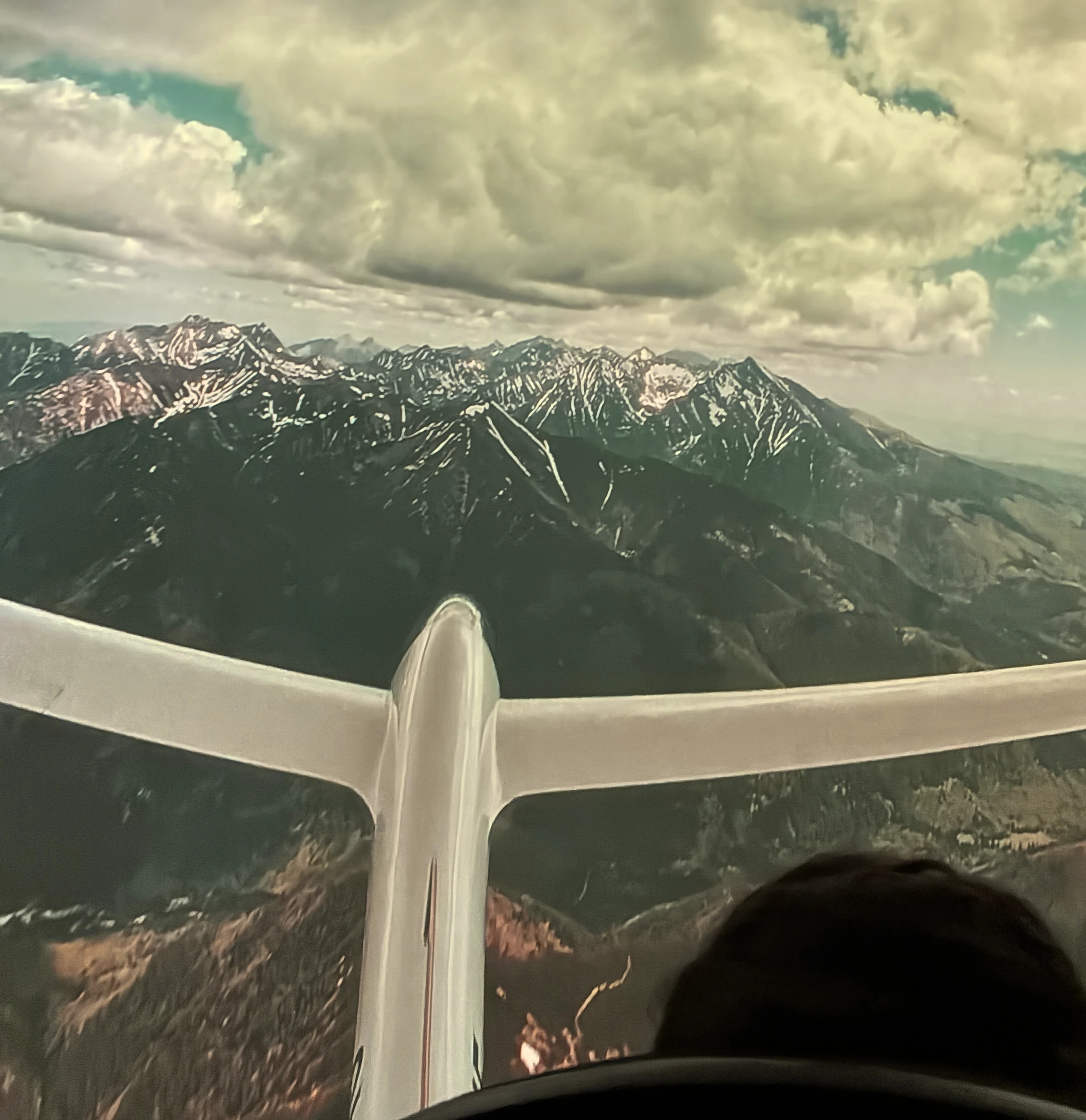
For many years at the start of my career at the Chaffee Planetarium we ran an in-house produced weather show, Our Restless Planet, which fell into many traps that can plague a planetarium show, it was slow, ponderous, and burdened by having to include a segment with every local TV meteorologist, which pushed its runtime to nearly a full hour. It filled me with a lasting antipathy for meteorology. Edge of the Sky is nothing like a traditional weather show. Sitting through the program, which features incredible aerial footage taken from gliders and other light aircraft soaring in and out of clouds, I admired how while it had educational value, its real value was in delivering an experience. It really took the audience into the clouds to experience the drama and power of weather on this planet in a way that didn’t just teach you, it made you feel it. I hope this is the kind of programming we begin to lean into more as planetariums: giving our audiences the feeling we are really taking them to new places.
I wasn’t alone in my admiration for the show, it walked away with the award for Best Narrative Film at the end of the festival.
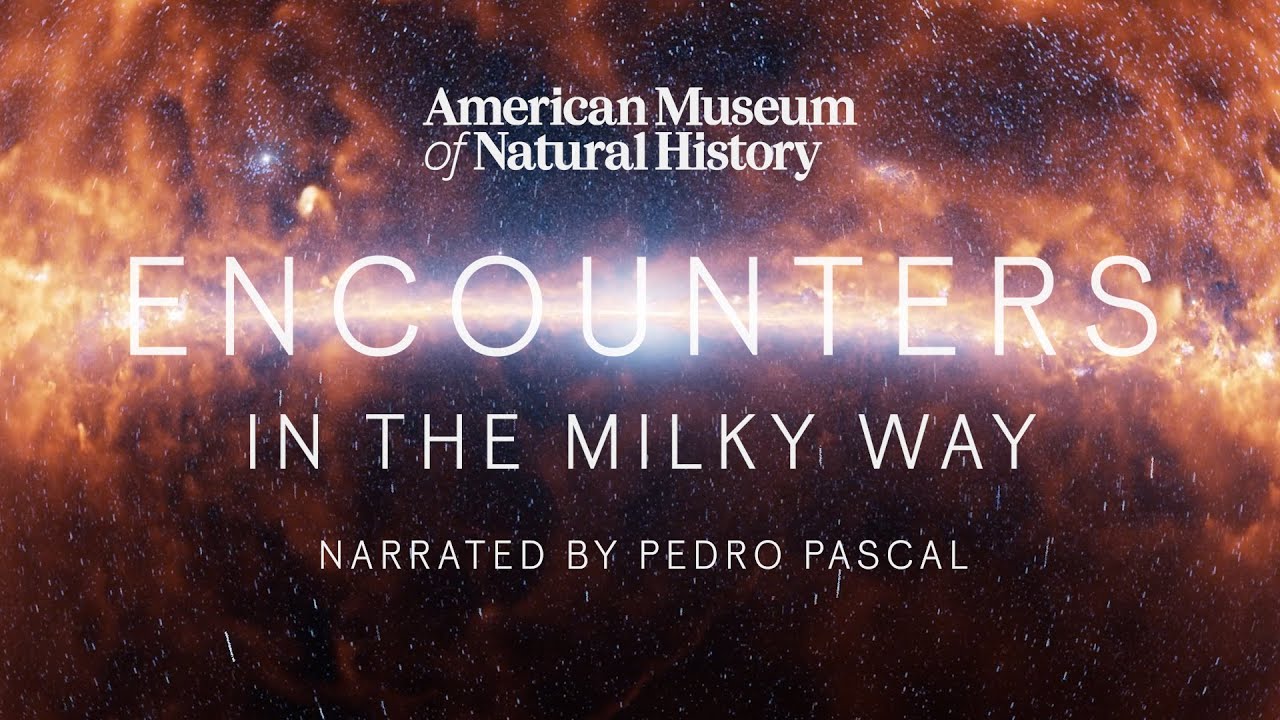
This same film block featured the American Museum of Natural History’s stunning new production Encounters in the Milky Way, featuring the charming narration of Pedro Pascal, and the final production guided by AMNH’s longtime Director of Astrovisualization, Carter Emmart. Much of the data in this show was data I’d gotten to see and work with in OpenSpace and Uniview previously with Dr. Jacqueline Faherty, whose research guided much of the show, and it was lovely to see the polished version of these visuals in the finished production.
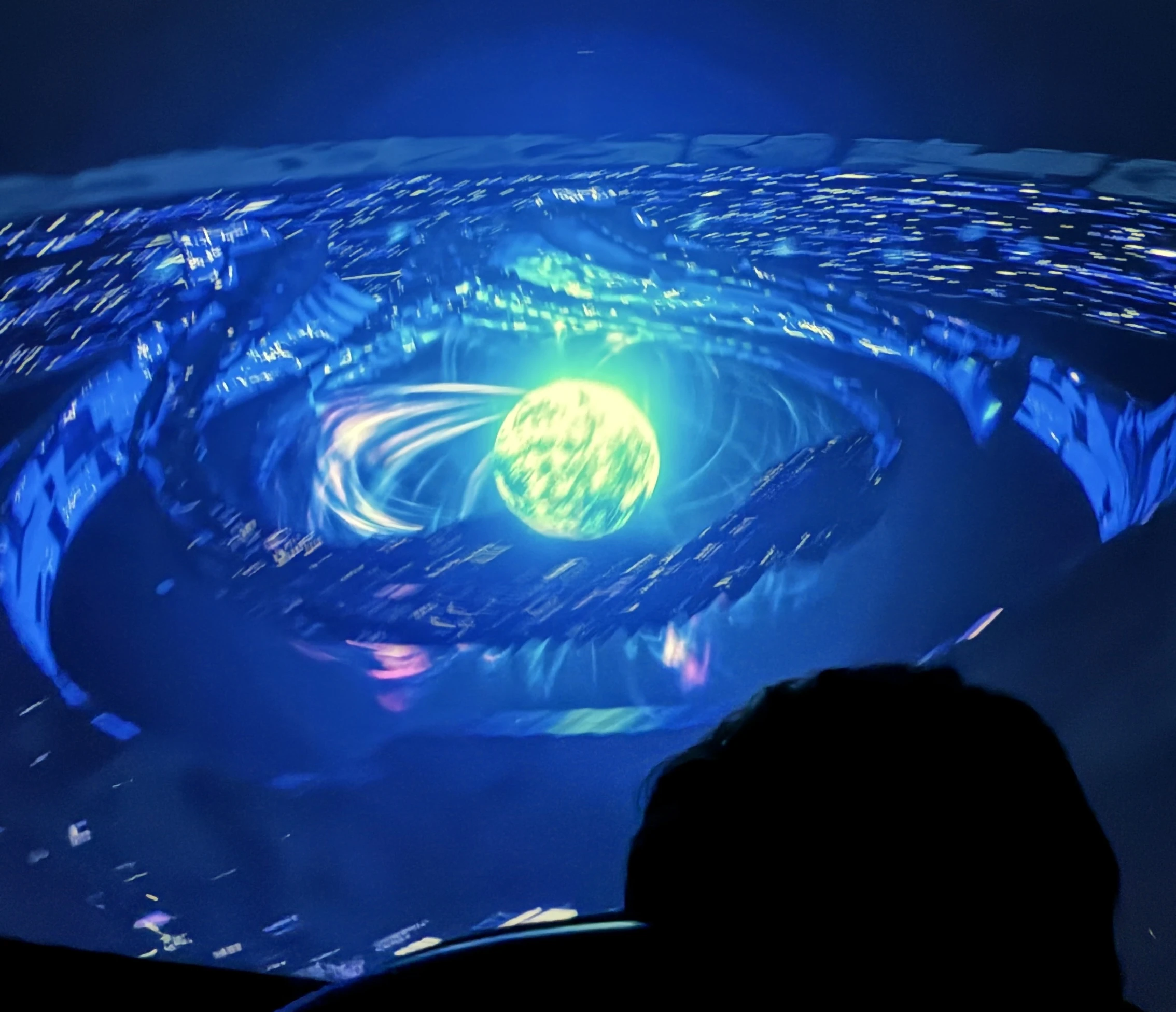
It was also delightful to see the Last Symphony of Light, the first production from my friend Eric Edelman at the Jim and Linda Lee Planetarium at Embry-Riddle Aeronautical University. Eric and I had worked together at Morrison Planetarium, where it was a joy to support the stories he wanted to tell in his live programs there. Working with our mutual friends at Double Dome Films (whose productions Black Holes: Unknown Horizons and Life’s Questions are available through Tau Immersive as a distribution partner!), Eric shared a unique, hopeful vision for the distant future of humanity, merging science, science fiction, and a love for classical music together into a unique, thoughtful program.
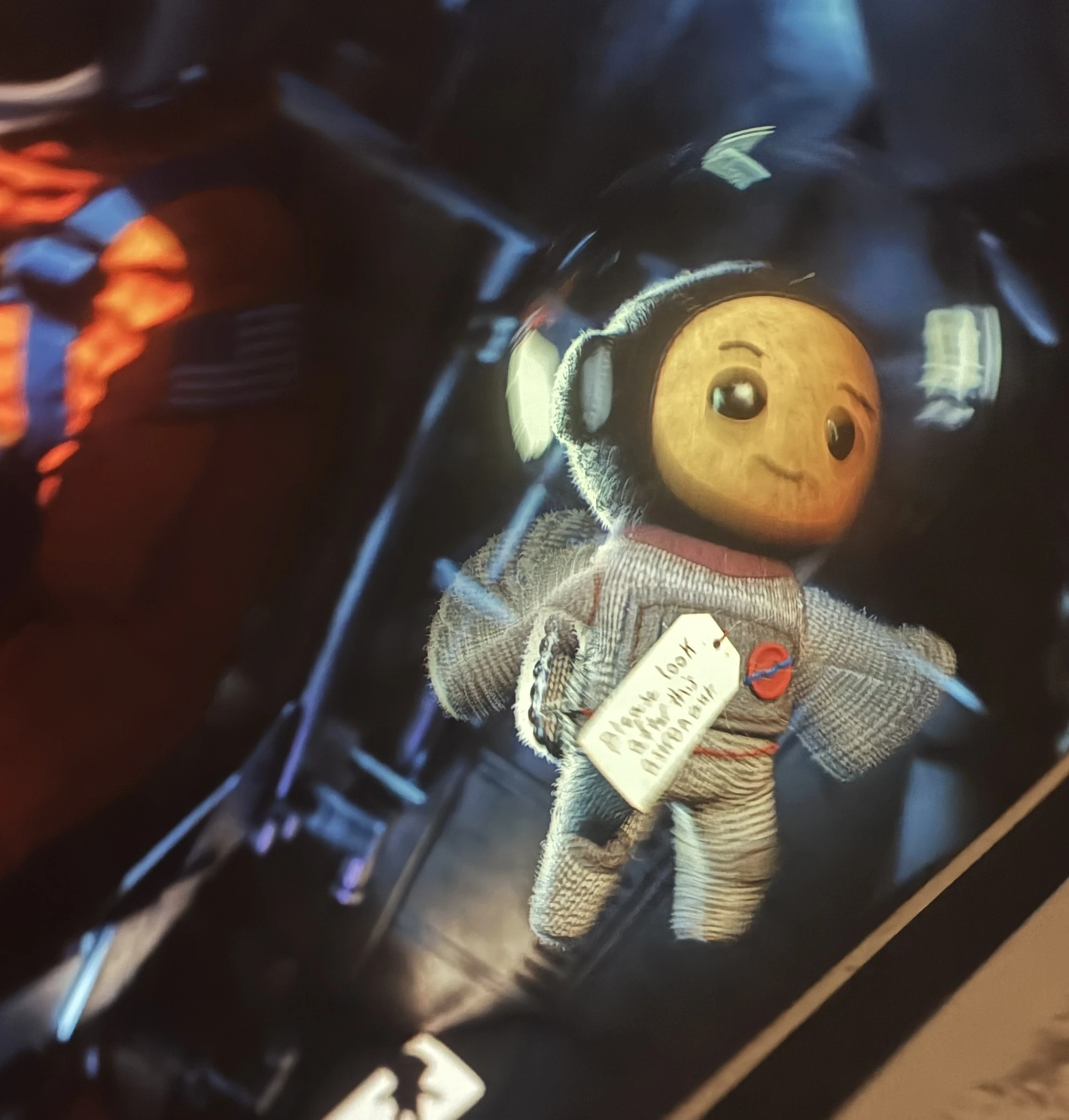
The block also featured the latest production from NSC Creative, One Step Beyond, which beautifully built on their tradition of fun, engaging storytelling and visuals–in many ways a spiritual sequel to their perennial classic Astronaut; as well as Sebastian Gautier’s Alpes Azur Mercantour, which featured an experience I had just been wishing for earlier in the day: exploring the dark ecosystem of a cave in fulldome! Critical Fusion also shared their in-progress Impossible Journey.
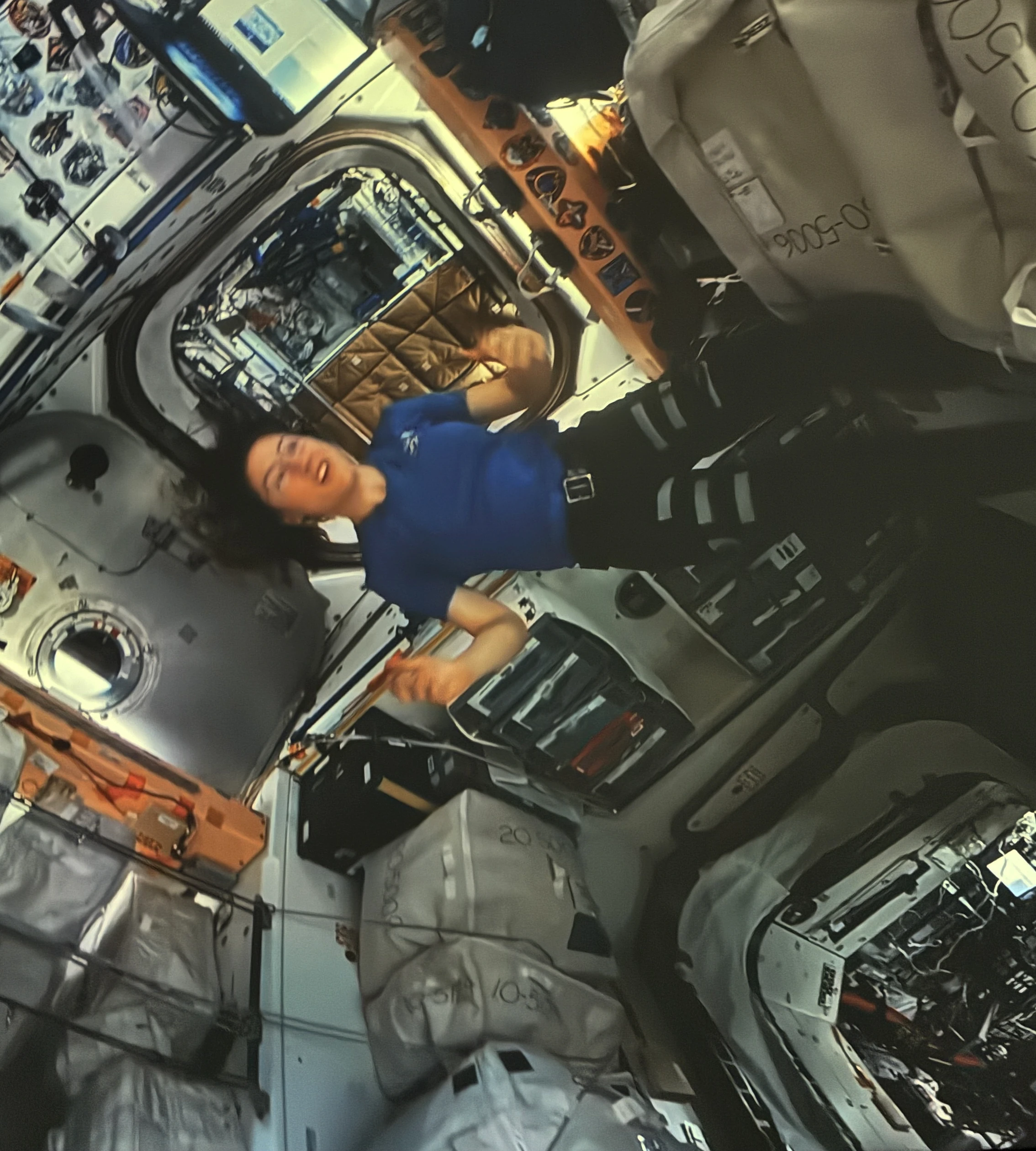
Astronaut Kristina Koch floats aboard the ISS in Felix & Paul’s Space Explorers: the ISS Experience
In addition to these more traditional astronomy films, other blocks throughout the conference continued to take travelers into space. One of the most spectacular was Felix & Paul Studios’s Space Explorers: The ISS Experience, a fulldome-first visit to the International Space Station. Earlier in the festival, Kelley Francis of Fulldome Creative and I hosted the festival’s speed networking event, where we encouraged attendees to build their friendships through their shared interest in fulldome and we asked them “what traditional movie would you want to see a fulldome version of?” (Kelley’s answer: Jaws. Mine? Pacific Rim). Many answered 2001: A Space Odyssey, and this film was probably the closest to a real world version of that experience–although it also highlighted the cramped, cluttered quarters of the International Space Station in contrast to the glistening, clean space vehicles imagined for 2001. This film was honored with the special Sphere of Light award.
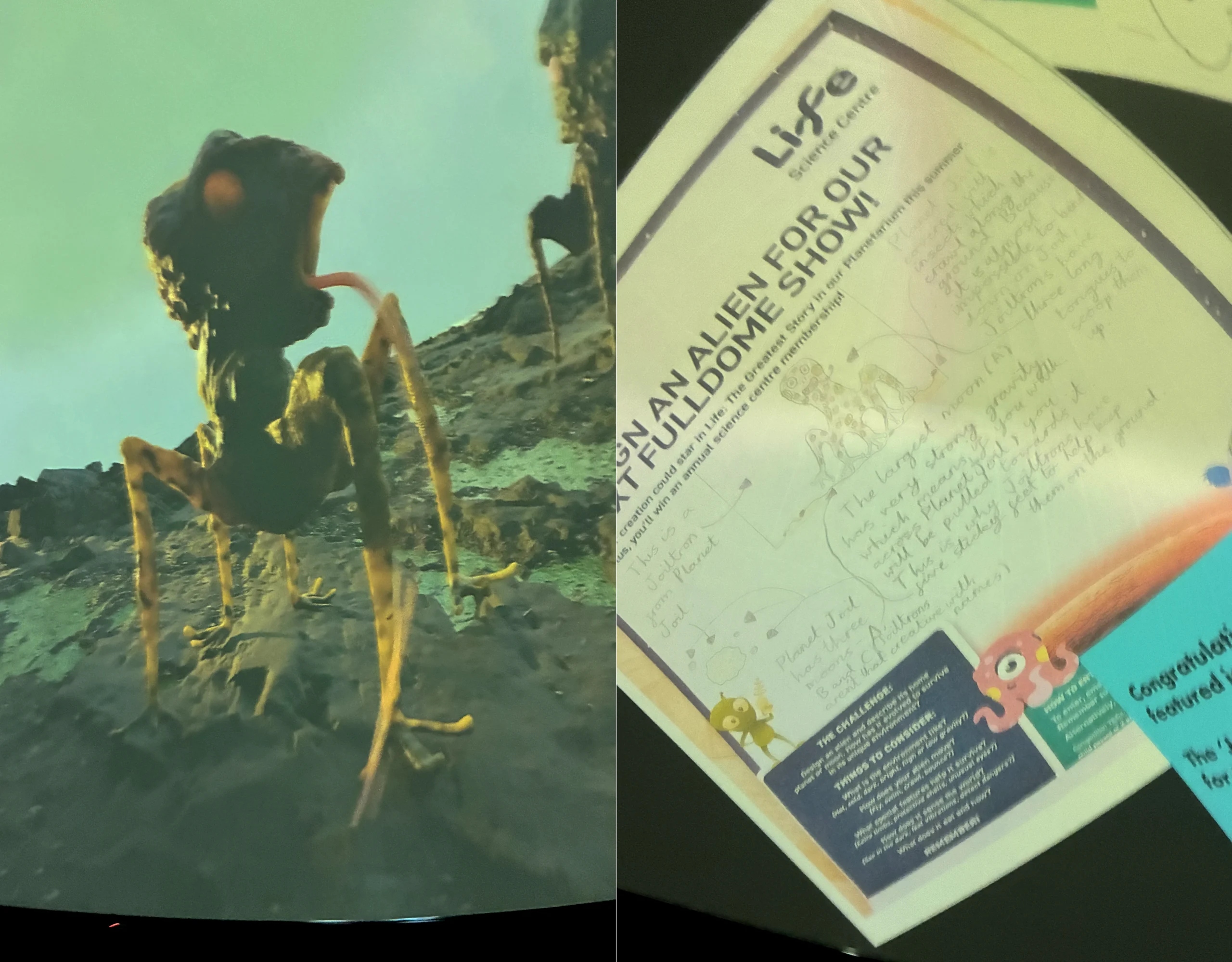
Other science films went beyond exploration of space. The Life Science Centre in the UK brought Life: the Greatest Story which featured stunning visuals exploring the origins of life on our planet–but also ended with speculation on the diversity of life in the cosmos, featuring aliens designed by children who visited their facility.
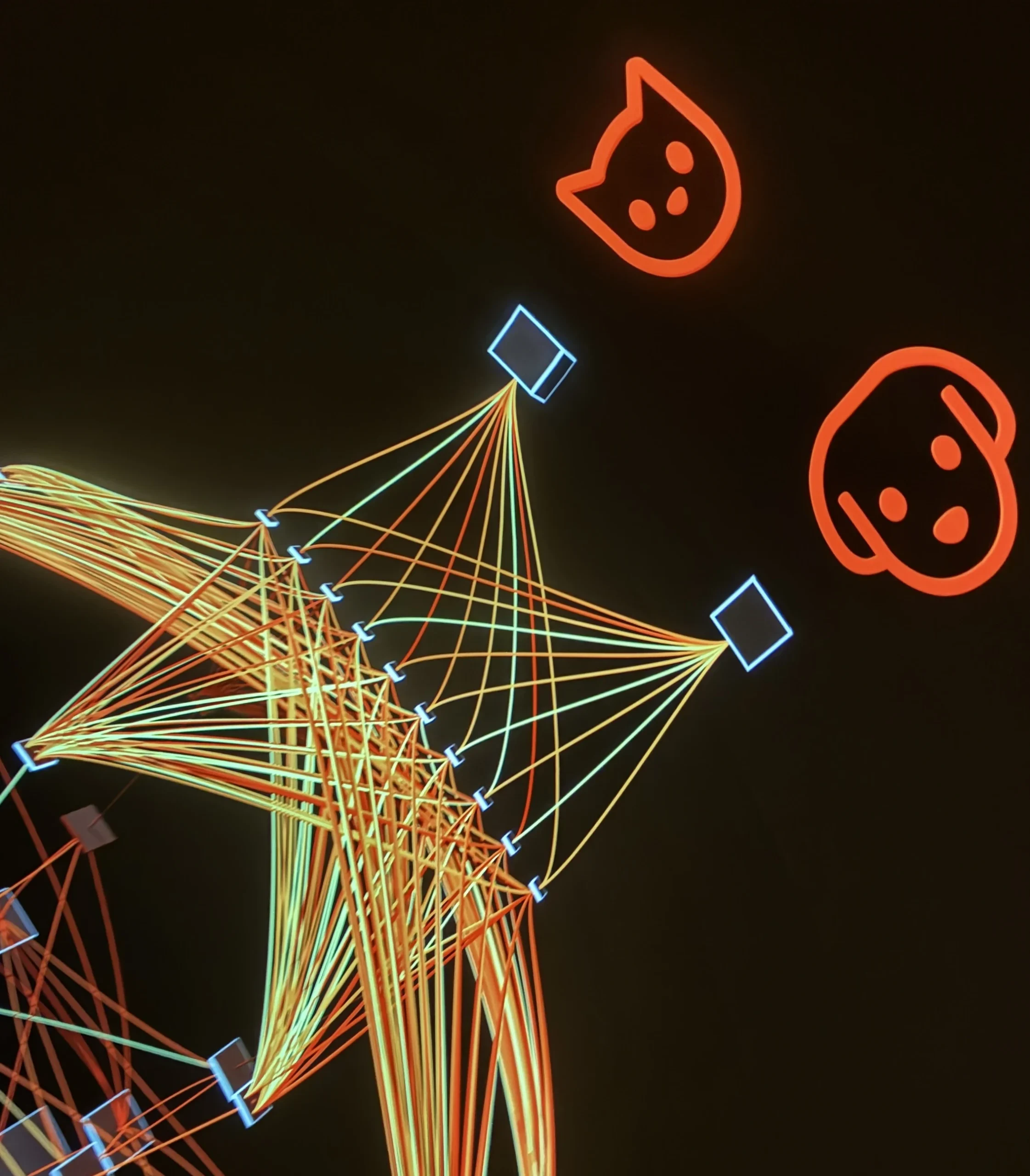
A visual explanation of a neural network from AI: An Immersive Journey
Norrköping Visualization Center C shared their film AI: An Immersive Journey, tackling one of the most controversial technologies of our time–and managed to make the complexity of modern AI models and systems understandable to a general audience. Many attendees commented the show actually helped soothe their concerns about the potential dangers of AI, and reflect on our role in history now as the moment when we choose how these tools will be used.
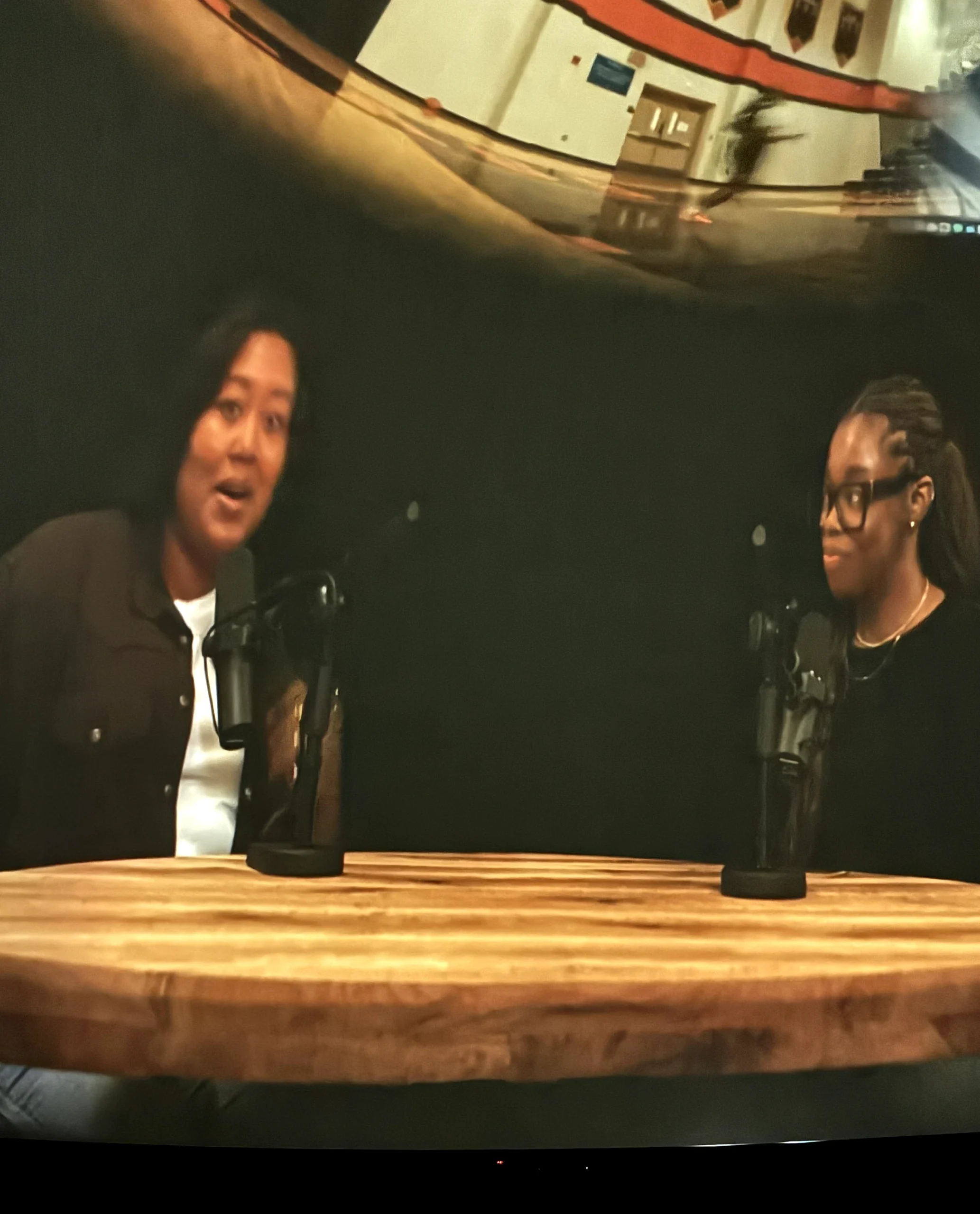
The Museum of Science in Boston presented their collaborative production with the Dope Labs Podcast, REMIXED: The Unexpected Side of Science. While scripted planetarium shows in the past have tried to capture the popular media of their days–be it with fake radio or TV shows as vehicle for story–the MoS team let their collaborators from Dope Labs do what they do best, and their natural flow and energy shaped the program, and centered the voices and work of Black scientists and creators to share how STEM is everywhere in our lives–even taking us to a rodeo in fulldome! Shows like this also helped bridge between the traditional science education use of domes, and the connections to art and expression.
Dome Fest West had no shortage of artistic experiences. The use of domes as an environment for mind-bending art and music goes back decades–including laser light shows, live performances, and experimental avante-garde concerts like the Vortex Experiments of the 1950s.
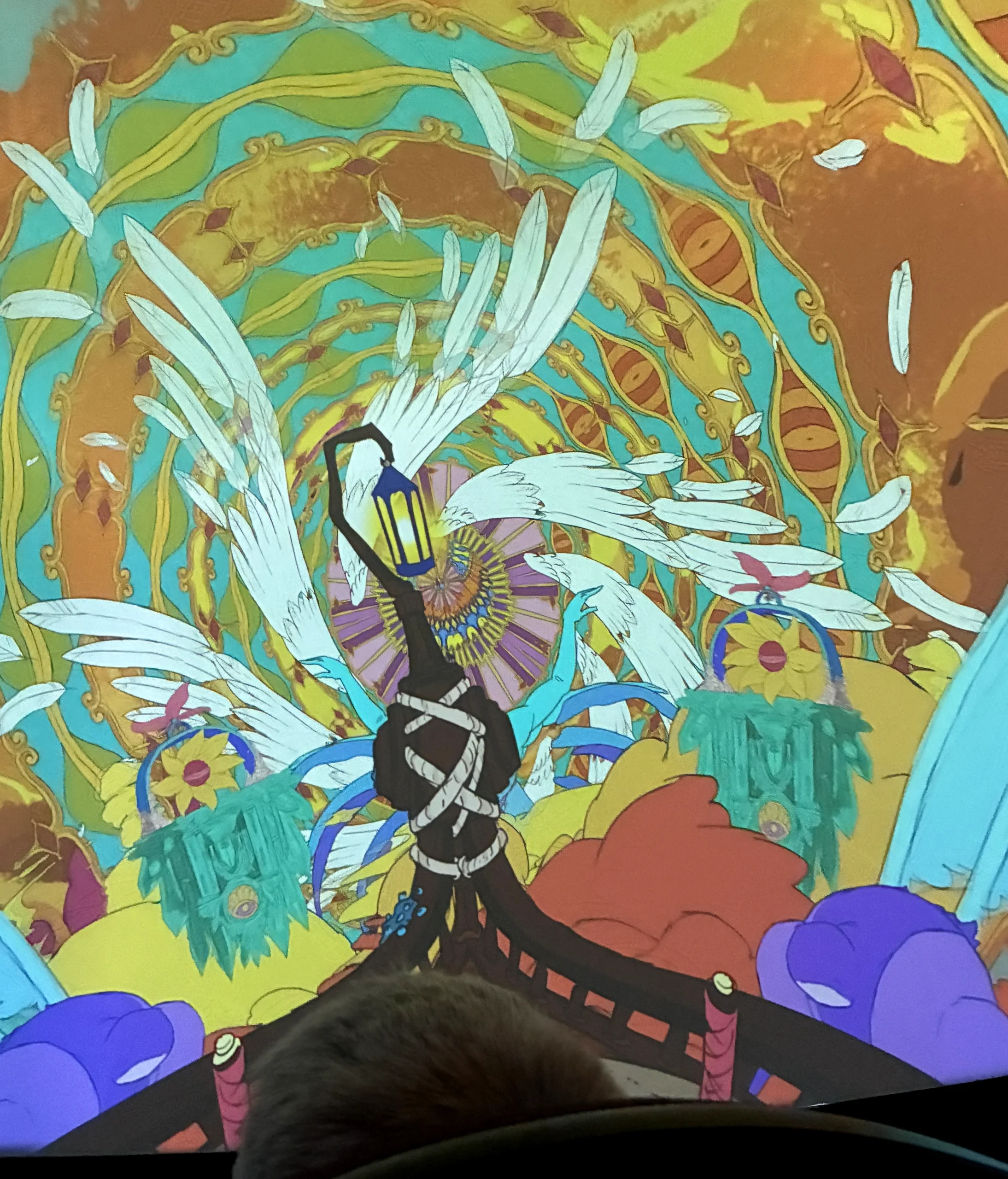
Many attendees were captivated by Resolution: A Cinephonic Rhapsody for the Soul, produced by Scott Berman and set to the music of the Polyphonic Spree. Saying “set to” understates it–Berman is longtime friends with Polyphonic Spree frontman Tim DeLaughter and the show really was a visual expression of the band’s music, presenting a cohesive journey visualizing the musical landscape. It took me back to how I taught myself planetarium program production two decades ago, learning by hacking together wireframe visuals on the Digistar II to tell the stories I had always imagined in my favorite songs too. The program is an amazing example of the power of the fulldome medium to work intentionally with musicians to make their music a multi-sensory journey. Resolution was recognized with the award for Best Artistic Feature Film, and I hope we’ll see many more like it.
(If anyone ever wants to make a Metric fulldome show, let me know!)
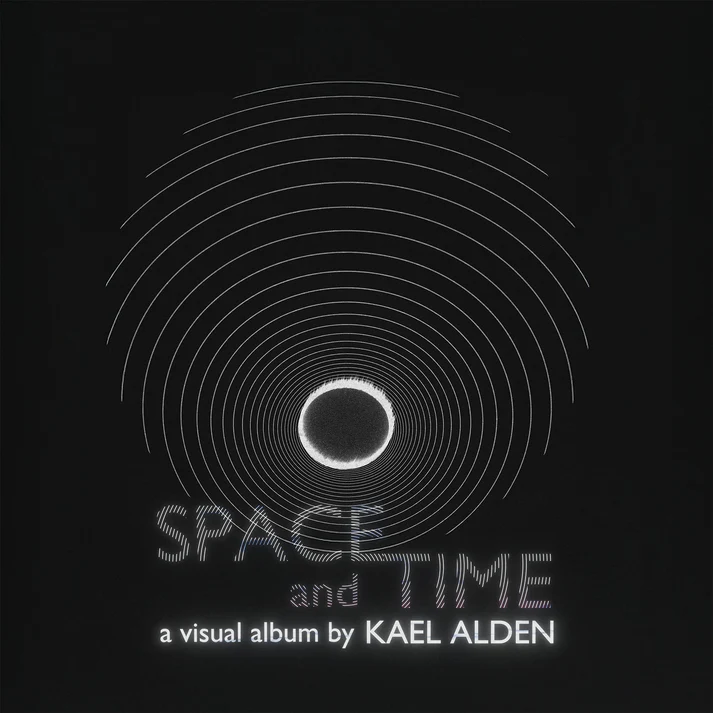
We also got to experience musician and artist Kael Alden’s Space and Time. A self described psychedelic-synth-soul album, where the artistic experience of the artist telling his own visual story took us between the inner and outer world with crisp, stunning graphics and innovative use of the dome space. It’s fantastic to see an artist bring their work so thoughtfully into the dome and use it as a medium to expand the power of their expression. I hope experiences like Space and Time are what we can grow audiences to expect in domes, and will attract and build new audiences that are ready to explore music in new ways. Kael Alden won the Best Musical Feature Film award for this work, with great applause from the audience.
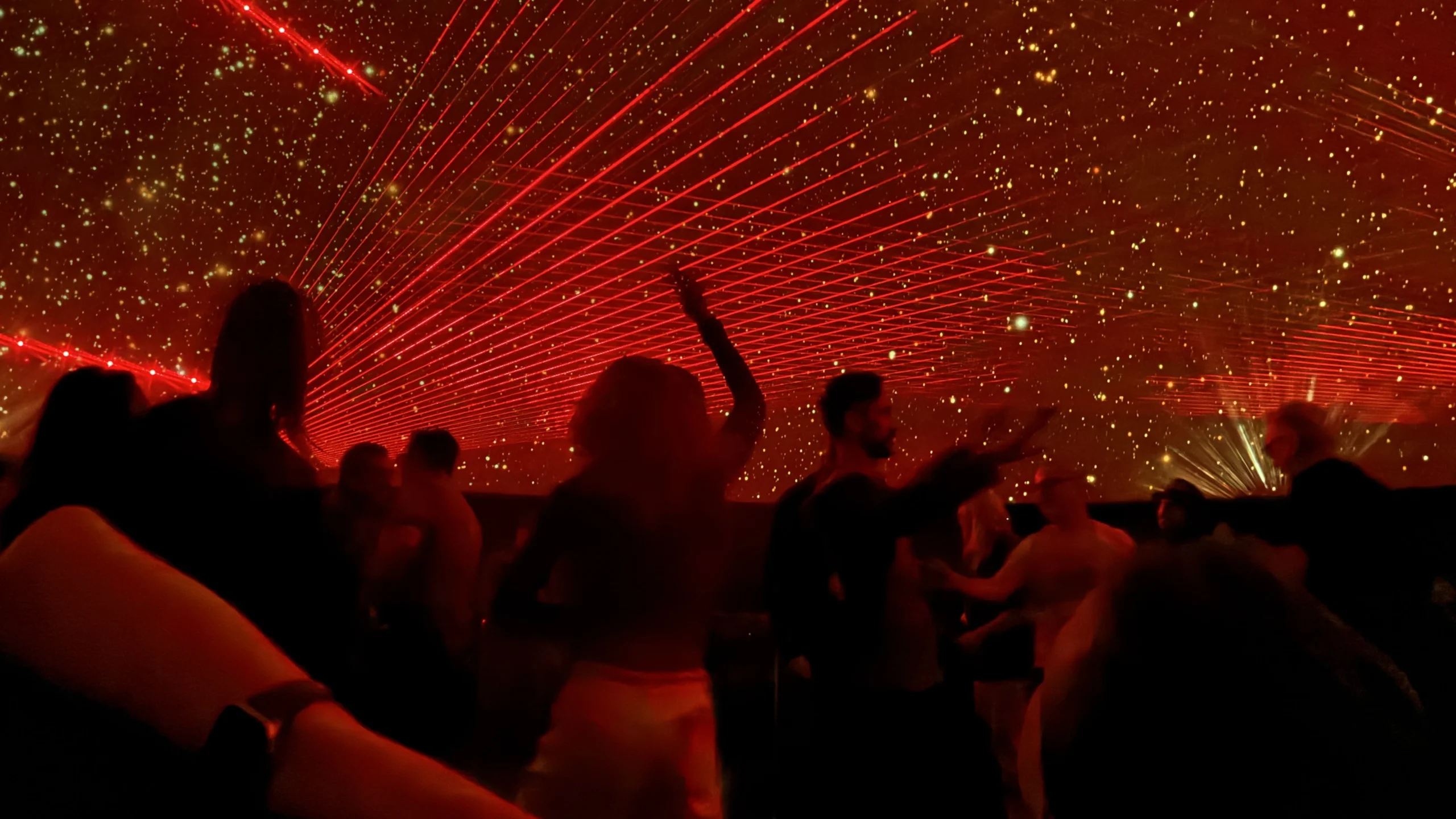
Dome Fest West attendees really love lasers
The planetarium classic experience of laser shows were also featured with a selection of songs from Laser Fantasy International, and a live laser DJ set which turned into a laser rave closing out the Festival’s Saturday night screening block. My friend Jason Achilles also delivered a shortened highlight of his live hybrid educational and musical performance Rovers, Rockets and Rock n Roll.
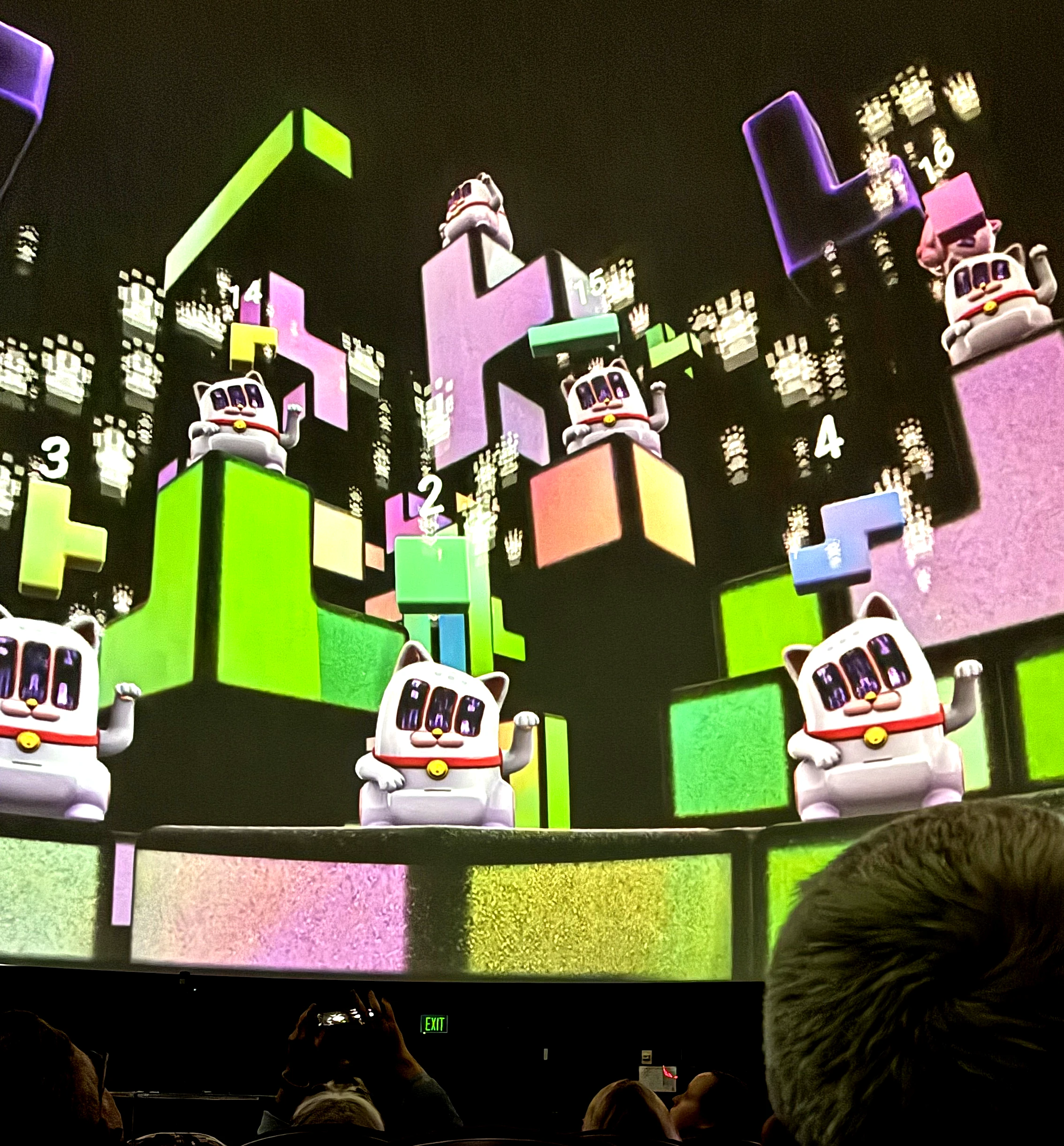
Artists also brought us into the dome in new ways, exploring interactive engagement from the audience using our phones to shape the on-dome visuals. Kelon Cen and Weilu Ge presented the Pleasure Machine where the audience’s scrolling on their phones shaped the behavior on on-screen characters (and perhaps gave us a moment to reflect on the unhealthy stimulation of doomscrolling), while Anne Wichmann’s LUMINESENCE blended augmented reality interactions with the visual and auditory experience on the dome. Both programs were awarded for their ground-breaking work, winning Best Interactive Experience and Best Live Experience, respectively.
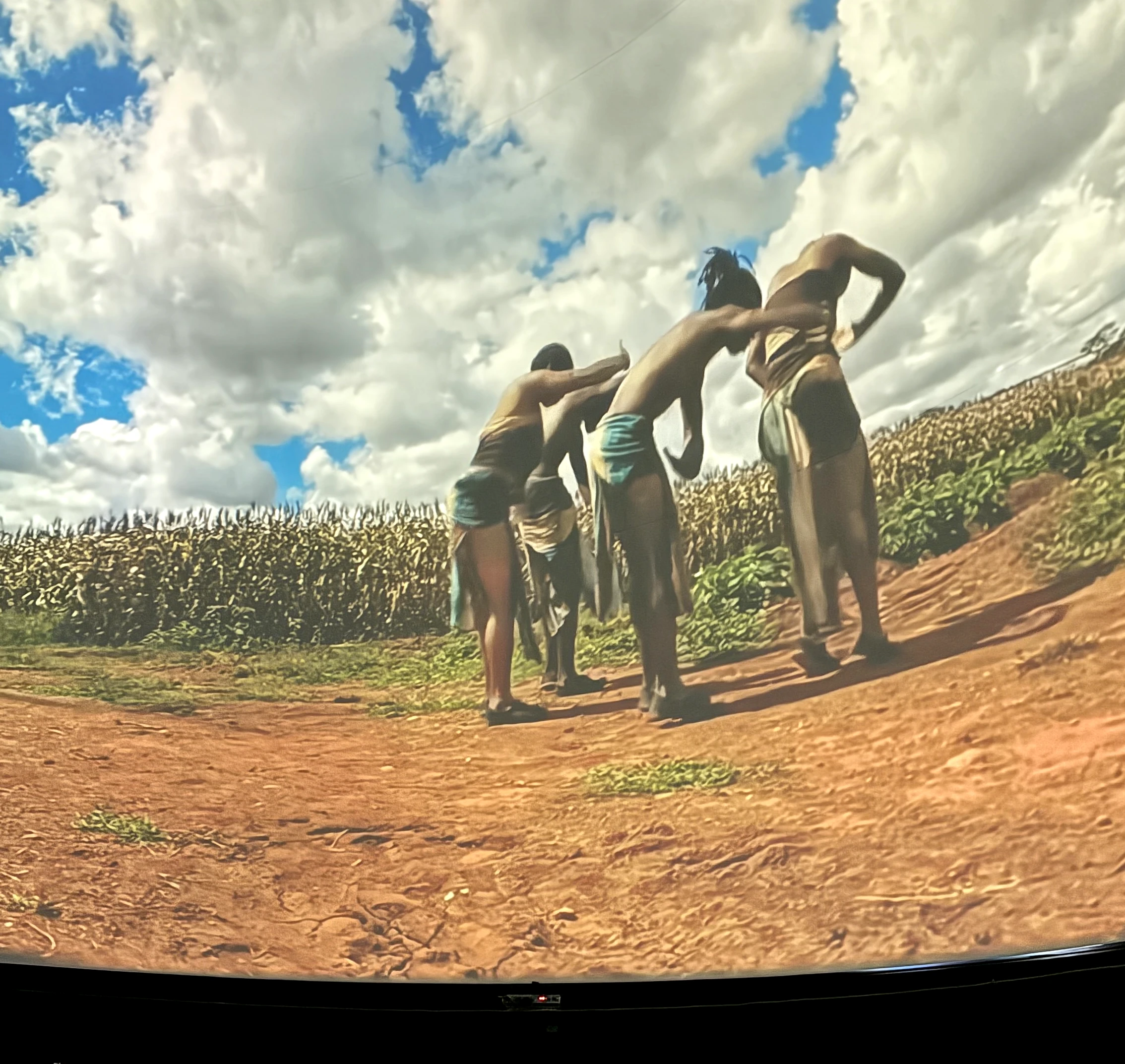
Over my career I’ve been a big fan of the use of the dome to share dance performances. Dome Fest West didn’t disappoint here either, with the Rift by 4Pi Productions, blending contemporary dance performance with the stunning environments of Zimbabwe. The power of this experience secured it the Best Musical Short award.
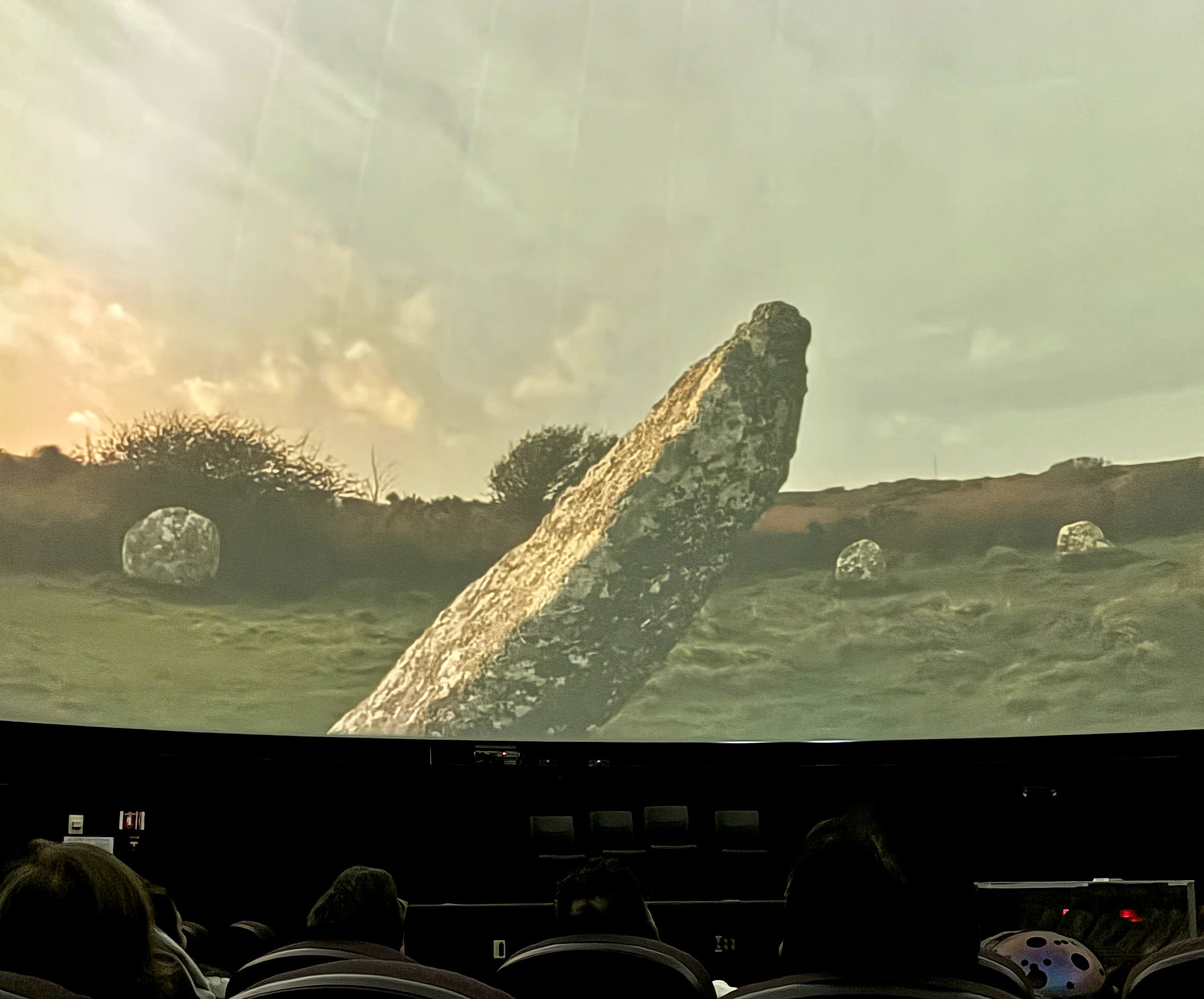
That same power of the dome to transport our audiences across space and time was seized by other films that blended artistry and experience in new ways. From Granite to Galaxies by Rich Atkinson and Tom Edwards, used the history of Cornwall in the UK for a poetic exploration of human growth and curiosity, from the stone circles and villages erected at the dawn of civilization, through the eras of mining and exploitation, to now when we finally stretch our hands out into the cosmos. My maternal grandparents live in Cornwall and I excitedly texted my family “they made a planetarium show out of our vacations!” Cornwall further proved itself a vortex in space and time with Adam Laity’s Gans’n Dhama Wedhen (In the Company of the Mother Tree), which meditated on the temperate rainforests of Cornwall, pondering on the botanical memory of trees ancient to us, yet musing on their own infancy compared to the deep geologic history of the land.
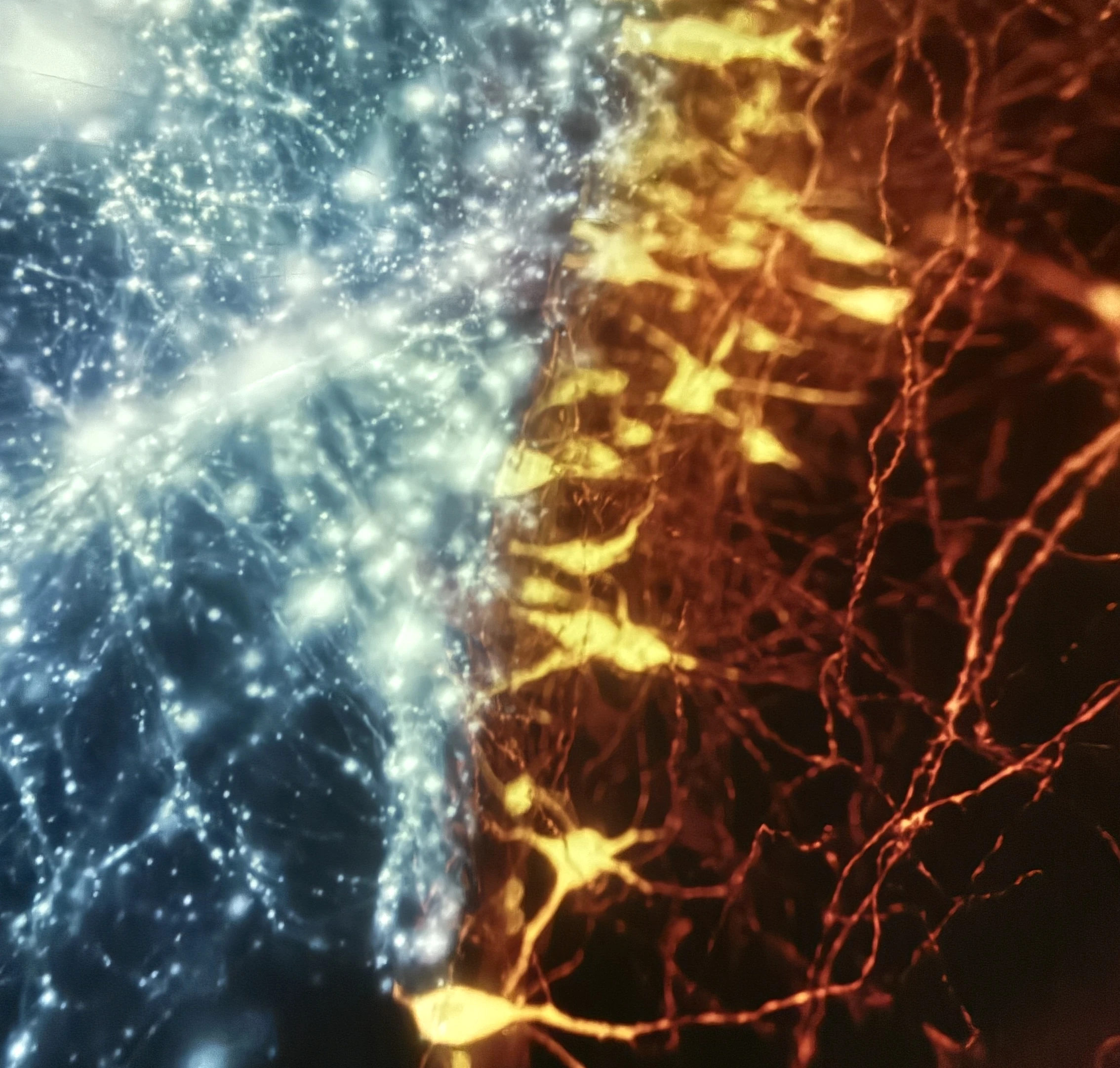
Neurons and galaxies collide in Frontiers of Infinity
This transportative quality also took us into the inner cosmos. Michel Lam’s Frontiers of Infinity used neuroscience to ponder the essential human quest for knowledge, and why we look out into the macrocosmos and also turn back into the inner universe of the self to try to understand our role in this vast and complex world.
That turn into the inner world has become an increasingly common use of the dome creative shared meditative experiences to help audiences reflect on, and perhaps, leave behind the self. A variety of programs explored this booming use of the dome medium, including Worlds and James Hood’s latest collaboration, Astronomica, but also Michael and Jahna Perricone’s The Journey: From Formlessness to Form, and Weaving Plasma by Simon Haiduk. A clear favorite of the audience though, was Laura Inserra’s meditative Qualia, which blended the traditional ideas of the four elements, a variety of traditional musical instruments from around the world, and Laura’s guided meditations together into an experience that triumphed with both the Juror’s Choice and Audience Choice awards.
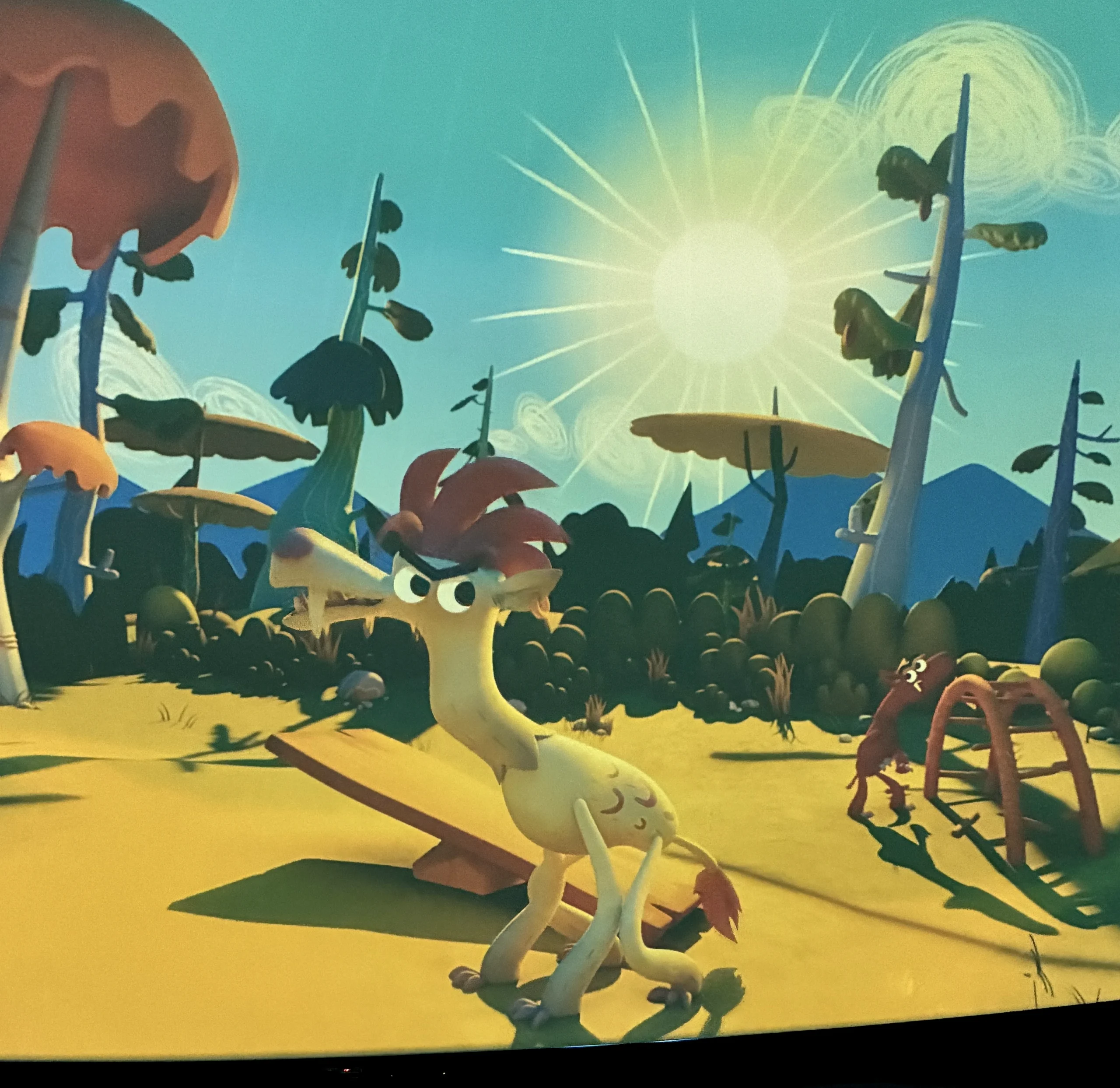
There’s soemthing I like about the look of this character in Krutart’s Little Eve
Of course, even this lengthy selection of highlights of the festival is still only a sampling of the programs. Krutart Studios brought the delightful new children’s show Little Eve, Creative Planet won Best Artistic Short with their piece UP, we traveled to the ancient polar regions with Dinosaurs Under the Northern Lights, and even joined a young otter on a journey to Jupiter’s moon Europa in H2O: The Cosmic States of Water. As someone who has long worked in ecological conservation and is interested in the power of domes to help with ecological and cultural conservation, I was also thrilled by the Minam River Conservation Area by 360 labs and funded by the Oregon Department of Fish and Wildlife to take people on a virtual journey that shared the experience of wilderness, while still protecting vulnerable habitats–and winning the Best Environmental Film award.
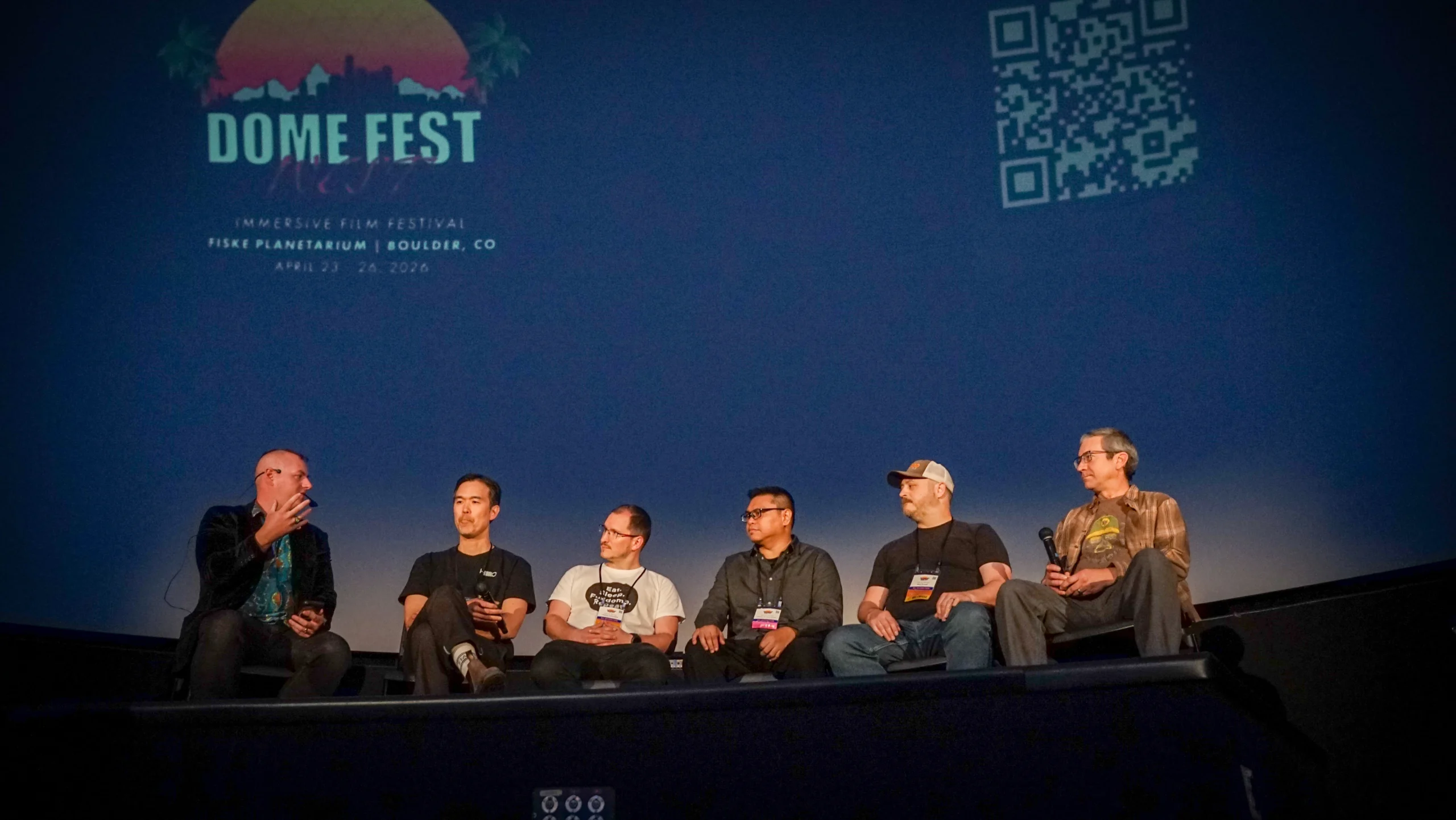
Hosting a post-film panel discussion with several filmmakers at Dome Fest West. Photo courtesy Dessignare Studio
Many planetarians have asked me “is Dome Fest West something I should be attending?” I always tell them “yes!” but I would say that more emphatically than ever after this year. Dome Fest West is the best opportunity for planetarium operators in North America to sample and shop for the latest programs to bring to their venues, and see how producers, experienced and new, are pushing the limits of the fulldome medium.
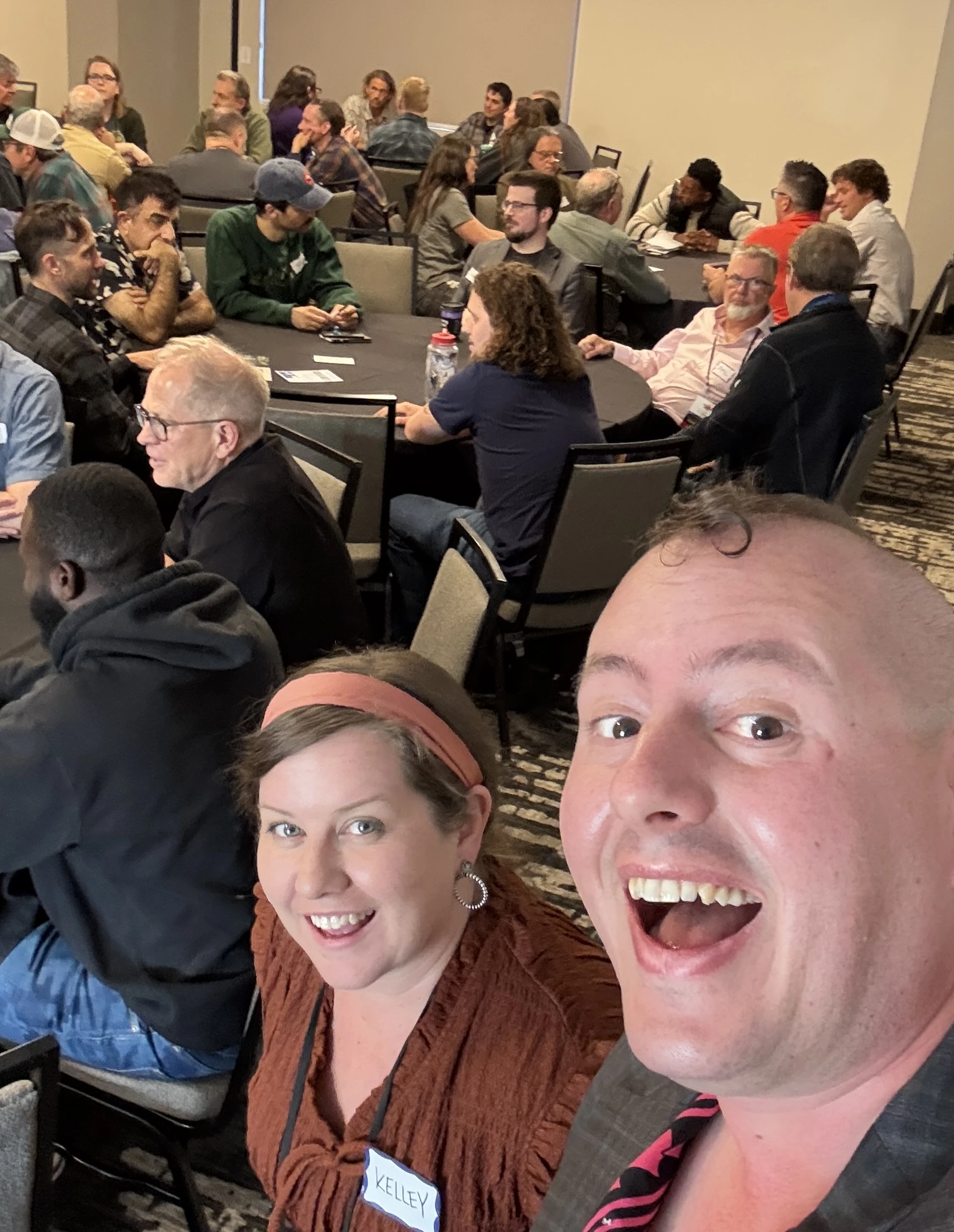
Hosting speed networking at Dome Fest West with Kelley Francis
It’s also an incredible opportunity for anyone to build their network–and as I always say, the best kind of networking is making friends. Kelley Francis and I used that as our guiding philosophy as we ran the speed networking event, while Tammy Barrett from the Giant Screen Cinema Association also hosted one of her Open Space sessions (not to be confused with the OpenSpace software–which doesn’t have a space in the middle!) to get attendees to collaboratively problem solve on the future of the planetarium medium. Building the connections between theaters and creators is essential so we can work together to bring the best, most compelling, most successful, most innovating programming into theaters in a way that helps everyone succeed.
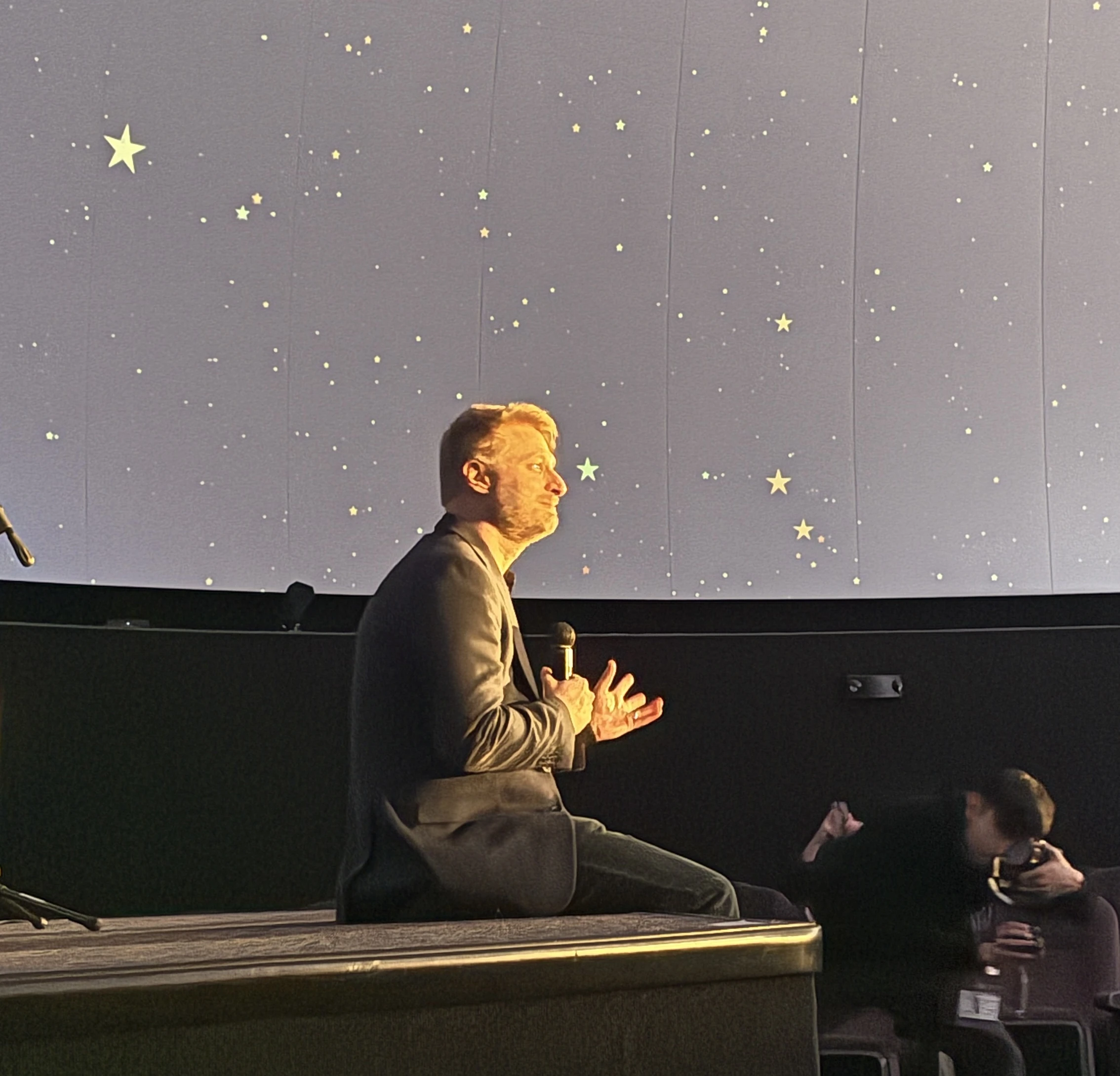
Dome Fest West Executive Director, Founder, and Planetarium Hype Man Ryan Moore reflects on the success for the festival.
In short: Dome Fest West was awesome. I hope to see you there next year at the Fiske Planetarium in Boulder!