Last fall I worked with the Elumenati to help build easy-to-use OpenSpace Night Sky profiles and control panels to support their integration of OpenSpace into their WorldViewer flexible immersive software suite.
We continued to grow our collaboration, and I was honored to support their Worldviewer Network Conference, which took place in Denver, immediately following Dome Fest West.
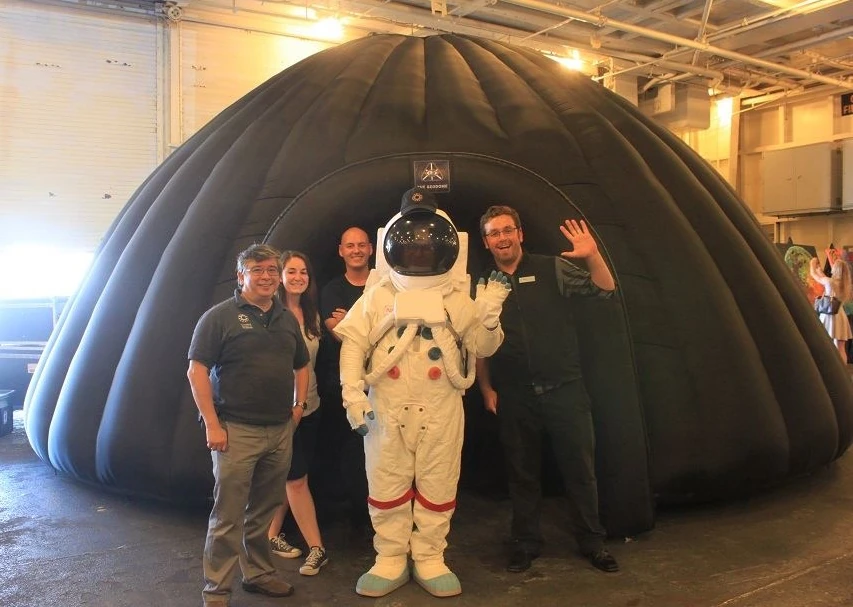
I’ve worked with Elumenati’s products for over a decade, using one of their Geodome portable theaters with Uniview throughout the 2010s. It was a pleasure to be in Denver with their user community as they embrace the adoption of OpenSpace into Elumenati’s software suite.
During the two-day event, I ran three 90 minute sessions showcasing the power OpenSpace brings to Worldviewer.
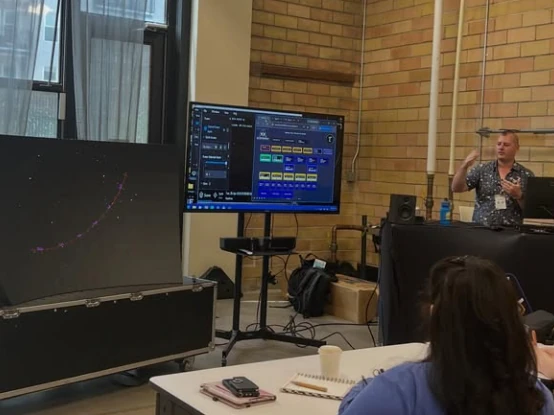
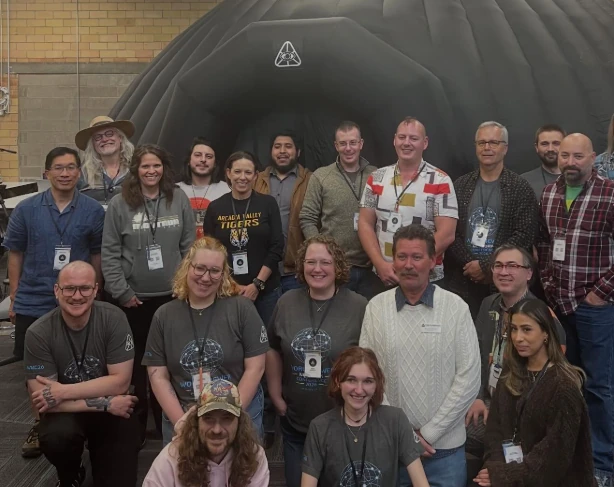
Picture courtesy the Elumenati
First I demonstrated how to use the Night Sky panels for OpenSpace, and expressed my goal with the project, that this was a flexible platform for each individual planetarium to build upon to deliver the show they wanted to give. I also shared some of my tips for how I’ve always tried to take my sky shows beyond the typical.
Long before I had a modern fulldome video planetarium, I worked with a Digistar II in an otherwise more classical planetarium configuration, with 70+ slide projectors, inset CRT video projectors, and a range of BFJ–and acronym for “baby food jar”–special effects.
Even with these limits, in every planetarium live sky show, I broke us out of the night sky to take a trip into the Solar System, combining video animations with panoramic landscapes (some of which I hand painted).
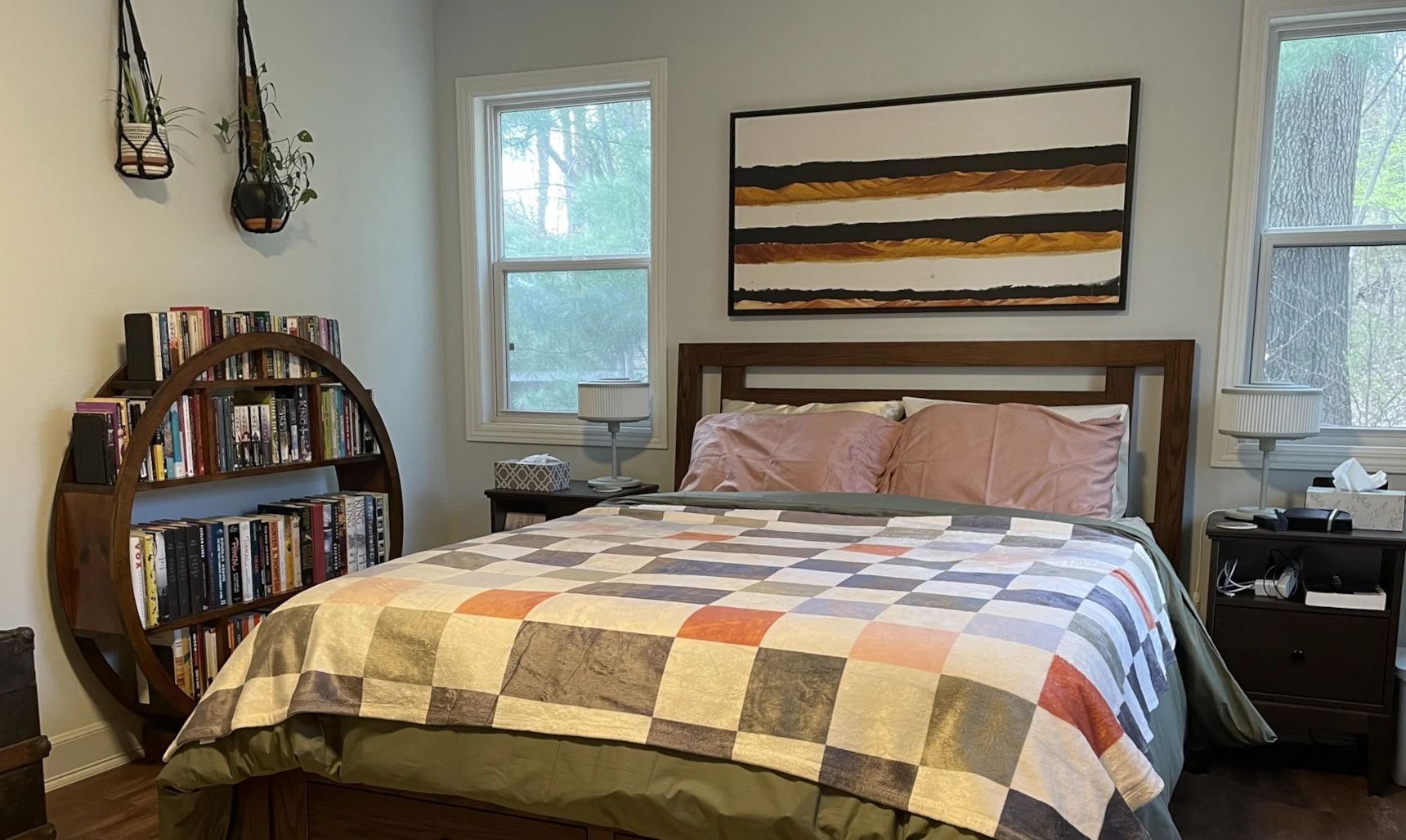
Panorama paintings of Titan based on the Huygen’s landing and a terrestrial desert now serving as home decor. Photo courtesy Emily Hromi
Digital systems make that easier than ever to “break the dome of the sky,” instead of just seeing the telescopic view of the planets to go experience them as worlds, or travel out into the Milky Way to see how the constellations are just a fragment of the vastness of the Universe.
And speaking of experiencing planets as worlds, my next session focused on how to use OpenSpace’s globebrowsing engine to explore the planets. The amazing, cool power of the planetarium is its power to make us feel like we are being transported to new places, and the ability to leverage geospatial data to explore our world and other worlds in high resolution is what got me involved in the OpenSpace project to begin, leveraging my years of collaboration with NASA Ames Research Center who manages much of the spatial data for missions around the Solar System.
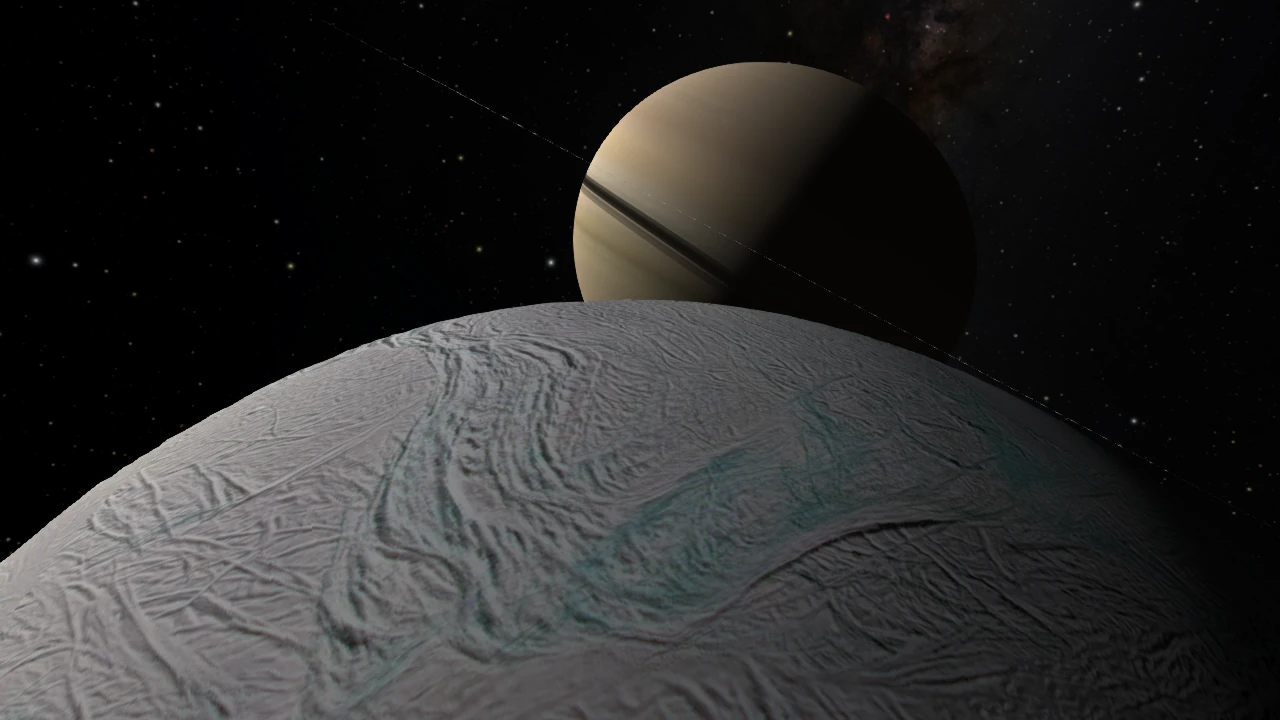
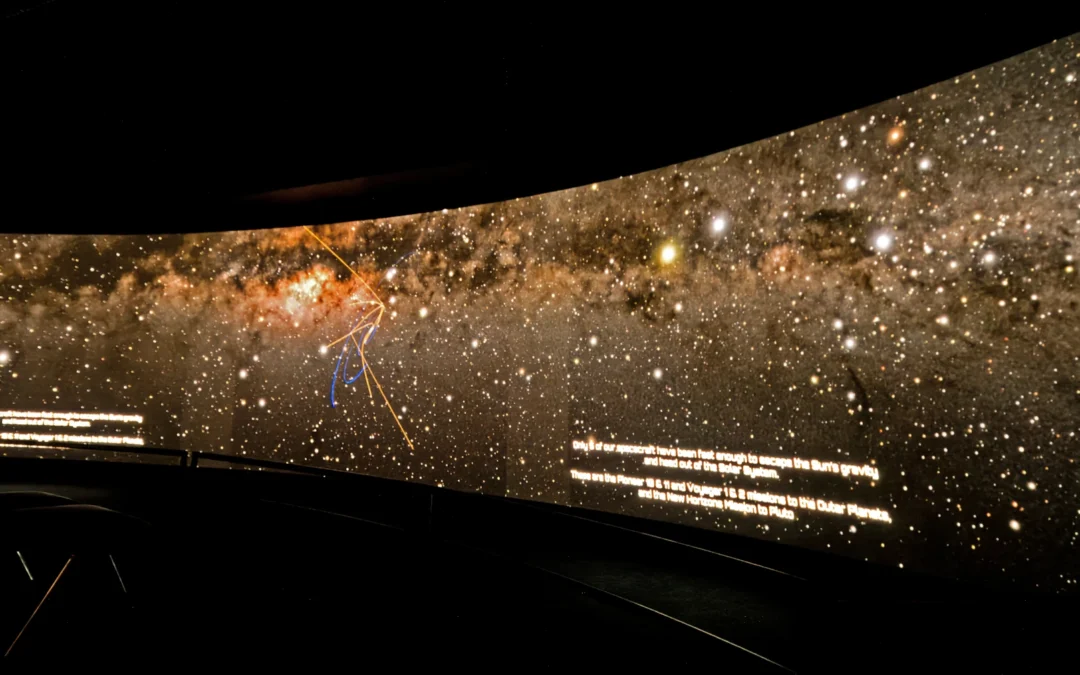
I showed the attendees the amazing stories that they can tell with this data, visiting the Moon and Mars in nearly human-scale, with digital elevation models. We also travelled out to the moons of Jupiter and Saturn, and even Pluto to explore the incredible stories buried in the data that came back from New Horizons.
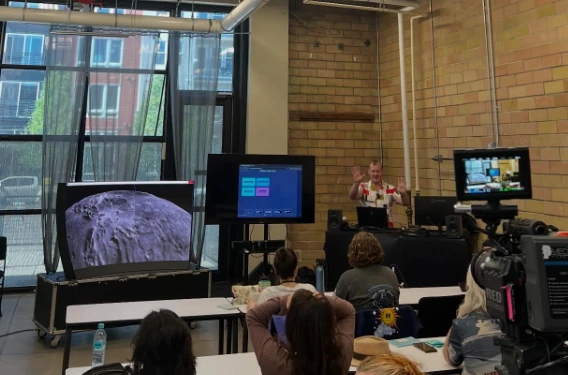
Photo courtesy the Elumenati
My contributions to the sessions concluded with a tutorial lesson on how to use OpenSpace’s ShowComposer to build and customize your own shows. I think building these kind of control panels is an essential step to making the software its most usable, getting users away from searching through menus and changing settings, to having all the controls they need for their program at their fingertips, so they can focus on the story.
In addition to my sessions, Micah Acinapura from the OpenSpace development team was present to share a variety of insights and lessons with the audience, while Elumenati’s own team share tips on how to use the Worldviewer platform and the variety of exciting content they provide access to beyond astronomy.
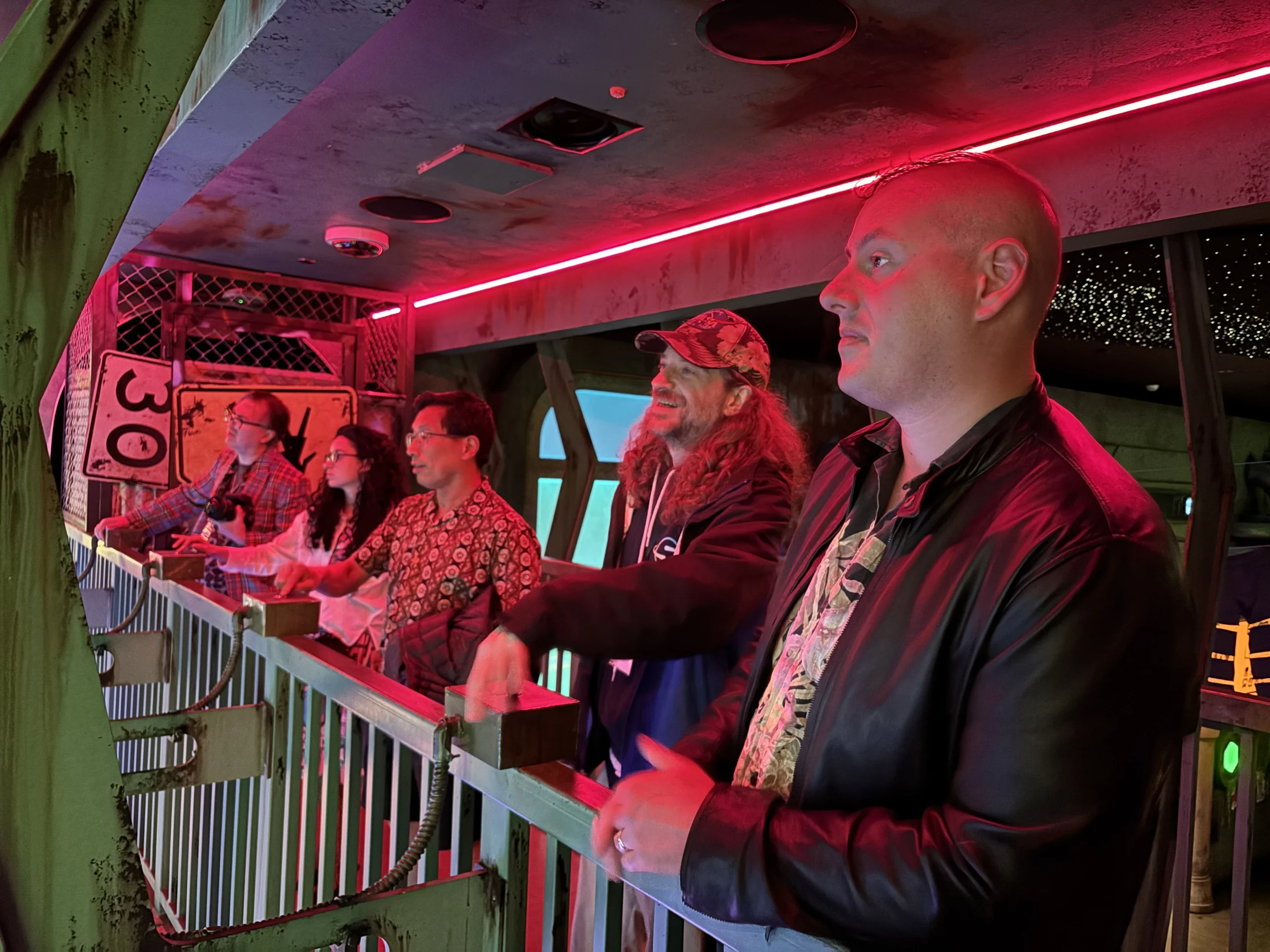
Dan, Micah, and Ka Chun Yu of the Denver Museum of Nature and Science enjoy a mid-conference excursion ot Meow Wolf. Photo by Kimberly Colegrove
As always when I teach people how to get more out of OpenSpace, I walked away inspired by the buzz of ideas from the group as they felt the excitement of their imaginations being unlocked. That’s always been my dream–helping people tell their stories through technology, rather than feeling limited by it. I’m excited to see everything Elumenati’s customers will keep doing with the power of OpenSpace!
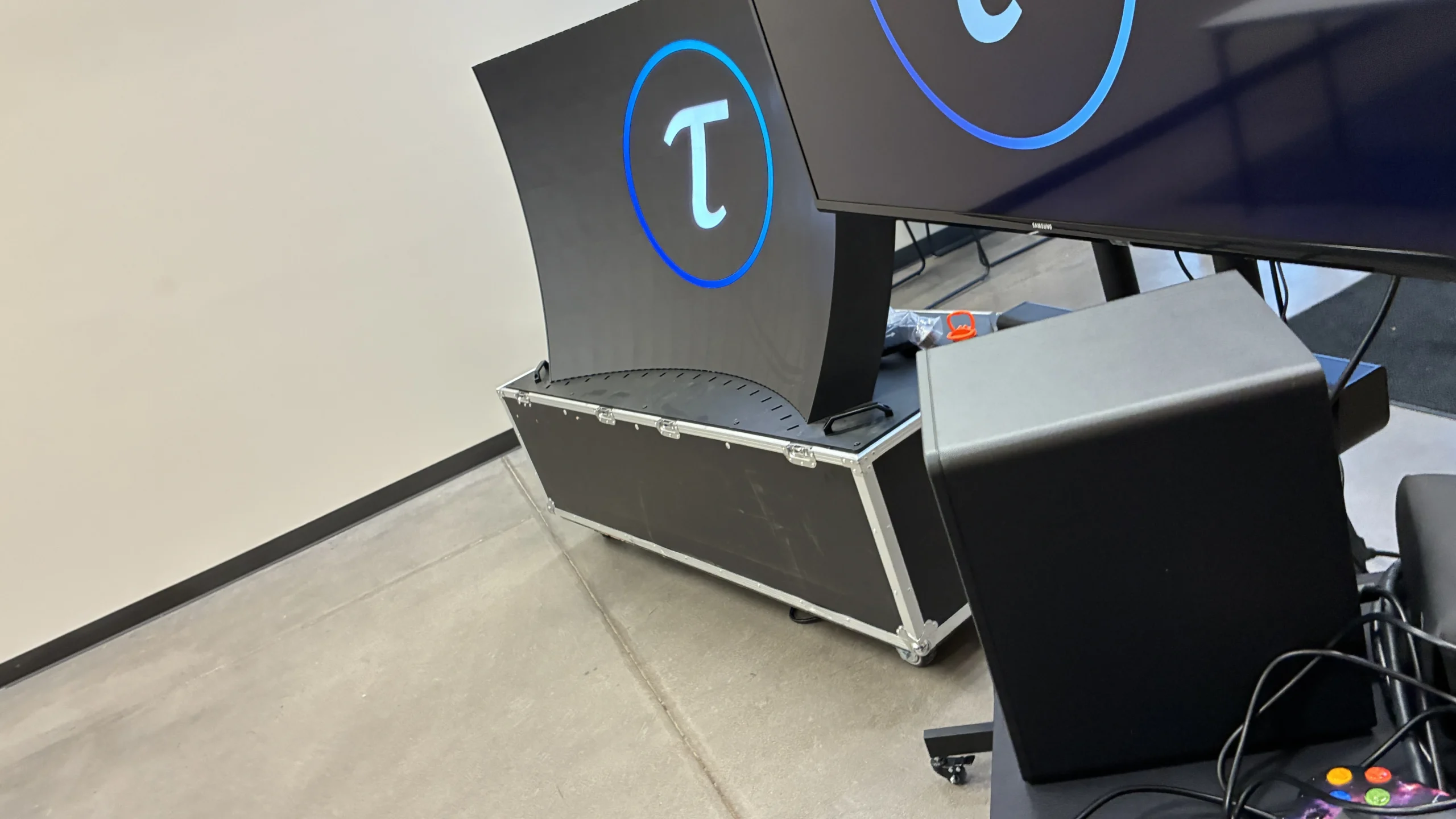
Thanks to the Elumenati for letting me co-sponsor this event, and giving me the opportunity to see OpenSpace (and the Tau Immersive logo) on their LED displays!